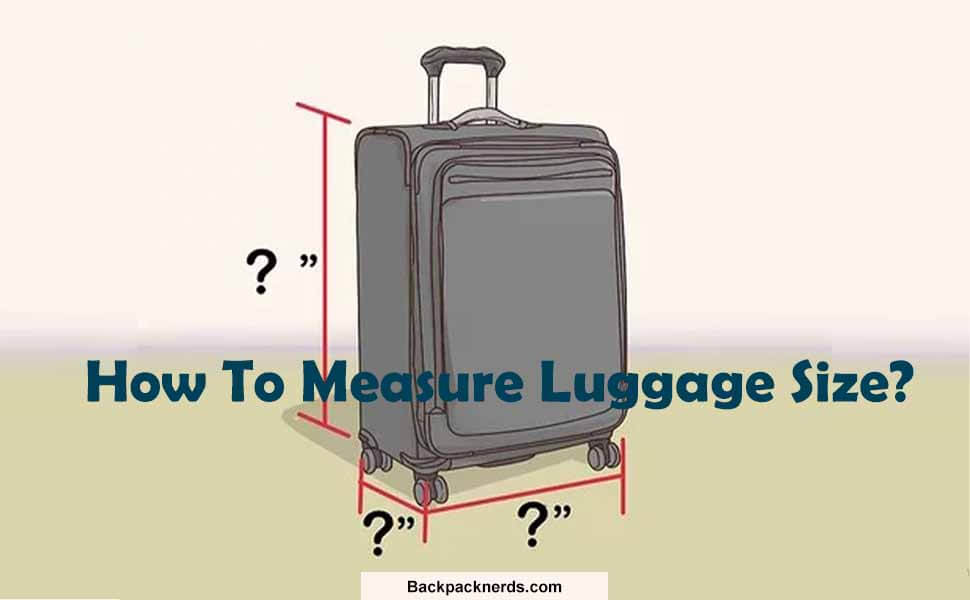
To measure luggage dimensions, measure the suitcase from its outermost points: height from the floor to the tallest point, width from side to side, and depth from front to back. Include wheels, handles, and external pockets because airlines usually consider the complete outside size.
Travelers in the United States often need accurate luggage measurements before flying because airlines set limits for carry-on and checked bags. A suitcase that appears small enough may exceed the allowed dimensions once wheels, handles, or expandable sections are included.
The correct method is to measure the fully packed bag as it will be used during travel. Measuring only the suitcase shell can produce incorrect results because airline baggage rules generally apply to the complete exterior dimensions rather than just the storage compartment.
Luggage dimensions describe the external measurements of a suitcase or bag. The three standard measurements are height, width, and depth, usually listed in inches in the United States.
Height is the vertical measurement when the bag stands upright. Width measures the distance from one side of the bag to the other. Depth, sometimes called length by some manufacturers, measures how far the bag extends from the front to the back.
Source: fity.club
Height
Measure from the ground to the highest point of the luggage, including wheels and handles if they extend above the main body.
Width
Measure across the widest side of the luggage from left to right.
Depth
Measure the thickness of the luggage from front to back, including expanded sections when they are opened.
Why accurate measurements matter
Incorrect measurements can lead to unexpected baggage fees, gate checks, or the need to repack before departure. Measuring correctly helps travelers compare their luggage with airline restrictions before arriving at the airport.
Airline compliance
Accurate dimensions help determine whether a bag fits carry-on sizers or checked baggage limits.
How to measure luggage dimensions step by step
The most reliable way to measure luggage is to place the bag on a flat surface and measure the complete exterior while it is packed for travel. Use a flexible tape measure for curved areas and record each measurement separately.
Before measuring, remove temporary items such as luggage tags or loose straps that are not part of the normal travel size. Keep permanent parts such as wheels, fixed handles, and built-in pockets included.
Source: oa.openforall.co.uk
Step 1: Measure height
Stand the suitcase upright and measure from the floor to the highest fixed point.
Step 2: Measure width
Measure the widest horizontal section of the suitcase from one side edge to the other.
Step 3: Measure depth
Measure from the front surface to the back surface at the deepest point.
Step 4: Record the dimensions
Write measurements in the standard order of height × width × depth.
How to measure luggage with wheels and handles
Wheels and handles can increase the official outside dimensions of luggage. Measure from the bottom of the wheels to the highest point of the handle or bag structure when the handle is stored or extended according to the airline’s measurement method.
Include permanent features
Wheels, fixed handles, and built-in compartments should be included in the final measurement.
How to calculate luggage linear dimensions
Many airlines use linear dimensions, also called linear inches, to describe the maximum combined size of checked baggage. The calculation is simple: add the height, width, and depth measurements together.
For example, a suitcase measuring 28 inches high, 20 inches wide, and 12 inches deep has total linear dimensions of 60 inches. This calculation only applies to size, not weight restrictions.
Airline baggage rules differ between carriers and can change depending on domestic or international routes, ticket classes, and frequent flyer benefits. Confirm the current requirements directly with the airline before traveling.
Check before flying
Use the airline’s official baggage policy rather than relying only on general luggage size charts.
Common luggage measurement mistakes
Many luggage measurement errors happen because travelers measure only the main suitcase body instead of the complete outside dimensions. Small differences can matter when airlines enforce strict size limits.
Checking measurements before leaving home reduces the chance of unexpected problems at check-in or the boarding gate.
Source: travelinglight.com
Ignoring wheels
Wheels add to the total height and should usually be included.
Measuring an empty bag only
Expandable luggage may become larger when filled or expanded.
Using manufacturer labels without checking
Listed dimensions may exclude wheels or handles depending on the brand’s measurement method.
What to do if your luggage exceeds the limit
If your luggage is too large, reduce the size by removing unnecessary items, closing expandable sections, or moving belongings into another bag if allowed. If the bag remains oversized, contact the airline before travel to understand available options.
Confirm the policy
Airlines may have different rules for oversized baggage, fees, and exceptions.
Tools needed to measure a suitcase accurately
Measuring luggage does not require specialized equipment. A basic measuring tool and a flat surface are usually enough for accurate results.
A flexible tape measure works better than a rigid ruler because luggage often has curved edges and rounded corners.
Source: storage.googleapis.com
Flexible tape measure
Allows accurate measurements around curved luggage surfaces.
Flat floor or table
Provides a consistent starting point for height and depth measurements.
Notebook or phone
Helps record measurements and compare them with airline requirements.
Signs your measurement is accurate
A correct measurement should represent the complete travel-ready bag and should remain consistent when measured again from the same points.
Repeat measurement
Measure each dimension twice if the result is close to an airline limit.
Frequently Asked Questions
Q
Do luggage dimensions include wheels?
Yes, luggage dimensions generally include wheels because they are part of the bag’s external size. However, measurement practices can vary, so travelers should check the specific airline rules.
Q
How do I measure a carry-on suitcase?
Measure the carry-on from the floor to the highest point, then measure width and depth at the widest areas. Include wheels, handles, and exterior pockets when checking airline limits.
Q
What does 62 linear inches mean for luggage?
62 linear inches means the combined total of height, width, and depth equals 62 inches. For example, a bag measuring 30 × 20 × 12 inches has 62 linear inches.
Q
Should I measure luggage expanded or unexpanded?
Measure luggage in the condition you plan to use it. If you will use an expandable section, measure the expanded size because it represents the actual travel dimensions.
Q
Can luggage dimensions be different from the manufacturer’s size?
Yes, manufacturers may measure only the suitcase body or use different methods. Always measure the complete outside dimensions when airline compliance matters.
✦ Wrapping Up
Conclusion
Measuring luggage dimensions correctly requires checking the full exterior size of the bag, including wheels, handles, and expanded sections. The basic process is measuring height, width, and depth, then comparing those numbers with the airline’s baggage rules.
A few extra minutes spent measuring before a trip can help prevent oversized baggage issues and make packing decisions easier.
💡 Key Takeaway
Measure your packed luggage from its widest outer points, calculate the total dimensions if needed, and verify the exact airline allowance before traveling.