Backpacks are measured by their external dimensions (height, width, and depth), internal capacity in liters, and fit measurements such as torso length and strap adjustment range.
In the United States, backpack measurements help shoppers compare school bags, travel packs, hiking backpacks, and everyday carry bags before purchase. The most common measurements are the bag’s height, width, depth, and volume capacity, which show how much space the backpack provides and whether it will fit the user’s needs.
A backpack measurement is not only about the outside size. A large-looking backpack may have less usable storage because of padding, compartments, or design features. Understanding how manufacturers measure dimensions and capacity helps consumers choose a backpack that fits their body, equipment, airline requirements, or daily activities.
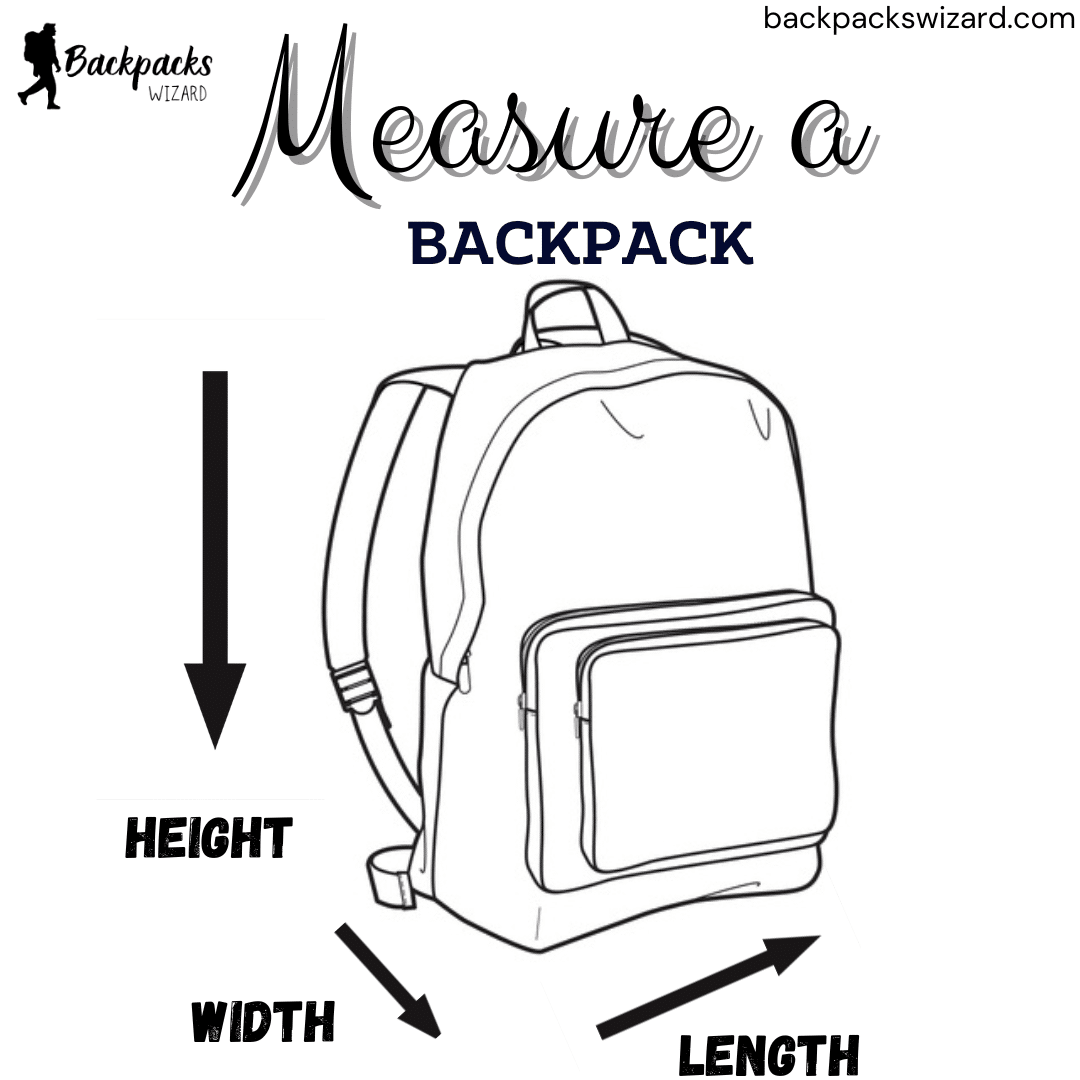
Backpacks are measured using three main external dimensions: height, width, and depth. Manufacturers typically measure the bag when it is empty and standing in its normal shape. These measurements help determine whether a backpack will fit personal belongings, storage spaces, or airline size limits.
Backpack capacity is usually measured separately in liters. A liter measurement estimates the total internal storage space available across the main compartment and additional pockets.
Source: i.pinimg.com
Height
Height measures the backpack from the bottom of the bag to the highest point, usually along the back panel or top handle area.
Width
Width measures the side-to-side distance across the front of the backpack when viewed from the outside.
Depth
Depth measures how far the backpack extends from the front panel to the back panel.
Why External Dimensions Matter
External dimensions determine whether a backpack can fit under an airplane seat, inside a locker, in a vehicle storage area, or comfortably on the user’s back. Two backpacks with the same liter rating may have different outside dimensions because of shape, padding, and construction.
Air travel
Travelers should compare backpack dimensions with airline personal item or carry-on size limits because capacity alone does not determine whether a bag will be accepted.
How Is Backpack Capacity Measured in Liters?
Backpack capacity is measured in liters by calculating the approximate internal volume of all usable storage areas. A liter rating represents space, not weight capacity. A 30-liter backpack can hold about 30 liters of volume, but the amount of weight it can safely carry depends on materials, suspension design, and construction.
Manufacturers may use different methods to calculate capacity, so two backpacks with the same stated volume may not provide identical usable space. Compartments, laptop sleeves, padding, and pockets can reduce the practical storage area.
Source: shuttermuse.com
Small backpacks
Often around 10 to 20 liters, suitable for light daily items such as a wallet, water bottle, and small electronics.
Medium backpacks
Often around 20 to 35 liters, commonly used for commuting, school, and short trips.
Large backpacks
Often 40 liters or more, designed for travel, camping, or carrying larger loads.
How to Estimate Backpack Volume Yourself
A backpack’s approximate volume can be estimated by measuring each compartment’s length, width, and height, then multiplying those measurements to calculate cubic inches or cubic centimeters. The result can be converted into liters, although manufacturer measurements may use specialized methods.
Basic calculation
Multiply length × width × height for each compartment, add the results, and convert the total volume into liters.
How Are Backpack Dimensions Measured Correctly?
To measure a backpack accurately, place it on a flat surface, keep it empty, and measure the main body rather than flexible external parts such as loose straps or compression straps. Measurements should include the full usable shape of the bag but exclude items that are not part of the storage area.
If a backpack has a curved back panel or expandable sections, measurements may vary depending on whether the bag is compressed or expanded. Always use the manufacturer’s stated dimensions when checking strict size requirements.
Source: leisurehiking.com
Step 1: Measure height
Measure vertically from the bottom of the backpack to the highest fixed point.
Step 2: Measure width
Measure the widest part across the front of the backpack.
Step 3: Measure depth
Measure the distance from the front panel to the back panel.
Signs Your Measurement Is Accurate
A correct measurement should match the manufacturer’s listed dimensions closely and should allow you to compare the backpack with your intended storage space or carrying requirements.
Consistent results
Repeating the measurement should produce similar numbers.
How Do Backpack Fit Measurements Work?
Backpack fit measurements focus on the relationship between the backpack and the user’s body. Hiking and outdoor backpacks often use torso length measurements because a properly fitted pack distributes weight more comfortably across the hips and shoulders.
A backpack that is too large or too small may feel uncomfortable even if its storage capacity is suitable. Fit measurements are especially important for heavier loads.
Source: i.ytimg.com
Torso length
Measured from the base of the neck to the top of the hips to help select an appropriate backpack frame size.
Hip belt position
The hip belt should sit around the hip area rather than above or below the correct position.
Common Backpack Measurement Mistakes
Many measurement errors happen because people compare only liters and ignore physical dimensions or body fit. A higher-capacity backpack is not always better if it does not fit the user or match the intended activity.
Ignoring depth
A backpack may have enough volume but be too thick for certain storage areas or travel rules.
Comparing only capacity
Liter ratings do not show the exact shape or accessibility of storage space.
How to Choose the Right Backpack Size Based on Measurements
The right backpack size depends on what you plan to carry and how you will use it. Students, commuters, travelers, and hikers usually need different combinations of capacity and fit.
Use dimensions to confirm physical fit, liters to estimate storage space, and body measurements when selecting backpacks designed for heavier loads.
Source: osgwbag.com
School and daily use
Choose a size that fits books, electronics, and personal items without unnecessary extra bulk.
Travel
Check external dimensions carefully because airlines may restrict bag size regardless of liter capacity.
Hiking
Prioritize torso fit, carrying comfort, and load support in addition to volume.
What to Do If Measurements Do Not Match Your Needs
If a backpack seems too small, check whether compartments are organized efficiently before choosing a larger size. If it feels too large, consider whether unused space will create unnecessary weight or poor fit.
Recheck measurements
Confirm the listed dimensions and compare them with the actual items you need to carry.
Frequently Asked Questions
Q
Are backpacks measured by length, width, and height?
Yes. Most backpacks are measured by height, width, and depth. These external measurements describe the physical size of the bag and help determine whether it fits a specific space or requirement.
Q
What does a 30L backpack measurement mean?
A 30L backpack measurement refers to approximate internal storage capacity. It does not mean the backpack weighs 30 pounds or has a specific external size.
Q
How do I measure my backpack for an airline?
Measure the backpack’s height, width, and depth at its largest points, including any parts that count toward the airline’s size rules. Compare those measurements with the airline’s current requirements before traveling.
Q
Are backpack liters and dimensions the same thing?
No. Dimensions describe the outside size of the backpack, while liters describe the estimated internal storage volume.
Q
Why do two backpacks with the same liters feel different in size?
Different designs use space differently. Padding, compartments, frame systems, and pocket placement can change how much usable storage a backpack provides.
✦ Wrapping Up
Conclusion
Backpacks are measured using external dimensions, internal volume capacity, and fit measurements. Understanding the difference between these measurements helps shoppers select a backpack that matches their activity, storage needs, and body size.
Before choosing a backpack, compare the measurements that matter most for your situation. A correctly sized backpack should provide enough space while remaining comfortable and practical to carry.
💡 Key Takeaway
Check height, width, depth, and liters together instead of relying on a single measurement when choosing a backpack.