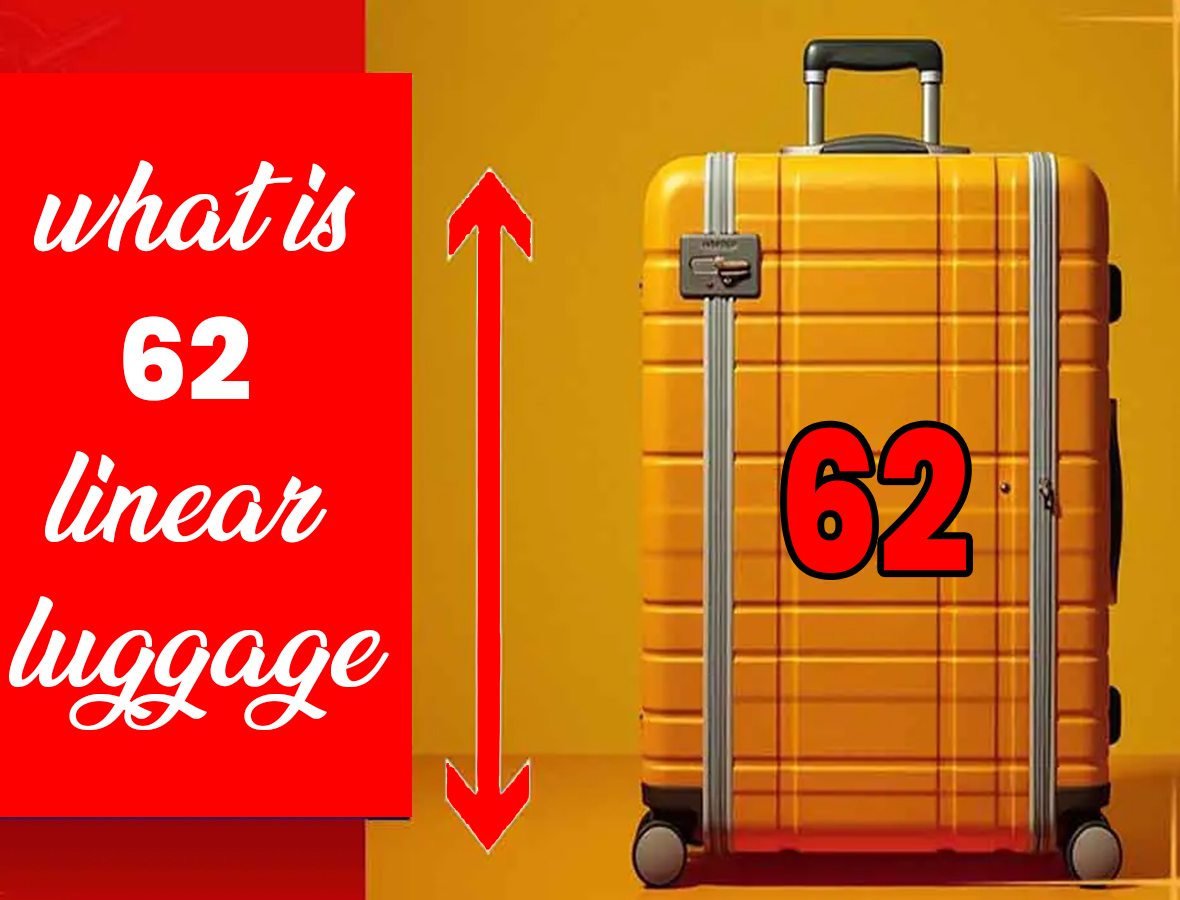
A 62 linear inches suitcase usually measures about 27 to 30 inches tall and is considered a large checked suitcase. Airlines calculate this size by adding the length, width, and height together, not by measuring one side alone.
For travelers flying within or from the United States, a 62 linear inches suitcase is the common maximum size allowed for standard checked baggage on many major airlines. The measurement refers to the total outside dimensions of the bag: length plus width plus height. A suitcase that measures 30 x 20 x 12 inches, for example, equals 62 linear inches.
Understanding linear inches helps travelers choose luggage that fits airline rules before arriving at the airport. The exact allowed size, weight limit, and fees depend on the airline and fare type, so travelers should always confirm current baggage requirements before flying.
A 62 linear inches suitcase is not a suitcase that is 62 inches long. Linear inches are a combined measurement used by airlines to describe the total outside size of luggage. To calculate it, add the suitcase length, width, and height together.
For example, a suitcase measuring 30 inches high, 20 inches wide, and 12 inches deep has a total size of 62 linear inches (30 + 20 + 12 = 62). Different combinations can reach the same total measurement.
Source: newyorkcityadvisor.com
Measurement formula
Linear inches = length + width + height. Measure all three outside dimensions and add them together.
Common use
Airlines use linear inches to set maximum checked baggage dimensions instead of limiting only one side of the suitcase.
Example Dimensions of a 62 Linear Inches Suitcase
A 62-inch linear suitcase can have different shapes while keeping the same total measurement. The following examples show how dimensions can vary.
Large rectangular suitcase
30 x 20 x 12 inches equals 62 linear inches and represents a common large checked suitcase size.
Taller suitcase design
29 x 21 x 12 inches also equals 62 linear inches and may provide similar packing capacity.
How Large Is a 62 Linear Inches Suitcase Compared With Other Sizes?
A 62 linear inches suitcase is generally considered large luggage designed for checked baggage. It provides more packing space than carry-on bags and medium suitcases but must still stay within airline size limits.
The actual capacity depends on the suitcase shape, shell design, wheel system, and internal compartments. Two bags with the same linear measurement may hold different amounts of clothing and gear.
Source: backpacknerds.com
Carry-on suitcase
Usually much smaller and designed to fit airline cabin requirements rather than checked baggage limits.
Medium checked suitcase
Often smaller than 62 linear inches and suitable for shorter trips or lighter packing needs.
Large checked suitcase
Commonly falls near the 62 linear inch limit and works for longer trips or travelers needing more storage.
Who Typically Needs a 62 Linear Inches Suitcase?
A 62 linear inches suitcase is often useful for travelers taking extended vacations, international trips, business travel with bulky equipment, or family travel where one large checked bag is preferred.
Longer trips
Provides additional room for clothing, shoes, and personal items compared with smaller luggage.
Family packing
Can help combine multiple travelers’ belongings into fewer checked bags when weight limits allow.
How to Measure a Suitcase for 62 Linear Inches
To check whether a suitcase meets the 62 linear inch limit, measure the outside dimensions after the bag is packed. Include fixed wheels, handles, and exterior parts because airlines generally measure the complete outside size.
Use a tape measure and record the longest points of the suitcase rather than relying only on manufacturer labels. Different brands may measure luggage without including certain external features.
Source: luggageguide.co.uk
Step 1: Measure height
Measure from the bottom of the wheels to the highest fixed point of the suitcase.
Step 2: Measure width
Measure the widest side-to-side distance of the suitcase.
Step 3: Measure depth
Measure the front-to-back thickness, including expanded sections if they are being used.
Step 4: Add measurements
Add height, width, and depth together to find the linear inch total.
Common Measurement Mistakes
Many travelers measure only the suitcase body and forget wheels or handles. This can create a difference between the listed size and the airline’s actual measurement.
Ignoring wheels
Wheels add to the overall outside dimensions and should usually be included.
Measuring empty luggage only
Expandable luggage can become larger after packing and opening expansion panels.
Will a 62 Linear Inches Suitcase Be Accepted by Airlines?
Many airlines use 62 linear inches as the maximum combined dimension for standard checked baggage, especially in the United States. However, acceptance depends on the airline’s current baggage policy, route, ticket type, and weight restrictions.
A suitcase that meets the size limit may still require additional fees if it exceeds the airline’s weight allowance. Oversized or overweight bags may be handled differently depending on the carrier.
Source: miro.medium.com
Check airline rules
Confirm the baggage policy for the specific airline and flight before traveling.
Check weight separately
Size compliance does not guarantee that the suitcase meets weight requirements.
What Fits Inside a 62 Linear Inches Suitcase?
A 62 linear inches suitcase typically provides enough room for several days to multiple weeks of travel depending on clothing type, packing style, and personal needs.
Clothing
Can usually hold a larger wardrobe than carry-on or medium luggage.
Shoes and accessories
Extra space can accommodate bulkier personal items when packed efficiently.
Frequently Asked Questions
Q
Is a 62 linear inches suitcase considered large luggage?
Yes. A 62 linear inches suitcase is generally considered a large checked suitcase. It is near the maximum size allowed for many standard checked bags.
Q
What are the dimensions of a 62 linear inches suitcase?
There is no single dimension. Common examples include 30 x 20 x 12 inches or other combinations where the length, width, and height add up to 62 inches.
Q
Can a 62 linear inches suitcase be a carry-on?
No. A 62 linear inches suitcase is typically too large for airline carry-on requirements and is designed for checked baggage.
Q
Do wheels count when measuring linear inches?
Usually, yes. Airlines generally consider the full outside dimensions of the bag, including wheels and fixed handles.
Q
How many pounds can a 62 linear inches suitcase hold?
The size measurement does not determine weight capacity. Airlines set separate weight limits, and travelers should check their airline’s baggage rules before packing.
✦ Wrapping Up
Conclusion
A 62 linear inches suitcase is a large checked bag that measures 62 inches when its length, width, and height are added together. A common example is a suitcase measuring about 30 x 20 x 12 inches.
Before flying, measure the complete suitcase and confirm the airline’s current size and weight rules. Correct measurement helps avoid unexpected baggage fees and airport delays.
💡 Key Takeaway
Measure your suitcase using length + width + height, include wheels and handles, and compare the total with your airline’s checked baggage allowance before your trip.
Which camera is best for vlogging and photography? Compare key features, image quality, and video performance to choose the right camera for your content.