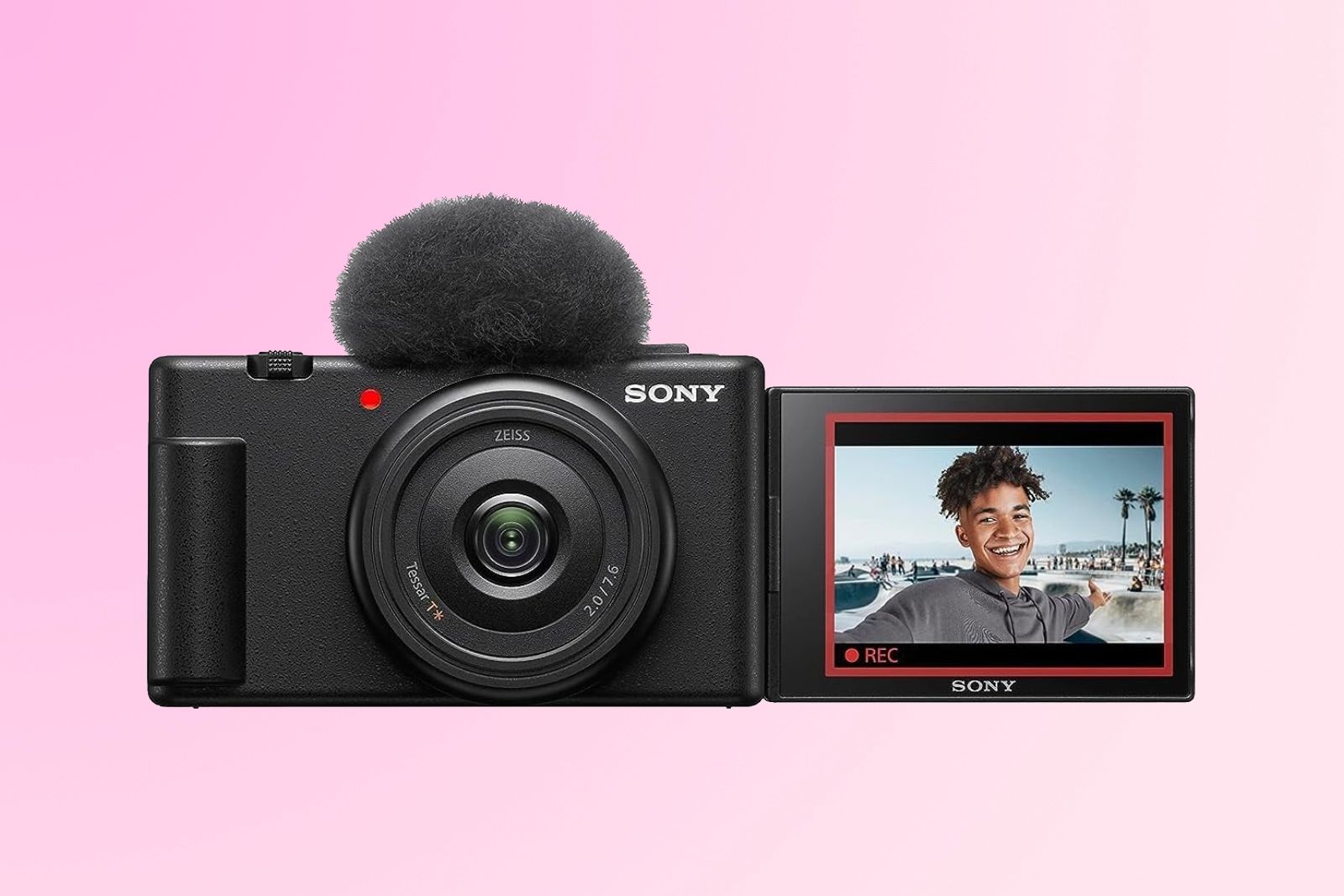
For most vloggers in the United States, the Sony ZV-1 II is the best small, ready-to-use vlogging camera. It has a wide lens, a flip-out screen, a built-in microphone, fast autofocus, and a compact body.
The best choice changes with your style:
- Best compact camera for most vloggers: Sony ZV-1 II
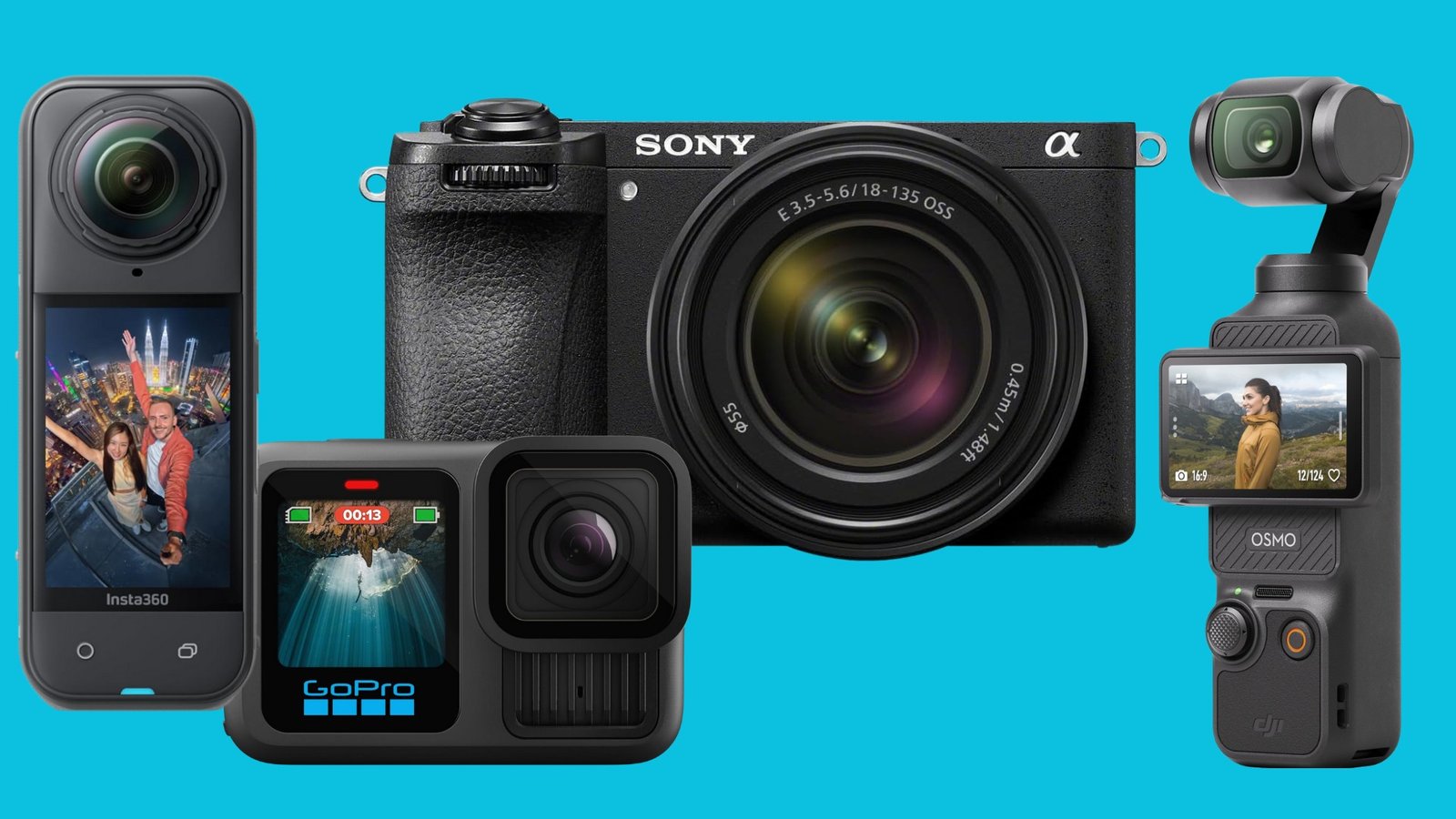
- Best camera for walking and travel: DJI Osmo Pocket 3
- Best interchangeable-lens camera: Sony ZV-E10 II
- Best beginner camera for creators who want to grow: Canon EOS R50
- Best action camera for outdoor videos: GoPro HERO13 Black
- Best phone-sized option: Your current iPhone or Android phone, paired with a small microphone
This guide compares the features that matter most in real U.S. vlogging settings, including home videos, road trips, city walks, family content, food videos, and YouTube production.
What Makes a Camera Good for Vlogging?
A good vlogging camera makes it easy to record clear video, sharp faces, clean sound, and stable footage without a large crew. The camera should also be simple to carry and quick to set up.
The most useful features are:
- A screen that faces you
- Reliable face and eye autofocus
- A wide field of view
- Good audio options
- Useful image stabilization
- Long battery life
- A light body
- Simple file transfer
- 4K video
- A lens that fits your filming style
A camera with the highest resolution is not always the best vlogging camera. A heavy camera may produce great video but become tiring during a long walk through New York City, Los Angeles, Chicago, or a national park.
The key trade-off
Every vlogging camera balances three things:
- Image quality
- Portability
- Ease of use
Large cameras often offer better low-light quality and lens choices. Small cameras are easier to carry and use. Action cameras handle movement and weather well but usually offer less control over background blur.
The best camera is the one you can carry, understand, and use often.

Best Vlogging Cameras at a Glance
The table below compares well-known camera types and models. Features are based on manufacturer specifications and documented product functions. This is not a hands-on lab ranking.
| Camera | Best for | Main strength | Main limit |
|---|---|---|---|
| Sony ZV-1 II | Most beginners and daily vloggers | Wide lens, strong autofocus, small body | Fixed lens and limited battery life |
| DJI Osmo Pocket 3 | Walking, travel , and moving shots , and moving shots |
Built-in mechanical gimbal | Small sensor and less traditional camera control |
| Sony ZV-E10 II | Creators who want to upgrade | Interchangeable lenses and strong video features | Needs more lens and accessory planning |
| Canon EOS R50 | Beginners who want photos too | Good autofocus and simple controls | Larger than a compact vlogging camera |
| GoPro HERO13 Black | Action and outdoor filming | Rugged design and very wide views | Less natural low-light video |
| iPhone or Android phone | Casual creators and short videos | Always available and easy to share | Audio, heat, and storage can limit longer shoots |
Quick recommendation
choose the Sony ZV-1 II if you want a small camera with a simple setup.
Choose the DJI Osmo Pocket 3 if you often walk, travel, or film yourself while moving.
Choose the Sony ZV-E10 II or Canon EOS R50 if you want to change lenses and improve your video system over time.
Choose a GoPro if you film biking, skiing, boating, hiking, or other activities where a standard camera may be unsafe to carry.
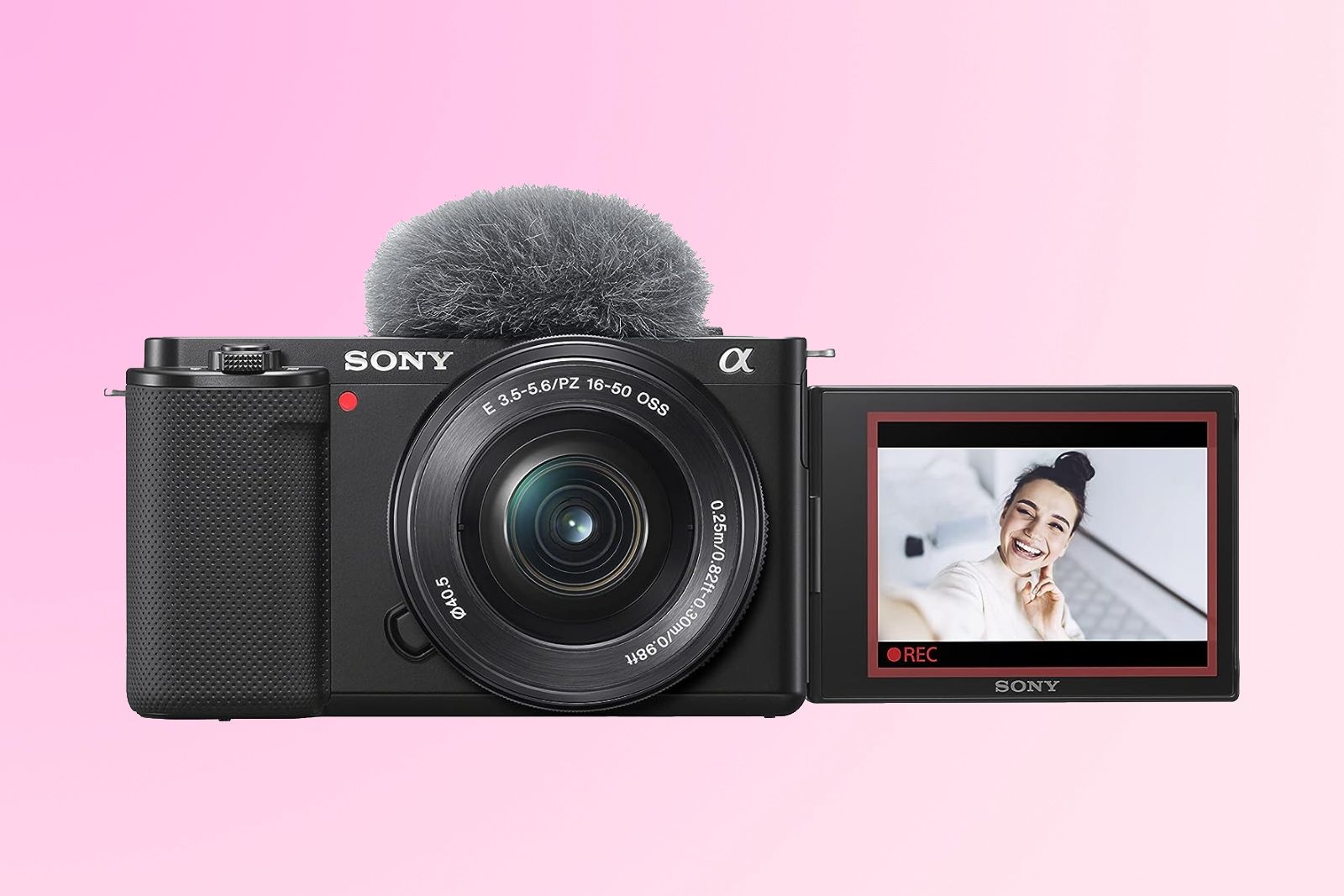
The Sony ZV-1 II: Best Compact Vlogging Camera for Most People
The Sony ZV-1 II is a strong choice for beginners, solo creators, and travelers who want good video without changing lenses.
It uses a fixed wide-angle lens. That helps when you hold the camera at arm’s length. A wide view can include your face and more of the room, street, or landscape behind you.
Why it works well for vlogging
The ZV-1 II includes features made for creators:
- A side-opening vari-angle screen
- Face-priority autofocus
- Eye autofocus
- A built-in directional microphone
- A supplied windscreen
- 4K video recording
- A compact body
- Background defocus controls
- Product showcase features for videos about objects
The camera’s fixed lens also removes one common beginner problem: choosing the wrong lens.
Limits to consider
The ZV-1 II is not the best choice for every creator. Its small body has less room for a large battery. You may need spare batteries or a USB power source for long recording sessions.
Its small sensor may also show more noise than a larger camera in a dark room. For indoor videos, place a soft light near your face. Better lighting often improves the result more than a costly camera upgrade.
Best fit: Daily vlogs, home videos, travel clips, product videos, and beginner YouTube channels.

The DJI Osmo Pocket 3: Best for Walking and Travel Vlogs
The DJI Osmo Pocket 3 is a pocket-sized camera with a built-in three-axis mechanical gimbal. The gimbal helps keep the image level and smooth as you walk.
This makes it different from a normal compact camera. A normal camera may depend on electronic stabilization or lens stabilization. The Pocket 3 physically moves the camera to reduce many small shakes.
Why it stands out
The Pocket 3 is useful for:
- Walking tours
- Travel diaries
- Street videos
- Family trips
- Live-style updates
- Selfie videos while moving
- Indoor and outdoor clips
Its rotating screen can switch between landscape and portrait recording. That helps creators who publish both YouTube videos and vertical videos for platforms such as TikTok, Instagram, and YouTube Shorts.
The larger sensor in the Pocket 3, compared with many older pocket cameras, can also help in dim scenes. It still needs good light for the cleanest results.
Limits to consider
The gimbal is not a magic shield. Sudden impacts, strong wind, and fast motion can still affect the image. The moving gimbal head also needs care during storage and transport.
The Pocket 3 is less flexible than a camera with interchangeable lenses. You cannot attach a long lens for distant subjects or a bright lens for a strong blurred background.
Best fit: Creators who move often and want smooth video with little setup.
The Sony ZV-E10 II: Best for Creators Who Want to Grow
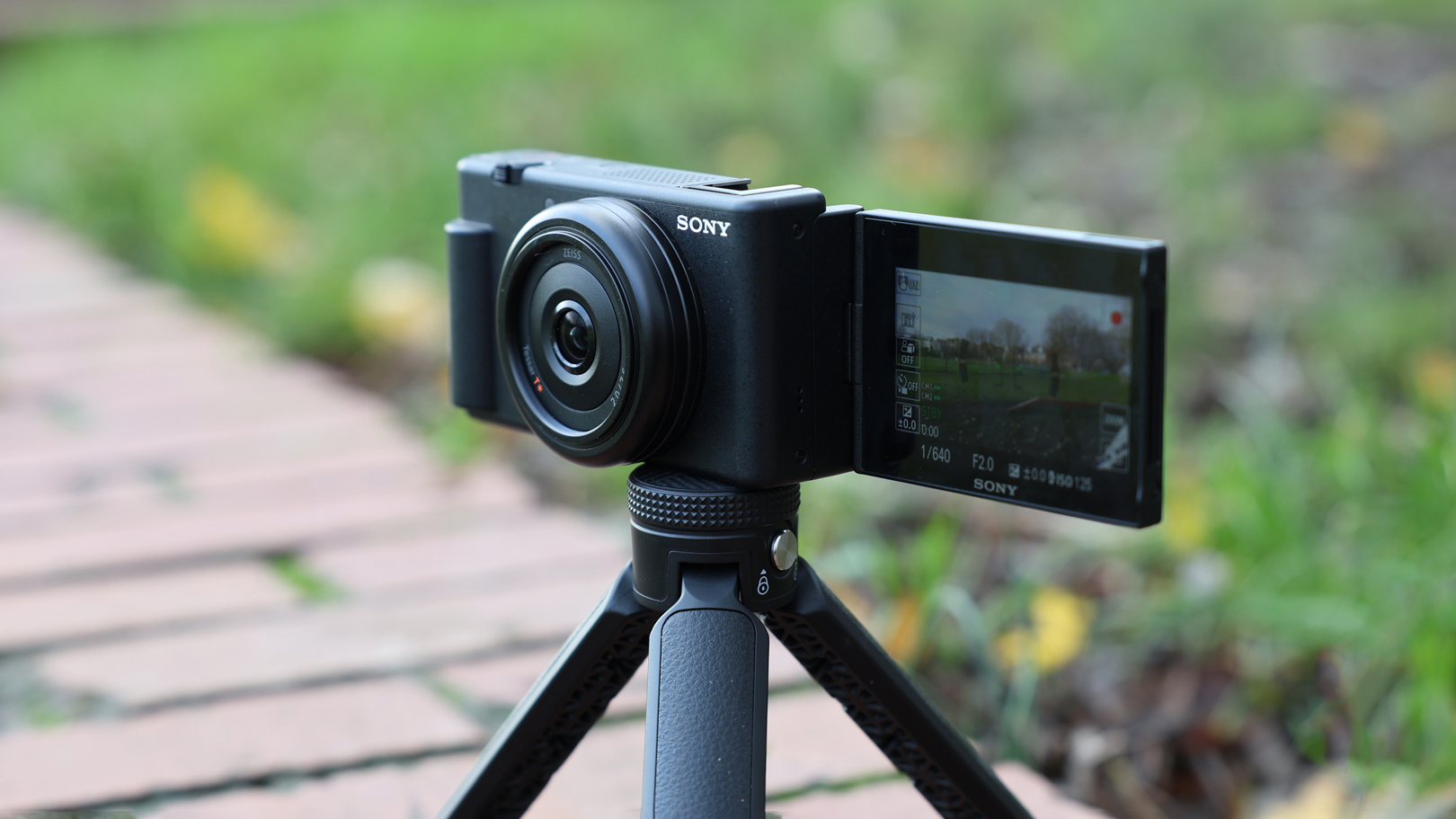
The Sony ZV-E10 II is an interchangeable-lens mirrorless camera built for video creators. It offers more room to grow than a fixed-lens compact camera.
You can change lenses to suit the scene. A wide lens can help with handheld vlogging. A bright prime lens can help indoors. A telephoto lens can bring distant subjects closer.
Why it is a strong long-term choice
An interchangeable-lens camera gives you control over:
- Field of view
- Background blur
- Low-light performance
- Camera balance
- Audio accessories
- Lens design
- Shooting style
The ZV-E10 II also has a flip-out screen, creator-focused controls, and Sony’s established autofocus system. It is a good choice for a creator who may later add interviews, studio videos, tutorials, or commercial work.
The cost beyond the camera
A camera body is only part of the system. You may also need:
- A wide lens
- Extra batteries
- A memory card
- A small tripod or grip
- A microphone
- A camera bag
- A light
That can make the total cost much higher than a compact camera. The lens also affects the final image more than many beginners expect.
Best fit: Serious YouTube creators, home studio users, and people who want to build a lens system.

The Canon EOS R50: Best Beginner Hybrid Camera
The Canon EOS R50 is a small mirrorless camera that can record video and take still photos. It suits creators who want one camera for vlogs, family events, travel photos, and general use.
Canon’s Dual Pixel CMOS autofocus is designed to track subjects such as people. The camera also has a vari-angle screen and supports interchangeable lenses.
Why beginners may prefer it
The R50 offers:
- Simple physical controls
- A familiar camera layout
- Strong subject detection features
- Interchangeable lenses
- A compact body
- Good still-photo performance
- A screen that faces forward
It may be easier to use than a professional camera with many advanced controls. At the same time, it offers more flexibility than a fixed-lens compact model.
What to watch for
The standard kit lens may not be wide enough for every handheld selfie shot. Test the framing before recording a full video.
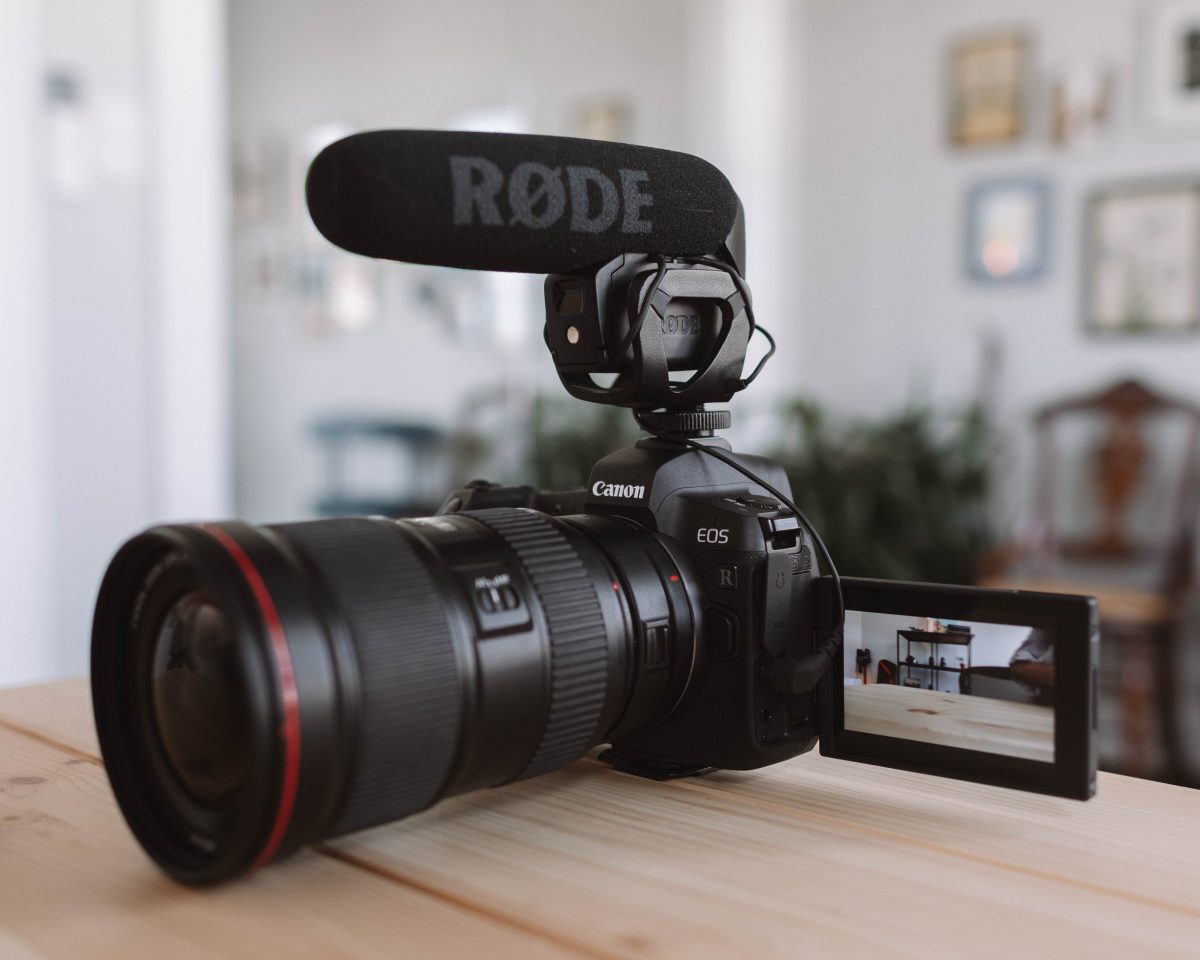
The camera is also larger than a pocket camera. Add a microphone and lens, and it becomes less convenient for a long walking vlog.
Best fit: Beginners who want both high-quality video and still photos.
The GoPro HERO13 Black: Best for Action Vlogging
A GoPro is the best vlogging camera for many high-motion and outdoor activities. Its rugged body, wide view, and strong stabilization suit sports and travel.
Use a GoPro for:
- Biking
- Skiing
- Snowboarding
- Surfing
- Kayaking
- Hiking
- Motorcycle rides
- Theme park rides
- Hands-free point-of-view footage
A GoPro can capture scenes that would put a mirrorless camera at risk.
Its main weakness
Action cameras use very wide lenses and small sensors. Faces can look stretched near the edge of the frame. Video quality may also drop in a dark room or after sunset.
A GoPro is usually not the best tool for a talking-head video in a bedroom or office. A compact camera or mirrorless camera will often produce a more natural face and softer background.
Best fit: Active creators who need a tough camera and strong electronic stabilization.
How to Choose the Best Vlogging Camera for Your Style
Start with the type of video you make most often. Do not choose a camera only by resolution or brand.
Choose by filming style
| Your main video type | Best camera type |
|---|---|
| Talking to the camera at home | Compact camera or mirrorless camera |
| Walking and travel | DJI Osmo Pocket 3 or compact camera |
| Sports and outdoor action | GoPro or another action camera |
| Studio and YouTube videos | Mirrorless camera |
| Product demonstrations | Sony ZV-1 II or mirrorless camera |
| Photos and video | Canon EOS R50 or another hybrid camera |
| Short vertical videos | Phone, Pocket 3, or compact camera |
| Low-light indoor work | Mirrorless camera with a bright lens |
Think about distance from the camera
A wide lens matters when you hold the camera close to your face. If the lens is too narrow, your face may fill the frame and leave little room for the background.
A tripod gives you more distance. That means you can use a less wide lens and still fit yourself in the shot.
Think about sound before video quality
Viewers often forgive a soft image. They are less likely to tolerate words they cannot hear.
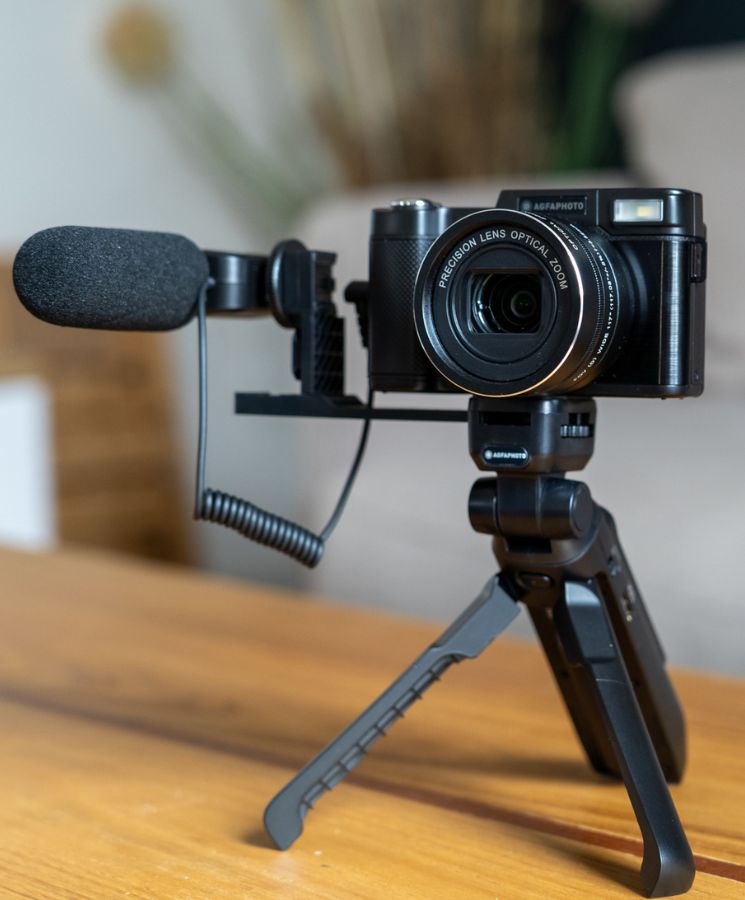
A camera should have a useful built-in microphone or support an external microphone. In loud streets, wind, restaurants, and busy events, an external microphone can make a major difference.
Think about recording time
Long videos use more storage and battery power. Before a long shoot, check:
- Battery charge
- Memory card space
- Camera heat
- File format
- Power bank support
- Backup storage
A camera may support 4K but still be inconvenient for long clips. Short videos and long interviews create different demands.
Is 4K Necessary for Vlogging?
4K is useful, but it is not required for every vlog.
4K video gives you more detail than 1080p video. It also gives you room to crop or reframe a shot during editing. This can help when the camera is fixed on a tripod.
1080p may be enough when:
- You want smaller files
- Your computer is slow
- You publish short clips
- You need longer recording times
- Your audience mainly watches on phones
A camera’s 4K mode may also use more battery and storage. Check the camera’s manual for recording limits, frame rates, crop factors, and heat conditions.
The practical choice is simple: use 4K when you need extra detail or editing room. Use 1080p when small files and easy editing matter more.

What Accessories Does a Vlogger Need?
You can start with a camera, battery, memory card, and a way to charge it. Add accessories only when they solve a real problem.
Useful first accessories
- Extra battery: Helps during travel and long shoots.
- Fast memory card: Needed when the camera requires a specific speed class.
- Small tripod or grip: Helps with stable shots and hands-free filming.
- External microphone: Improves speech in many noisy or windy places.
- Windscreen: Reduces wind noise outdoors.
- Small LED light: Helps in dark rooms.
- Camera bag: Protects the camera and keeps items together.
- USB-C power bank: Extends recording time when the camera supports external power.
Do not buy every accessory at once. Record a few videos first. Then fix the problem you notice most.
A simple starter setup
For a beginner, a practical setup may include:
- A compact vlogging camera
- One spare battery
- A compatible memory card
- A small grip or tripod
- A microphone if the built-in sound is not clear
This setup is easier to manage than a large rig with several lights, monitors, and cables.
Common Vlogging Camera Mistakes
The most common mistake is buying a camera before deciding how and where you will use it.
Other mistakes include:
Choosing resolution over sound
A sharp video with loud wind noise still feels poor. Test your audio before recording a full day.
Using a narrow lens for handheld shots
A narrow lens can cut off your face or make the camera feel too close. Choose a wide lens or move the camera farther away.
Ignoring stabilization
If you walk while filming, stabilization matters. If the camera stays on a tripod, stabilization matters less.
Forgetting the total cost
Include the lens, microphone, batteries, storage, tripod, light, and bag in your budget.
Buying a camera that is too heavy
A heavy kit may stay at home. A smaller camera that you carry every day may produce more useful footage.
Shooting in poor light
Small cameras perform better with good light. Face a window or use a soft light. Avoid placing a bright window directly behind you.
Failing to back up files
Memory cards can fail or be lost. Copy important video files to a computer or reliable storage soon after filming.

How Much Should You Spend on a Vlogging Camera?
The right budget depends on whether you already own a phone, microphone, tripod, or lenses.
A simple budget plan looks like this:
- Low budget: Use a current phone, add a small microphone, and improve the light.
- Mid-range budget: Buy a compact vlogging camera with a spare battery and small tripod.
- Higher budget: Buy a mirrorless camera, a suitable wide lens, microphone, and light.
- Special-use budget: Choose an action camera or gimbal camera for movement and outdoor work.
Do not spend more on a camera than you can support with storage, editing, and accessories. A camera is only useful if you can move the files, edit them, and publish them.
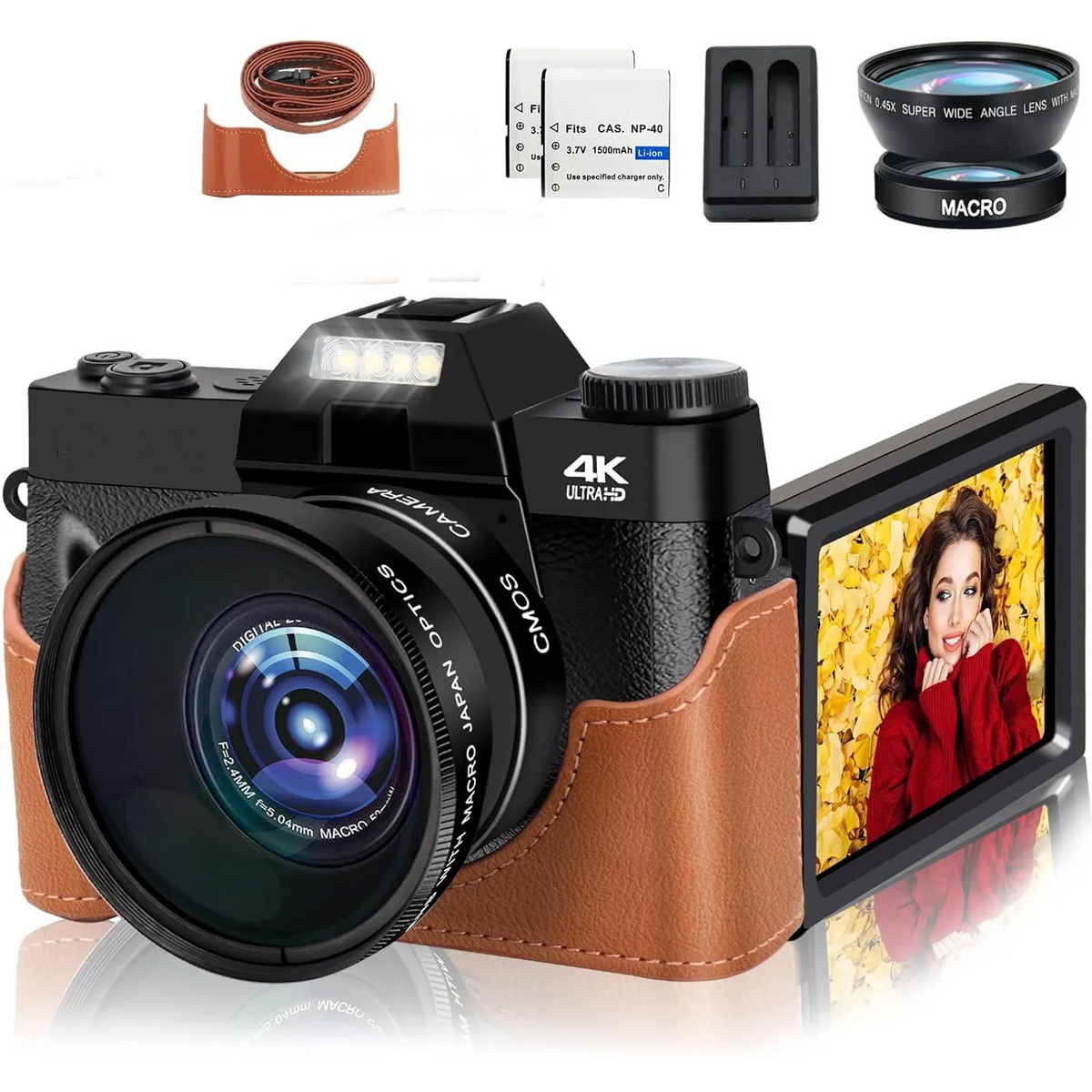
Prices and package contents change in the U.S. Check the manufacturer and major U.S. retailers before buying. A kit may include a lens, battery, charger, or microphone in one package and exclude those items in another.
Best Vlogging Camera: Final Recommendation
For most U.S. beginners, the Sony ZV-1 II is the best all-around compact vlogging camera. It is small, easy to carry, and designed around self-recording.
The DJI Osmo Pocket 3 is better for walking and travel footage because its built-in gimbal smooths movement.
The Sony ZV-E10 II is better for creators who want interchangeable lenses and a system they can expand.
The Canon EOS R50 is a good hybrid choice for people who want both photos and video.
The GoPro HERO13 Black is the right tool for action, weather, and high-motion filming.
Before buying, decide where you will film, how far the camera will be from you, whether you need smooth walking footage, and how much gear you want to carry. Those answers matter more than a camera’s headline specification.
FAQs About Vlogging Cameras
What is the best camera for YouTube beginners?
The Sony ZV-1 II is a strong beginner choice because it combines a forward-facing screen, wide lens, autofocus, and creator-focused controls in a small body. The Canon EOS R50 is better if you also want interchangeable lenses and still photos.
Is a phone good enough for vlogging?
Yes. A recent iPhone or Android phone can produce useful vlog video in good light. Add a small microphone and tripod before buying a dedicated camera. A camera becomes more useful when you need better audio options, longer recording comfort, lens control, or stronger background blur.
Which is better for vlogging: a phone or a camera?
A phone is easier to carry and share. A dedicated camera may offer better controls, longer ergonomic use, a larger sensor, and external microphone support. The better choice depends on your filming style and budget.
Do I need a microphone for vlogging?
You do not always need one. A built-in microphone can work in a quiet room. An external microphone is more useful outdoors, near traffic, in crowds, or when the camera is several feet away.
What camera is best for low-light vlogging?
A mirrorless camera with a bright lens is usually the strongest option. Good lighting is still important. A larger sensor can help, but it cannot fully replace a light placed near the subject.
Should I buy a camera with image stabilization?
Buy one if you film while walking or holding the camera. If most videos use a tripod, stabilization is less important. A mechanical gimbal, optical stabilization, and electronic stabilization work in different ways, so check the specific camera’s manual.
Conclusion
The best vlogging camera is not the most expensive model. It is the camera that fits your movement, light, sound, budget, and editing needs.
For a simple compact setup, choose the Sony ZV-1 II. For smooth travel walks, choose the DJI Osmo Pocket 3. For a growing video system, choose the Sony ZV-E10 II or Canon EOS R50. For action, choose a GoPro.
Start with the camera that removes your biggest filming problem. Then add accessories only when your videos show you need them.
Recent Posts
What is a vlogging camera? Learn its key features, benefits, and how to choose the right camera for creating better videos and engaging content.
Learn How Many Pounds Can My Checked Bag Be, including common airline weight limits, overweight fees, exceptions, and tips to avoid extra charges before your flight.