Choose a backpacking pack by matching the pack volume, fit, suspension system, and features to your trip length, body size, gear weight, and hiking conditions.
Backpackers in the United States face a wide range of conditions, from short trips in the Appalachian Mountains to extended routes in the Rocky Mountains, Sierra Nevada, and Pacific Northwest. The right backpacking pack should carry your required gear comfortably without adding unnecessary weight or creating pressure points during long days on the trail.
The best way to choose a backpacking pack is not to start with brand names or extra features. Start by estimating your gear volume, measuring your torso and hip size, deciding how much weight you normally carry, and selecting a pack designed for your style of backpacking. A pack that fits correctly can improve comfort, stability, and efficiency on multi-day hikes.
The correct backpack volume depends mainly on how many days you will travel, the equipment you carry, and the conditions you expect. A larger pack is not always better because extra empty space can encourage unnecessary weight, while a pack that is too small may force poor packing decisions.
Most backpacking packs are measured in liters. Capacity recommendations are approximate because hikers use different shelters, sleeping systems, cooking equipment, and clothing layers.
Source: storage.googleapis.com
Weekend trips
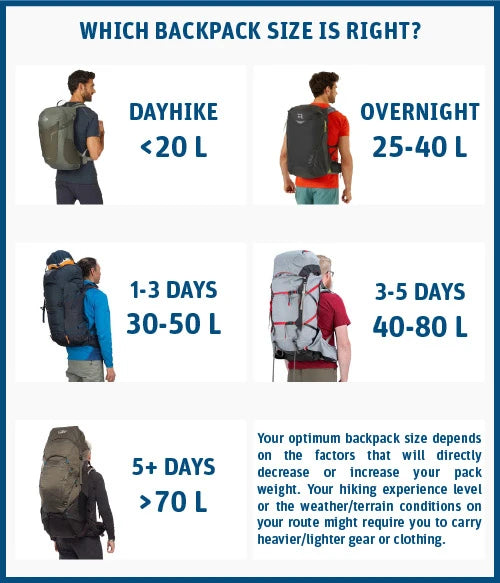
A 35 to 50 liter pack often works for overnight or two-night trips when using compact gear and carrying limited food.
Multi-day backpacking
A 50 to 70 liter pack is commonly suitable for trips lasting several days, especially when carrying more food, clothing, or colder-weather equipment.
Extended expeditions
Packs above 70 liters may be useful for long trips, winter conditions, remote routes, or situations requiring additional supplies.
Consider Gear Volume Before Pack Capacity
Two hikers may need different pack sizes for the same trail because their equipment choices differ. A backpacker using a compact shelter, lightweight sleeping bag, and smaller cooking system may fit everything into a smaller pack than someone carrying traditional equipment.
Smaller gear setup
Lightweight equipment usually reduces the required pack volume and total carried weight.
Cold-weather conditions
Winter trips often require more insulation, clothing, and safety equipment, increasing space requirements.
Measure Backpack Fit Before Buying
A backpack that fits your body correctly can make a heavier load feel more manageable. The most important measurements are torso length and hip circumference because backpack suspension systems are designed around these dimensions.
Do not choose a pack only by your height or clothing size. People with the same height can have different torso lengths, shoulder widths, and hip shapes.
Source: k2.com.au
Torso length
Measure from the base of your neck to the top of your hip bones to determine the correct pack frame size.
Hip belt fit
The hip belt should sit comfortably around the hip bones and provide secure support without restricting movement.
Shoulder straps
Shoulder straps should contact your shoulders without carrying excessive weight when the hip belt is properly adjusted.
Adjust the Backpack After Loading It
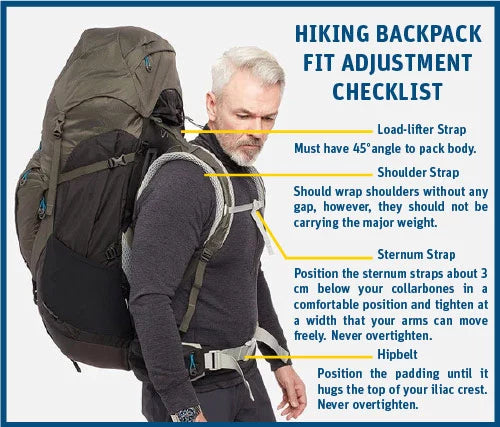
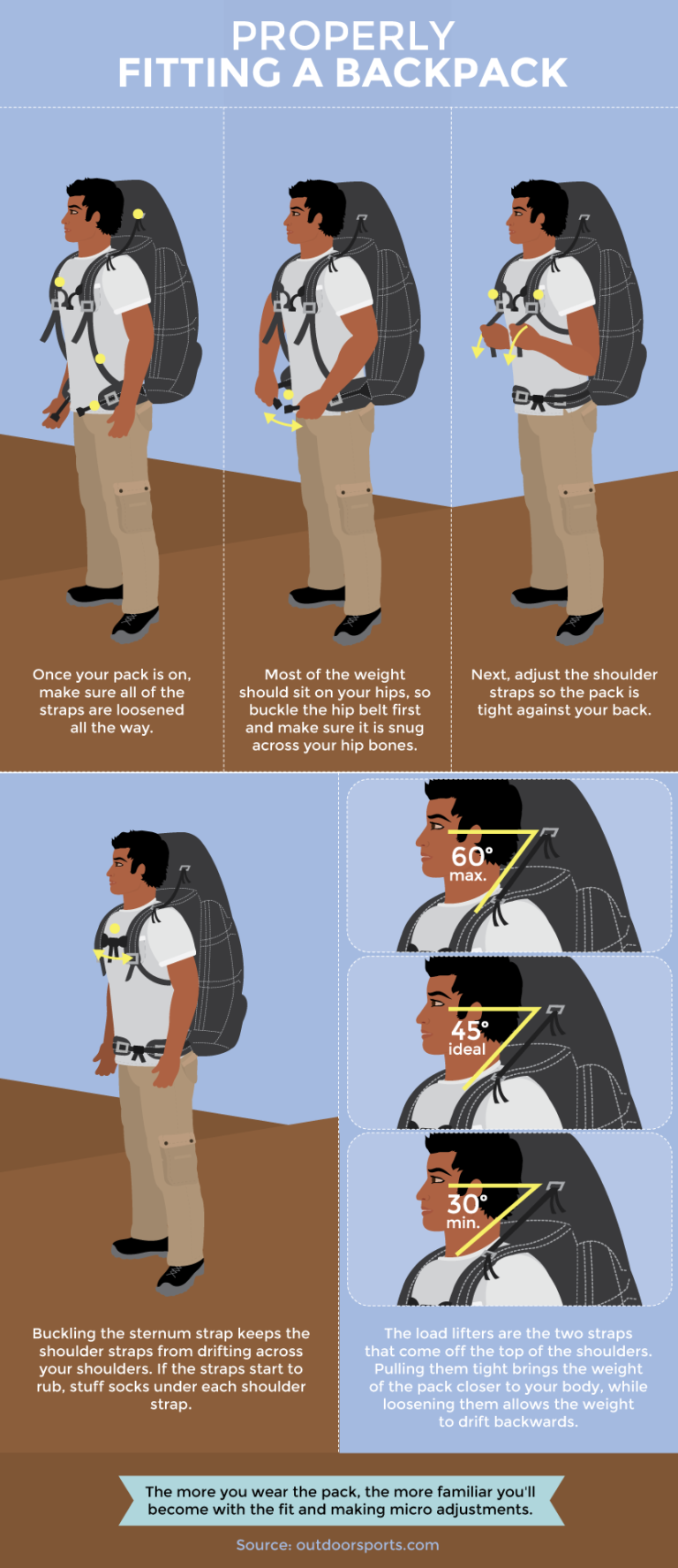
A backpack should be adjusted while carrying a realistic load. Load lifter straps, shoulder straps, hip belt tension, and sternum strap position can affect stability and comfort during hiking.
Signs of correct fit
The pack feels stable, weight is balanced, and there are no sharp pressure points.
Signs of poor fit
Painful shoulders, rubbing areas, shifting loads, or numbness may indicate adjustment problems or an incorrect size.
Choose the Right Backpack Frame and Suspension System
The frame and suspension system determine how a backpack carries weight. Backpacking packs are generally available with internal frames, lightweight frames, or frameless designs.
For most traditional backpacking trips, a framed pack provides better load support and stability when carrying heavier equipment.
Source: cascadedesigns.com
Internal frame packs
These are common backpacking choices because they provide support, stability, and close body contact for trail movement.
Ultralight packs
Lightweight packs can reduce carried weight but may require lighter equipment loads and careful packing.
Frameless packs
These are usually intended for experienced hikers carrying lighter loads.
Match the Pack to Your Expected Load
A backpack designed for lighter loads may not remain comfortable when filled with heavy equipment. Check the manufacturer’s recommended load range and compare it with your typical carried weight.
Heavy loads
Choose stronger suspension support when carrying larger amounts of food, water, winter gear, or group equipment.
Light loads
A lighter pack may improve efficiency when your total gear weight is intentionally reduced.
Evaluate Backpack Features That Affect Daily Use
Backpacking pack features should support how you travel rather than add unnecessary complexity. Useful features depend on your route, climate, and personal preferences.
Source: bearfoottheory.com
Top-loading versus panel access
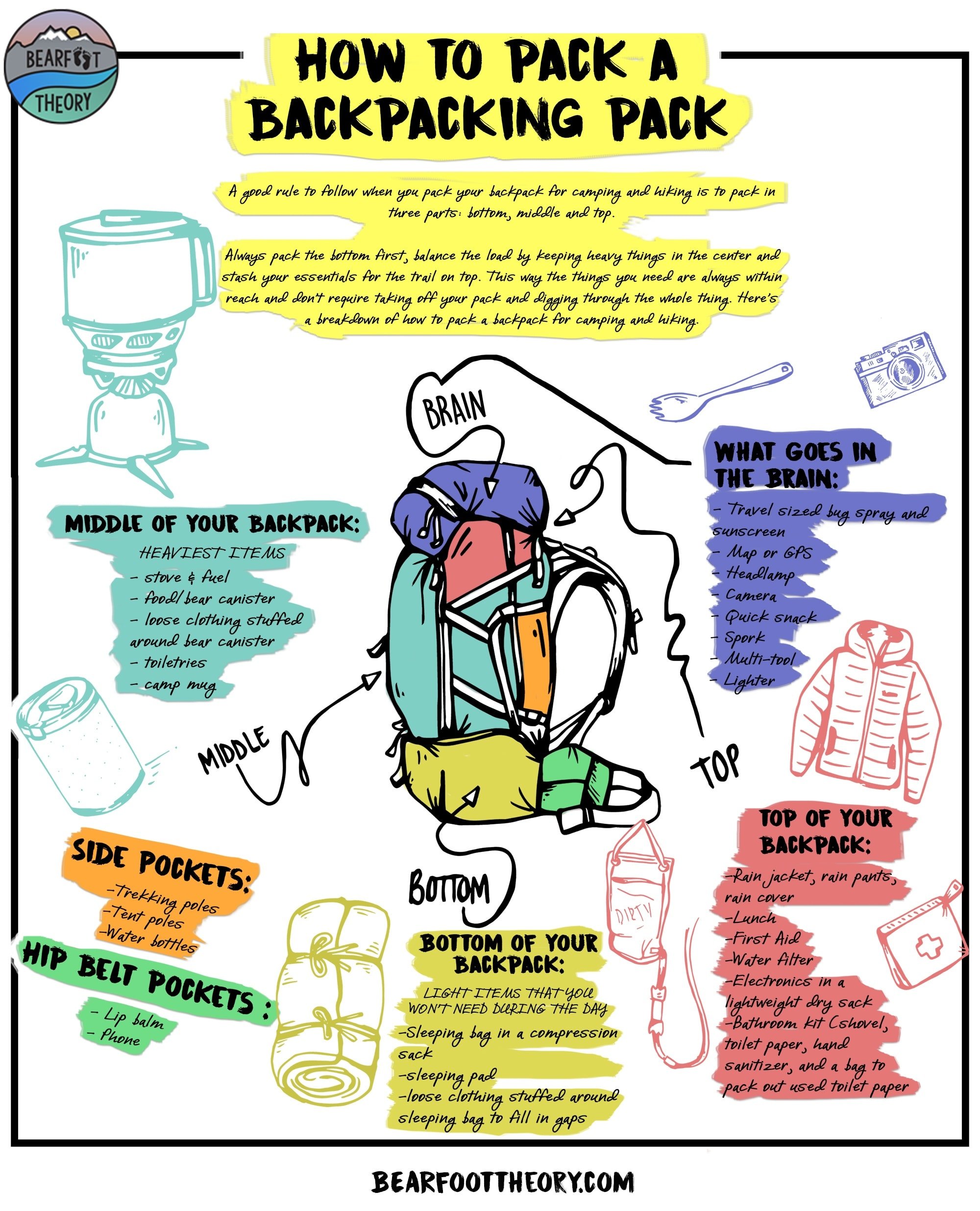
Top-loading packs are common for backpacking, while panel access can make organization easier.
External pockets
Side and hip belt pockets provide quick access to water bottles, snacks, maps, or small items.
Hydration compatibility
Many packs include hydration reservoir sleeves, but hikers should verify compatibility with their preferred system.
Weather protection
A rain cover or waterproof liner may help protect gear, although many backpack materials are not completely waterproof.
Avoid Choosing Features You Do Not Need
Extra zippers, compartments, and built-in accessories can increase weight and complexity. Focus first on fit, capacity, and carrying comfort because those factors have the greatest effect during long hikes.
Useful additions
Choose features that solve a real problem on your usual trips.
Unnecessary weight
Avoid paying for or carrying features that do not improve your hiking experience.
Common Backpacking Pack Selection Mistakes
Many backpacking pack problems happen before the first trail day. Choosing based only on appearance, price, or advertised capacity can lead to discomfort and inefficient packing.
Source: taketravelinfo.com
Buying a pack before measuring fit
A pack with the wrong torso length or hip belt size may remain uncomfortable even if the capacity is correct.
Choosing too much capacity
A very large pack can encourage carrying unnecessary equipment and increase total weight.
Ignoring loaded testing
Always check comfort with a realistic load before relying on a pack for a long-distance trip.
Selecting the lightest pack without considering load
Weight savings may not compensate for reduced support if you regularly carry heavier equipment.
Frequently Asked Questions
Q
What size backpacking pack do most beginners need?
Many beginners start with a pack around 50 to 65 liters because it provides enough space for common multi-day trips while allowing room for basic gear and food. The ideal size depends on equipment choices and trip conditions.
Q
How should a backpacking pack fit?
A backpacking pack should match your torso length and hip size. The hip belt should support much of the load, while the shoulder straps and frame keep the pack stable and comfortable.
Q
Is a heavier backpacking pack more durable?
A heavier pack may use stronger materials or more supportive components, but weight alone does not determine durability. Materials, construction quality, and how the pack is used all affect lifespan.
Q
Do I need a waterproof backpacking pack?
Most backpacking packs are water resistant rather than fully waterproof. Many hikers protect gear with waterproof liners, dry bags, or rain covers depending on conditions.
Q
Should I buy a backpacking pack online or in a store?
Buying in a store allows you to test fit and load adjustment. Online purchases can work when sizing information is clear and the return policy allows you to evaluate fit.
✦ Wrapping Up
Conclusion
Choosing a backpacking pack requires balancing capacity, fit, support, weight, and features. The right pack is the one that carries your actual gear comfortably for the type of trips you plan to take.
Before buying, measure your torso, estimate your typical load, compare pack volumes, and test adjustments with weight inside the pack. A correctly selected backpack can make long days on American trails more comfortable and efficient.
💡 Key Takeaway
Start your search by determining your trip length, gear volume, torso size, and expected carrying weight before comparing backpacking pack models.
Learn how a backpack should fit for comfort, support, and safety. Discover proper strap adjustment, hip belt positioning, sizing tips, and common backpack fitting mistakes.