A typical suitcase ranges from about 18 to 32 inches tall, depending on whether it is a carry-on, medium, large, or extra-large model. The right size depends on your trip length, airline limits, and how much you need to pack.
For travelers in the United States, suitcase sizes are usually discussed by height in inches and airline rules are often based on total external dimensions. A small carry-on suitcase may measure around 20 to 22 inches tall, while larger checked suitcases commonly measure 25 to 32 inches tall.
Suitcase size is not only about height. Width, depth, interior capacity, wheels, handles, and airline restrictions all affect how useful a bag will be. A properly sized suitcase helps avoid extra fees, protects belongings, and makes transportation easier.
Standard suitcase sizes are generally grouped by height: carry-on, medium, large, and extra-large. Manufacturers measure suitcases from the bottom of the wheels to the top of the case, including handles and external parts in many cases.
There is no single universal suitcase size standard. Different brands may label the same height differently, so travelers should compare actual dimensions and capacity instead of relying only on labels such as small, medium, or large.
Source: luggageguide.co.uk
Carry-on suitcase
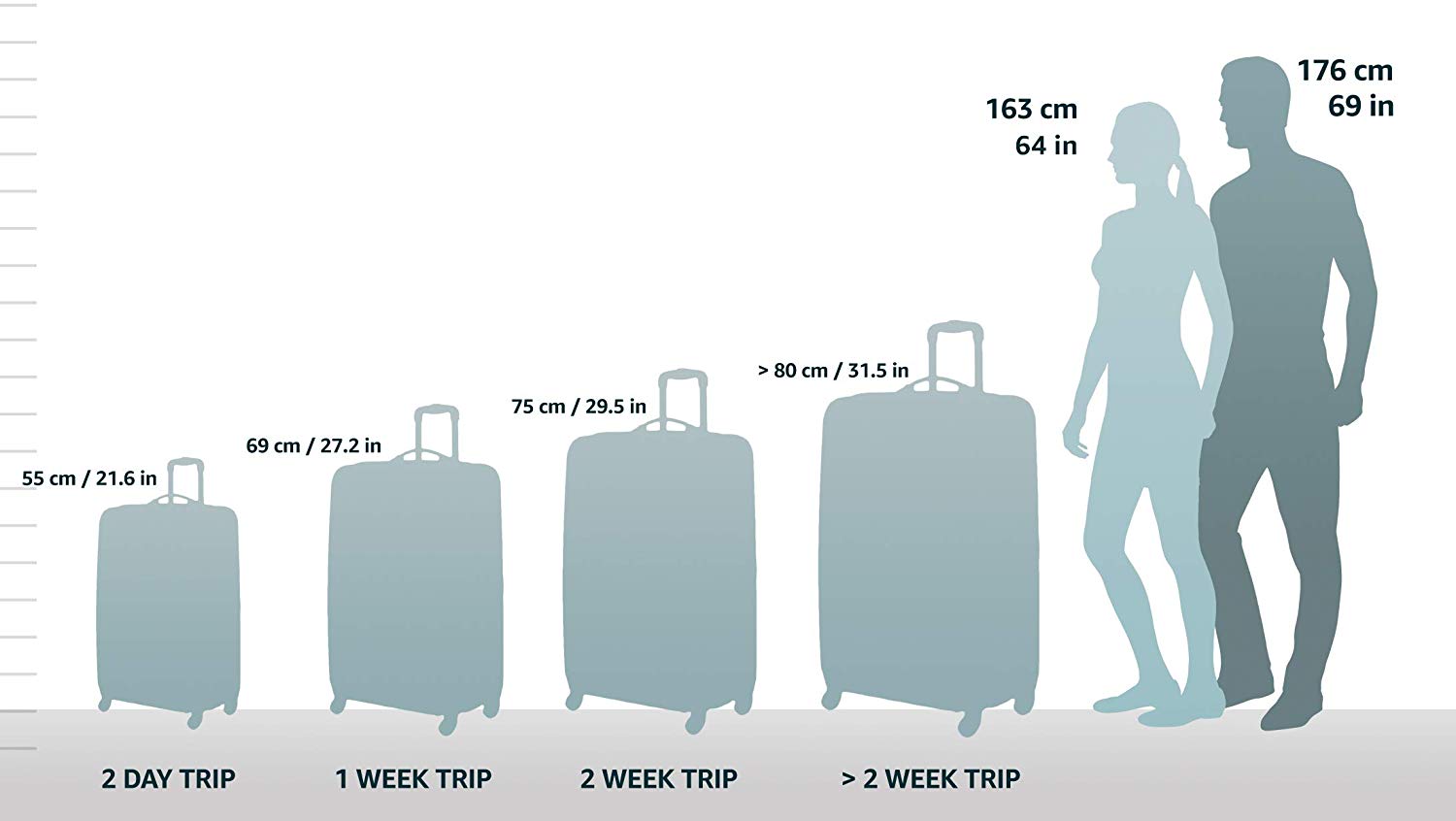
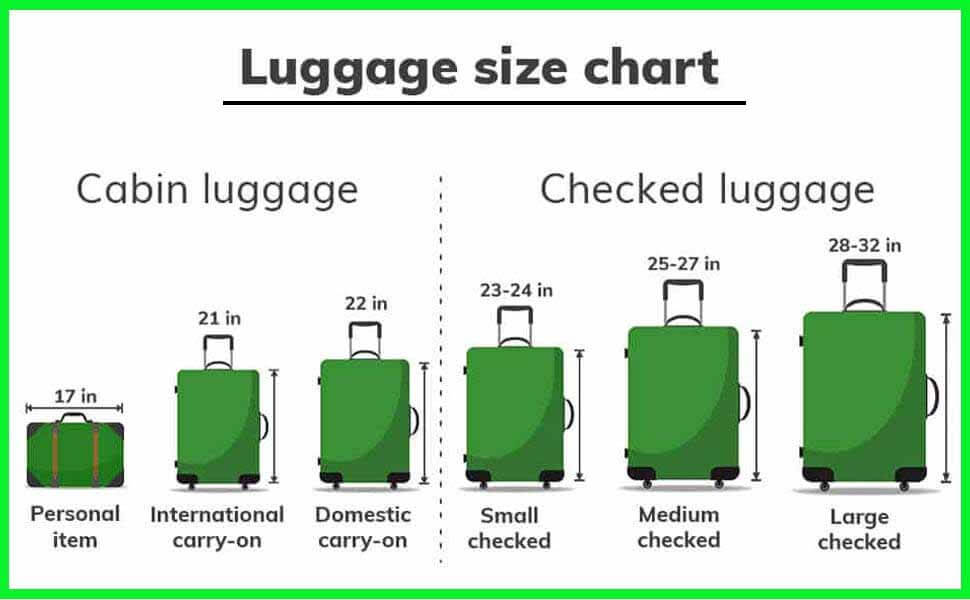
Usually about 18 to 22 inches tall with a capacity commonly suitable for short trips. Many airlines use maximum carry-on dimensions rather than a specific suitcase height.
Medium suitcase
Often around 23 to 26 inches tall and designed for several days to a week of clothing and personal items.
Large suitcase
Usually about 27 to 30 inches tall and intended for longer trips or travelers who need more packing space.
Extra-large suitcase
Often 31 inches or larger and useful for extended travel, but it may become heavier and harder to transport.
Common Suitcase Dimensions by Size
The following table shows typical suitcase measurements. Actual dimensions vary by brand, design, and wheel size.
Small suitcase
Approximately 18 to 22 inches tall, 13 to 16 inches wide, and 7 to 10 inches deep.
Medium suitcase
Approximately 23 to 26 inches tall, 16 to 19 inches wide, and 10 to 12 inches deep.
Large suitcase
Approximately 27 to 30 inches tall, 19 to 22 inches wide, and 11 to 14 inches deep.
How Big Is a Suitcase for Different Types of Travel?
The ideal suitcase size depends on the length of the trip, destination, transportation method, and packing style. A larger suitcase provides more space but can increase weight and handling difficulty.
For most travelers, choosing the smallest suitcase that fits their needs is practical because it reduces carrying effort and may help avoid airline baggage restrictions.
Source: i2.wp.com
Weekend trips
A carry-on suitcase between 18 and 22 inches is usually enough for clothing, toiletries, and travel essentials.
One-week vacations
A medium suitcase around 24 to 26 inches often provides a balance between capacity and portability.
Long vacations
A large suitcase around 27 to 30 inches may provide the extra room needed for additional clothing or equipment.
Extended travel
Extra-large luggage can hold more items but requires attention to weight limits and maneuverability.
Suitcase Size and Packing Capacity
Suitcase capacity is often measured in liters. Two suitcases with similar height measurements may hold different amounts because of differences in shape, wheel design, and internal compartments.
Carry-on capacity
Commonly around 30 to 45 liters depending on design.
Medium capacity
Often around 60 to 90 liters for travelers needing more clothing space.
Large capacity
Frequently above 90 liters for longer trips.
How Do You Measure a Suitcase Correctly?
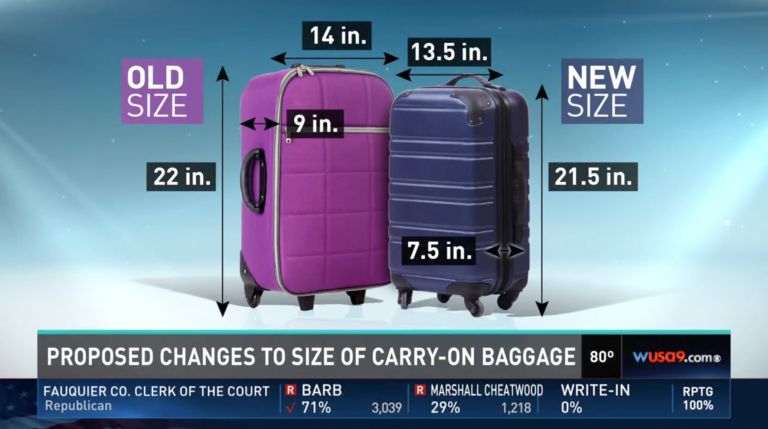
To measure a suitcase, measure the complete exterior dimensions, including wheels and handles if they extend beyond the main body. Airlines typically consider the full outside size when applying baggage rules.
Use a tape measure to record height, width, and depth. Multiply these three measurements when comparing overall size, but remember that interior packing space may be different.
Source: backpacknerds.com
Measure height
Measure from the floor to the highest point of the suitcase, including wheels and handles when required.
Measure width
Measure the widest side of the suitcase from left to right.
Measure depth
Measure the thickness from the front of the suitcase to the back.
Why Wheel Size Matters
Wheels add to the outside dimensions and can reduce available packing space inside the case. Spinner wheels may make movement easier but may also affect measurements compared with traditional two-wheel designs.
External size
Important for airline compliance and storage.
Interior space
Important for actual packing capacity.
What Size Suitcase Can You Take on an Airplane?
Airline suitcase rules vary by carrier, route, and ticket type. In the United States, many airlines use a maximum carry-on size near 22 x 14 x 9 inches, but travelers should verify the current requirements with their airline before flying.
Checked luggage rules commonly focus on a maximum combined measurement of height, width, and depth. A suitcase that is physically large may still need to meet weight restrictions to avoid additional fees.
Source: i5.walmartimages.com
Check airline requirements
Confirm size and weight limits before packing because rules differ between airlines.
Consider empty suitcase weight
A heavier suitcase leaves less allowance for clothing and other items.
Avoid overpacking
A larger suitcase does not always mean better because extra space can encourage excessive packing.
Common Suitcase Size Mistakes
Many travelers choose luggage based only on appearance or advertised capacity. Checking actual dimensions and intended use helps prevent problems.
Ignoring airline rules
A suitcase that fits your belongings may not meet airline requirements.
Buying too large
Oversized luggage can become difficult to carry, store, and transport.
How Do You Choose the Right Suitcase Size?
The right suitcase size matches your travel needs without adding unnecessary bulk. Consider trip length, transportation, packing habits, and whether you will check the bag or carry it onboard.
A smaller suitcase is often easier for city travel, while a larger suitcase may be useful when carrying bulky items or traveling for longer periods.
Source: luggageguide.co.uk
Choose carry-on size when
You want to avoid checked baggage and can pack efficiently.
Choose medium size when
You need more room for regular vacations without excessive luggage.
Choose large size when
You need extra capacity and can manage the additional weight.
The Best Size Depends on Your Situation
There is no universally best suitcase size. A frequent business traveler may prefer a compact carry-on, while a family vacation traveler may need larger checked luggage.
Frequent flyers
Often benefit from lightweight carry-on luggage.
Family travelers
May benefit from combining different suitcase sizes for different needs.
Frequently Asked Questions
Q
How big is a standard suitcase?
A standard suitcase is commonly around 24 to 28 inches tall, although sizes vary. Many travelers use medium or large checked suitcases for standard vacations.
Q
Is a 28 inch suitcase too big?
A 28 inch suitcase is not necessarily too big, but it may be larger than needed for short trips. Check airline size and weight limits before traveling.
Q
What size suitcase is best for a two week trip?
A large suitcase around 27 to 30 inches may work well for a two week trip, depending on clothing needs, destination, and packing habits.
Q
What is the most common carry-on suitcase size?
Many carry-on suitcases are around 20 to 22 inches tall, but airlines set their own maximum dimensions, so travelers should confirm requirements.
Q
Does suitcase size include wheels?
Airlines generally consider the full external dimensions, which may include wheels and handles. Always check the airline measurement rules.
✦ Wrapping Up
Conclusion
A suitcase can range from a compact carry-on of about 18 to 22 inches to an extra-large checked bag above 30 inches. The right size depends on your trip length, packing requirements, and transportation plans.
Before buying or packing a suitcase, measure the exterior dimensions, consider capacity, and check airline rules if you are flying. Choosing the correct size helps make travel easier and avoids unnecessary baggage problems.
💡 Key Takeaway
Choose the smallest suitcase that comfortably fits your trip, then confirm its dimensions against your airline or travel requirements before departure.
Learn how big a 62 linear inches suitcase is, how to calculate linear inches, typical suitcase dimensions, airline size limits, and what fits inside a 62-inch checked bag.
Learn how to choose a hiking backpack based on trip length, capacity, fit, comfort, materials, and features. Use this practical guide to find the right pack for day hikes, overnight trips, and backpacking.
Which camera is best for vlogging and photography? Compare key features, image quality, and video performance to choose the right camera for your content.