A backpack should fit close to your body with the weight centered between your shoulders and hips. The shoulder straps should hold the pack securely without digging in, and the hip belt should carry much of the load when the backpack is designed for it.
Across the United States, backpacks are used for school, commuting, travel, hiking, and outdoor recreation. A properly fitted backpack helps distribute weight more evenly, which can make carrying books, electronics, camping gear, or daily essentials more comfortable.
The correct fit depends on the backpack type, the user’s torso length, the load being carried, and the adjustment system available. A hiking backpack with a hip belt requires a different fit approach than a school backpack without a frame or load-support system.
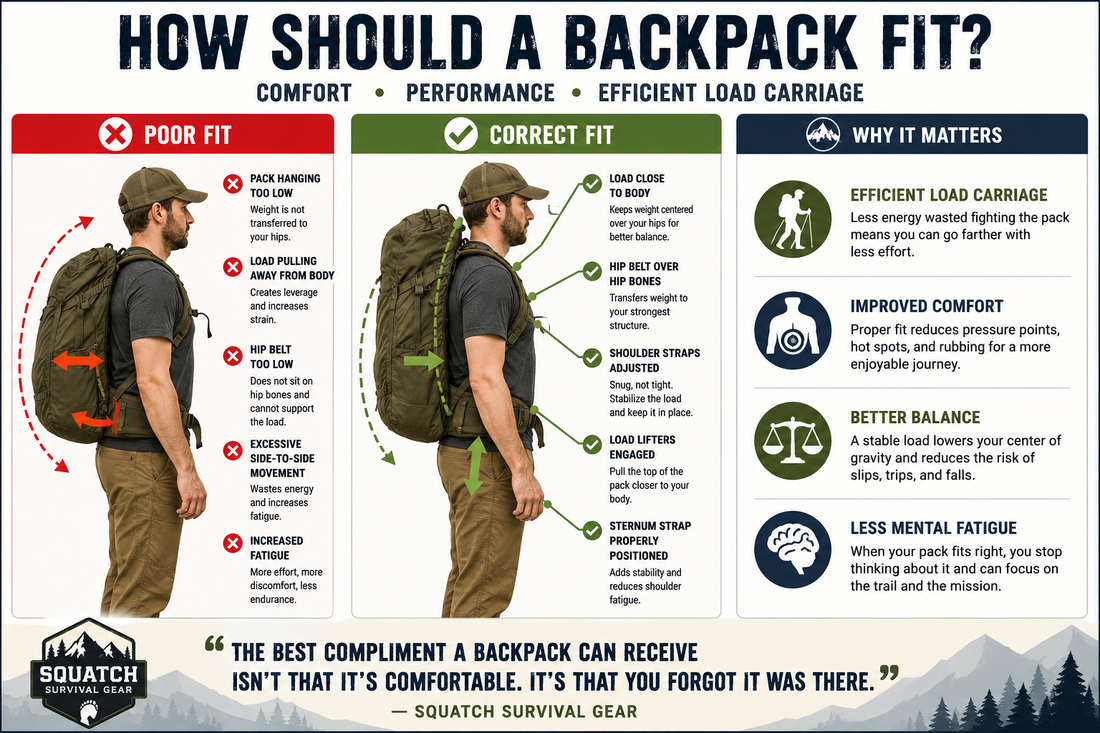
A properly fitted backpack rests comfortably against your back, keeps the load close to your body, and allows natural movement. The pack should not hang low on your lower back or pull your shoulders backward.
The correct position varies by backpack category. School and everyday backpacks usually sit higher on the back, while hiking backpacks are sized according to torso length and use a hip belt to support heavier loads.
Source: squatchsurvivalgear.com
Top of backpack position
The top of the backpack should generally stay near the top of your shoulders without extending far above your body or pressing into your neck.
Bottom of backpack position
The bottom should rest comfortably above the lower back area and should not hang several inches below the waist.
Weight placement
The heaviest items should be placed close to the back panel to reduce pulling force and improve balance.
How a Backpack Should Sit on Your Shoulders
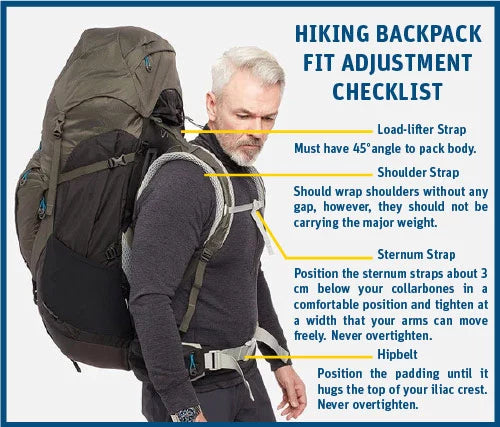
Shoulder straps should make contact across the shoulders without leaving large spaces between the straps and your body. They should support the backpack without carrying all the weight when a hip belt is available.
Correct strap tension
Tighten straps until the backpack sits close to your back, but avoid pulling them so tightly that they restrict movement or create pressure.
How to Adjust a Backpack for the Best Fit
Adjusting a backpack in the correct order helps create a balanced fit. Start with the hip belt if the backpack has one, then adjust shoulder straps and smaller stabilizing straps.
Always adjust the backpack while wearing the amount of weight you normally carry. A backpack that feels comfortable when empty may fit differently when loaded.
Source: alpenglowgear.com
Step 1: Position the backpack
Place the backpack on your back with the straps loosened enough to allow adjustment.
Step 2: Secure the hip belt
For hiking backpacks, position the hip belt around the top of the hip bones and tighten it firmly but comfortably.
Step 3: Adjust shoulder straps
Pull the shoulder straps until the backpack sits close to your body without excessive pressure.
Step 4: Adjust load lifters and sternum straps
If available, use these straps to stabilize the load and reduce movement while walking.
Signs Your Backpack Is Adjusted Correctly
A well-adjusted backpack feels stable while walking, keeps the load balanced, and does not require constant repositioning.
Comfortable shoulders
There should be no sharp pressure, tingling, or shoulder soreness caused by the straps.
Stable movement
The backpack should move with your body instead of swinging independently.
How Backpack Fit Changes by Use
The ideal backpack fit depends on how the backpack is used. A lightweight school bag, travel backpack, and multi-day hiking pack have different support requirements.
Choosing the correct adjustment method for the backpack type helps prevent discomfort and improves carrying efficiency.
Source: chaumetbag.com
School backpacks
Should sit close to the upper and middle back. Avoid carrying excessive weight or wearing the backpack low on the hips.
Travel backpacks
Should balance comfort and access, especially when carrying electronics, clothing, and personal items for extended periods.
Hiking backpacks
Require more precise sizing because torso length, hip belt position, and load distribution affect comfort during long walks.
How Heavy Should a Backpack Be?
There is no single weight limit that applies to every person or backpack. A comfortable carrying weight depends on body size, fitness level, backpack design, and duration of use. If a backpack causes pain or changes posture, reduce the load and reassess the fit.
Reduce unnecessary weight
Remove items that are not needed and place heavier items close to the back.
Common Backpack Fit Problems and How to Fix Them
Many backpack problems come from incorrect adjustment, improper sizing, or carrying more weight than the backpack design supports. Checking the fit systematically can solve many comfort issues.
Source: oakmontphysicaltherapy.com
Backpack feels too low
Tighten the shoulder straps or choose a backpack size that better matches your torso length.
Shoulders hurt
Redistribute the load, loosen overly tight straps, or use a backpack with better support features for heavier carrying needs.
Backpack shifts while walking
Adjust the sternum strap, hip belt, or compression straps if the backpack includes them.
Straps cause rubbing
Check strap alignment and padding. Persistent rubbing may indicate the backpack does not match your body shape.
When to Replace or Change a Backpack
A backpack may need replacement when damaged straps, worn padding, broken adjustment hardware, or poor fit prevent safe and comfortable use.
Damaged support parts
Broken frames, hip belts, or straps can prevent proper weight distribution.
How to Choose the Right Backpack Size for Your Body
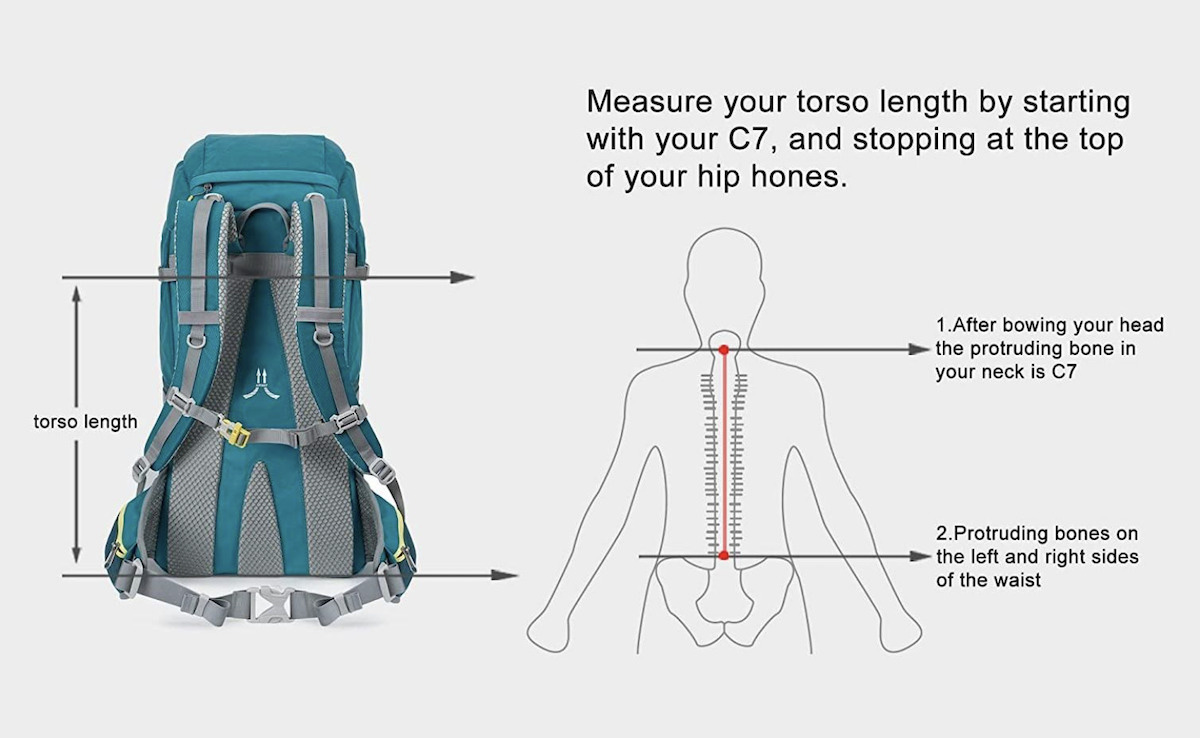
Backpack size should match both the intended use and the user’s body dimensions. For hiking backpacks, torso length is often more important than height because people of the same height can have different torso proportions.
A backpack that is too large may sit incorrectly and create unnecessary movement, while one that is too small may not distribute weight effectively.
Source: storage.googleapis.com
Measure torso length
For hiking packs, measure from the base of the neck to the top of the hip bones to help select an appropriate pack size.
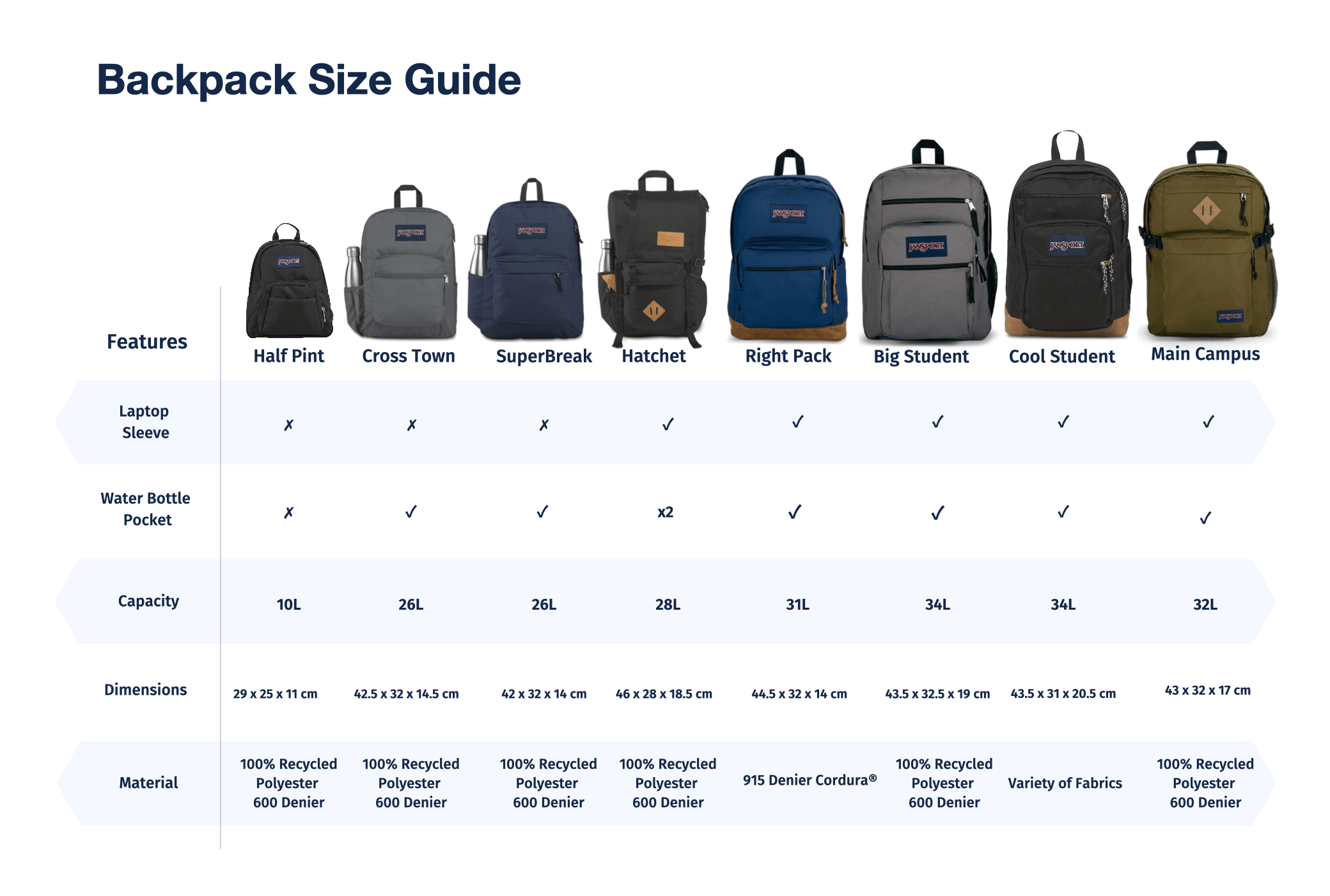
Match capacity to activity
Choose enough space for required items without carrying unnecessary volume and weight.
Backpack Fit Checklist Before Use
Before a trip, school day, or commute, check that the backpack sits correctly and all straps are adjusted.
Final check
Walk around with the loaded backpack and confirm that it remains stable and comfortable.
Frequently Asked Questions
Q
Should a backpack sit high or low on your back?
A backpack should generally sit high enough to stay close to your body without hanging below the lower back. The correct position depends on the backpack type and whether it has a hip belt.
Q
How tight should backpack straps be?
Backpack straps should be tight enough to keep the pack stable but not so tight that they cause pressure, numbness, or restricted movement.
Q
Should a backpack hip belt sit on the waist or hips?
A hiking backpack hip belt should usually sit around the top of the hip bones rather than the narrowest part of the waist. This allows the hips to support more of the load.
Q
Why does my backpack hurt my shoulders?
Shoulder discomfort can result from excessive weight, incorrect strap adjustment, poor weight placement, or a backpack that does not match your body size.
Q
How do I know if my backpack is too big?
A backpack may be too large if it shifts excessively, extends too far below your back, or cannot be adjusted to sit securely against your body.
✦ Wrapping Up
Conclusion
A properly fitted backpack keeps the load balanced, reduces unnecessary strain, and improves comfort during everyday activities and outdoor use. The right fit comes from matching the backpack size to your body, adjusting straps correctly, and carrying an appropriate load.
Checking the backpack position, strap tension, and weight distribution before use can prevent many common comfort problems.
💡 Key Takeaway
Load your backpack with the items you normally carry, adjust the hip belt and shoulder straps if available, and walk around to confirm the pack stays stable and comfortable.
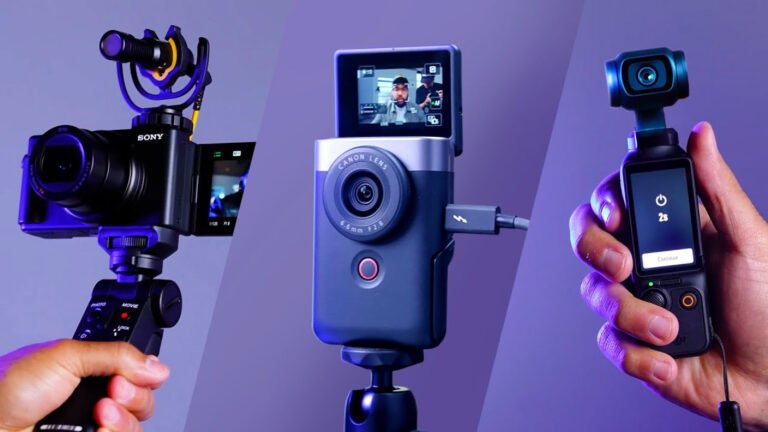
Find out what is the best cheap vlogging camera for sharp video, clear audio, and easy recording without overspending. Compare budget-friendly options.