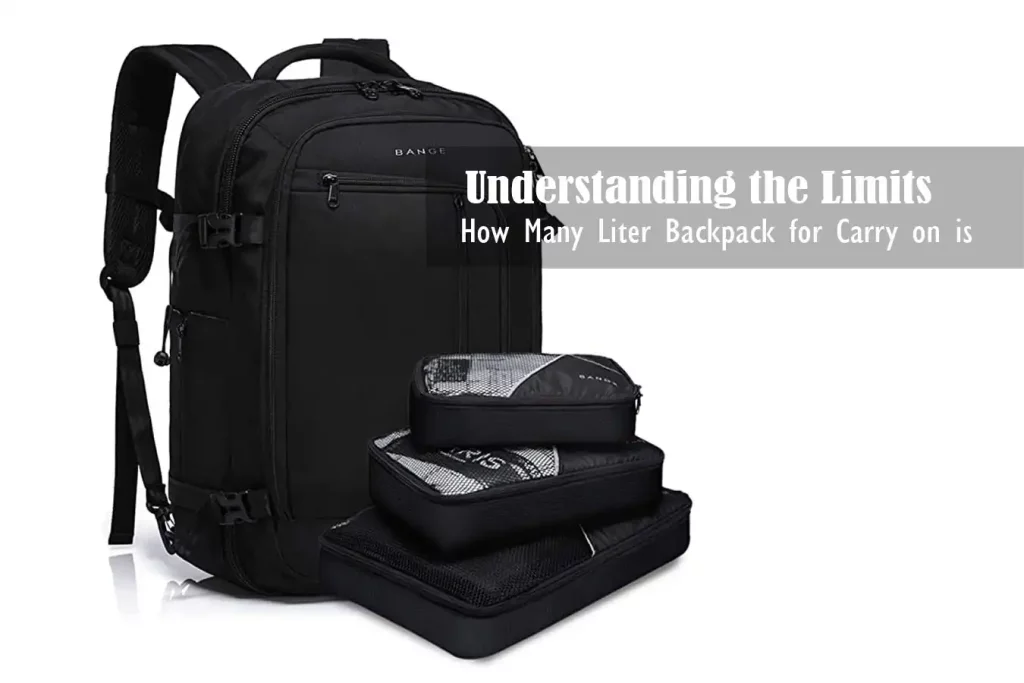
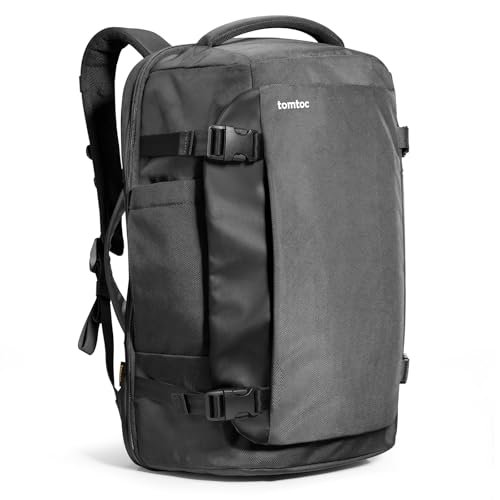
A carry on backpack usually works best at 30 to 45 liters, with 35 to 40 liters being a common range for most US airline travelers who need enough space for several days of clothing, electronics, and personal items.
For travelers flying from airports across the United States, the right carry on backpack size depends on airline limits, trip length, and packing style. Most major US airlines measure carry on bags by external dimensions rather than liters, so backpack volume should be treated as a planning guide rather than a guaranteed approval standard.
A backpack between 30 and 45 liters generally provides a practical balance between capacity and portability. Smaller 20 to 30 liter backpacks may work for short trips or minimalist packing, while larger bags above 45 liters can become difficult to fit within airline carry on restrictions unless they are specifically designed around those limits.
Source: i.ytimg.com
What Is the Best Liter Size for a Carry On Backpack?
The best liter size for a carry on backpack is usually between 30 and 45 liters because this range provides enough room for clothing, toiletries, travel documents, and electronics while remaining manageable for air travel.
The exact capacity depends on whether the backpack will be used as a main carry on bag placed in an overhead bin or as a personal item stored under the seat. Personal item backpacks are typically smaller, often around 15 to 25 liters, while full carry on backpacks commonly fall between 30 and 45 liters.
Source: gh-bags.com
20 to 30 liters
Suitable for short trips, daily travel, or passengers who pack lightly. It may work as a personal item depending on dimensions.
30 to 40 liters
A versatile carry on range for weekend trips, business travel, and many one-week trips with efficient packing.
40 to 45 liters
Provides more capacity for longer trips but requires careful attention to airline size restrictions.
Why Liter Capacity Does Not Guarantee Airline Approval
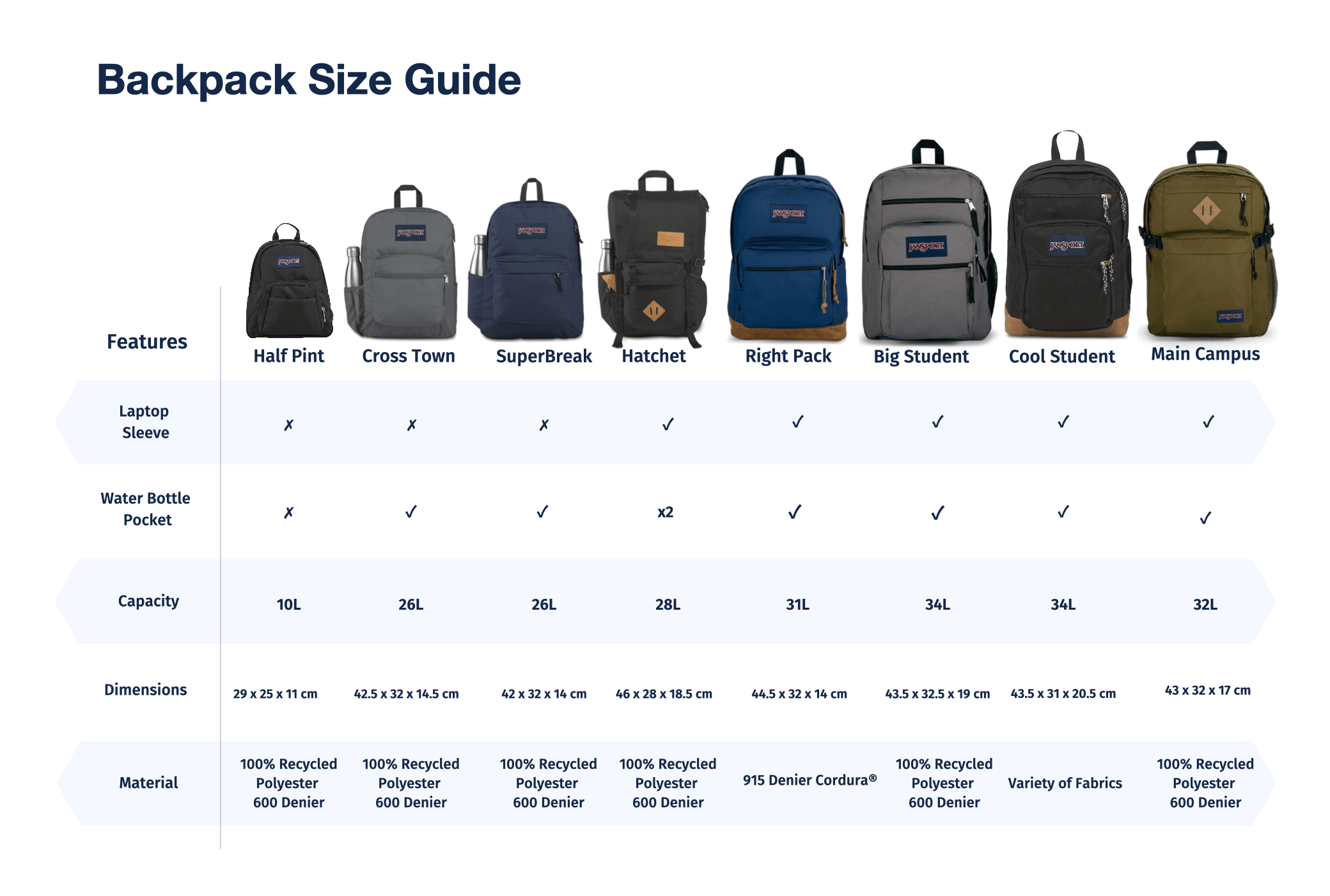
Liters measure internal volume, while airlines check external dimensions such as length, width, and height. Two backpacks with the same liter rating can have different shapes and may not fit the same airline limits.
Check dimensions first
Compare the backpack’s listed measurements with the airline’s carry on requirements before purchasing or packing.
How Many Liters Do You Need Based on Trip Length?
Trip duration is one of the biggest factors when choosing backpack capacity. A shorter trip usually requires less space, while longer travel may require a larger backpack or more frequent access to laundry.
The table below provides general guidance. Actual needs vary depending on climate, clothing requirements, and personal packing habits.
Source: cdn.shopify.com
1 to 3 day trips
A 20 to 30 liter backpack may provide enough space for basic clothing, toiletries, and electronics.
4 to 7 day trips
A 30 to 40 liter backpack is often suitable when clothing is packed efficiently.
Longer trips
A 40 to 45 liter backpack may help carry additional clothing, but travelers should confirm airline restrictions.
How Packing Style Changes the Required Capacity
Minimalist travelers who use lightweight clothing and repeat outfits can often travel with a smaller backpack. Travelers carrying bulky jackets, larger shoes, camera equipment, or multiple electronic devices may need more capacity.
Light packers
Can often stay within 25 to 35 liters.
Average travelers
Usually find 30 to 40 liters practical.
Heavy packers
May need 40 liters or more, but should verify airline limits.
Carry On Backpack Size Compared With Airline Requirements
Most US airlines set carry on limits using dimensions rather than liter capacity. A backpack that looks compact may still exceed limits if it is tall, wide, or overfilled.
Travelers should measure the packed backpack, including exterior pockets and compression straps, because those parts can affect the final size.
Source: cdn.shopify.com
Measure after packing
A flexible backpack can expand beyond its listed dimensions when filled completely.
Consider structure
Rigid travel backpacks may protect items better but can provide less flexibility when fitting into airline sizing frames.
Common Carry On Backpack Mistakes
Many travelers choose a backpack based only on liters and overlook airline rules. This can lead to a bag that holds enough items but does not fit carry on requirements.
Choosing the largest possible bag
A larger backpack may create problems if it exceeds airline dimensions.
Ignoring weight limits
A high-capacity backpack can become difficult to carry or exceed airline weight allowances when fully packed.
How to Choose the Right Carry On Backpack Capacity
Choosing the right backpack size starts with identifying what you normally carry. A traveler bringing only clothing and basic electronics will need less space than someone carrying work equipment, photography gear, or specialty items.
A practical approach is to choose the smallest backpack that fits your normal travel needs instead of selecting maximum capacity. Smaller bags are often easier to carry and easier to keep within airline limits.
Source: images.squarespace-cdn.com
Count your essentials
Estimate clothing, shoes, chargers, toiletries, and personal items before selecting capacity.
Think about travel conditions
Cold-weather trips often require more space because jackets and thicker clothing take up more volume.
Allow limited extra room
A little unused space is useful for souvenirs or unexpected packing needs.
Signs Your Backpack Is the Right Size
A properly sized carry on backpack should close comfortably without excessive compression, remain within airline dimensions, and allow you to access important items without unpacking everything.
Comfortable carrying
The backpack should distribute weight well and remain manageable when walking through airports.
Frequently Asked Packing and Capacity Questions
Understanding liters helps estimate backpack capacity, but travelers should combine that information with airline rules and personal packing requirements.
Source: theoutdoorinsider.com
Use liters as a guide
Capacity ratings help compare backpacks but do not replace checking dimensions.
Frequently Asked Questions
Q
Is a 40 liter backpack too big for a carry on?
A 40 liter backpack is often suitable as a carry on, but approval depends on its external dimensions and the airline’s rules. A compact 40 liter backpack may fit, while an oversized design may not.
Q
Is a 30 liter backpack enough for a carry on?
A 30 liter backpack can be enough for many travelers, especially for short trips or efficient packing. It may provide less room for bulky clothing or longer trips.
Q
How many liters is a personal item backpack?
A personal item backpack is commonly around 15 to 25 liters, although airlines usually define personal items by dimensions rather than liters.
Q
Can a 45 liter backpack be used as a carry on?
A 45 liter backpack may work as a carry on if its dimensions meet airline requirements. Larger capacity backpacks require more careful measurement before flying.
Q
What is the most versatile carry on backpack size?
A backpack around 35 to 40 liters is often considered versatile because it provides useful packing space while remaining easier to manage than larger travel backpacks.
✦ Wrapping Up
Conclusion
For most travelers in the United States, a carry on backpack between 30 and 45 liters provides a practical balance of storage space and portability. A 35 to 40 liter backpack is often a useful middle ground for people who want one bag for flights, short trips, and everyday travel.
The final choice should be based on airline dimensions, travel duration, packing habits, and comfort. Liters help estimate capacity, but the physical size of the backpack determines whether it can travel as a carry on.
💡 Key Takeaway
Choose a carry on backpack by checking both liter capacity and external dimensions, then select the smallest size that comfortably holds your regular travel essentials.
Compare the best travel backpack options for carry-on trips, laptops, weekend travel, and commuting. Get practical feature breakdowns, ratings, and buying advice.