A standard backpack is usually between 15 and 30 liters, with 20 to 25 liters being a common everyday size in the United States for school, work, commuting, and daily activities.
For shoppers in the United States, backpack capacity is normally measured in liters, which describes the internal volume available for carrying items. A standard backpack does not have one fixed capacity because sizes vary by purpose, but most everyday backpacks fall within the 15 to 30 liter range.
A 20 to 25 liter backpack often provides a practical balance between portability and storage. It can typically hold daily essentials such as books, a laptop or tablet, chargers, a water bottle, clothing layers, and personal items without becoming unnecessarily bulky.
Source: images.squarespace-cdn.com
What Is the Standard Liter Capacity of a Backpack?
The standard backpack size for everyday use is generally around 20 to 25 liters, although many common backpacks range from 15 to 30 liters. This range covers most school backpacks, laptop backpacks, commuter bags, and casual daypacks.
Backpack capacity is measured in liters because manufacturers calculate the approximate internal space of the bag. A higher liter rating means more room for items, but it does not automatically mean the backpack is more comfortable or better suited for a specific activity.
Source: vancharlioutdoor.com
Small everyday backpacks
Backpacks around 10 to 15 liters work well for carrying a few essentials such as a phone, wallet, small tablet, and light personal items.
Standard backpacks
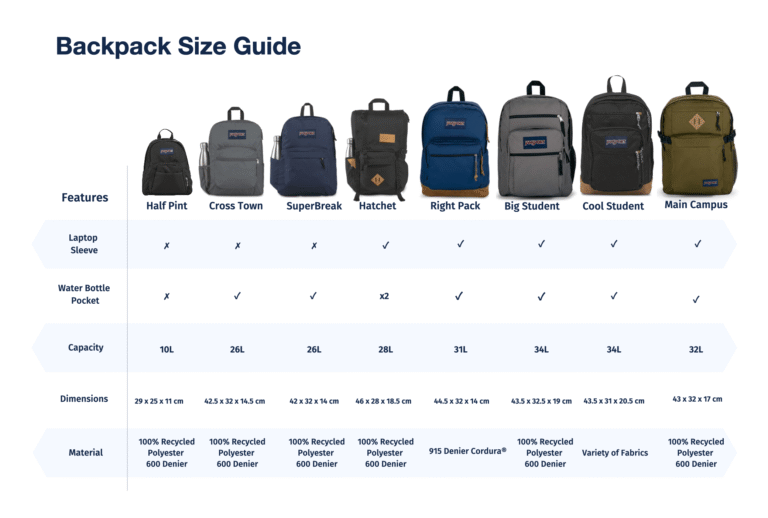
Backpacks around 15 to 30 liters are commonly used for school, office commuting, and daily transportation because they provide enough room without excessive size.
Large backpacks
Backpacks above 30 liters are designed for longer trips, outdoor activities, or users who need extra clothing, equipment, or supplies.
How Backpack Liter Sizes Compare for Different Uses
The right backpack capacity depends on what you plan to carry. A student carrying textbooks needs more space than someone carrying only a tablet and personal items. A commuter may need extra room for a laptop, lunch, and work accessories.
The table below shows common backpack capacity ranges and their typical uses.
Source: osgwbag.com
10 to 15 liters
Suitable for lightweight daily carry, short outings, and minimal essentials.
15 to 25 liters
A common standard size for school, office, commuting, and everyday activities.
25 to 35 liters
Useful for travelers, professionals carrying more equipment, or people needing extra storage.
35 liters or more
Usually intended for hiking, extended travel, or specialized gear storage.
How Many Liters Is a School Backpack?
Most school backpacks are commonly between 15 and 30 liters. Younger students often use smaller capacities, while high school and college students may prefer larger backpacks that can fit books, laptops, and personal items.
How Many Liters Is a Laptop Backpack?
A laptop backpack is often between 20 and 30 liters because it needs space for a computer compartment, charger, documents, and everyday accessories. The required capacity also depends on laptop size and the number of additional items carried.
How to Calculate or Estimate Backpack Capacity
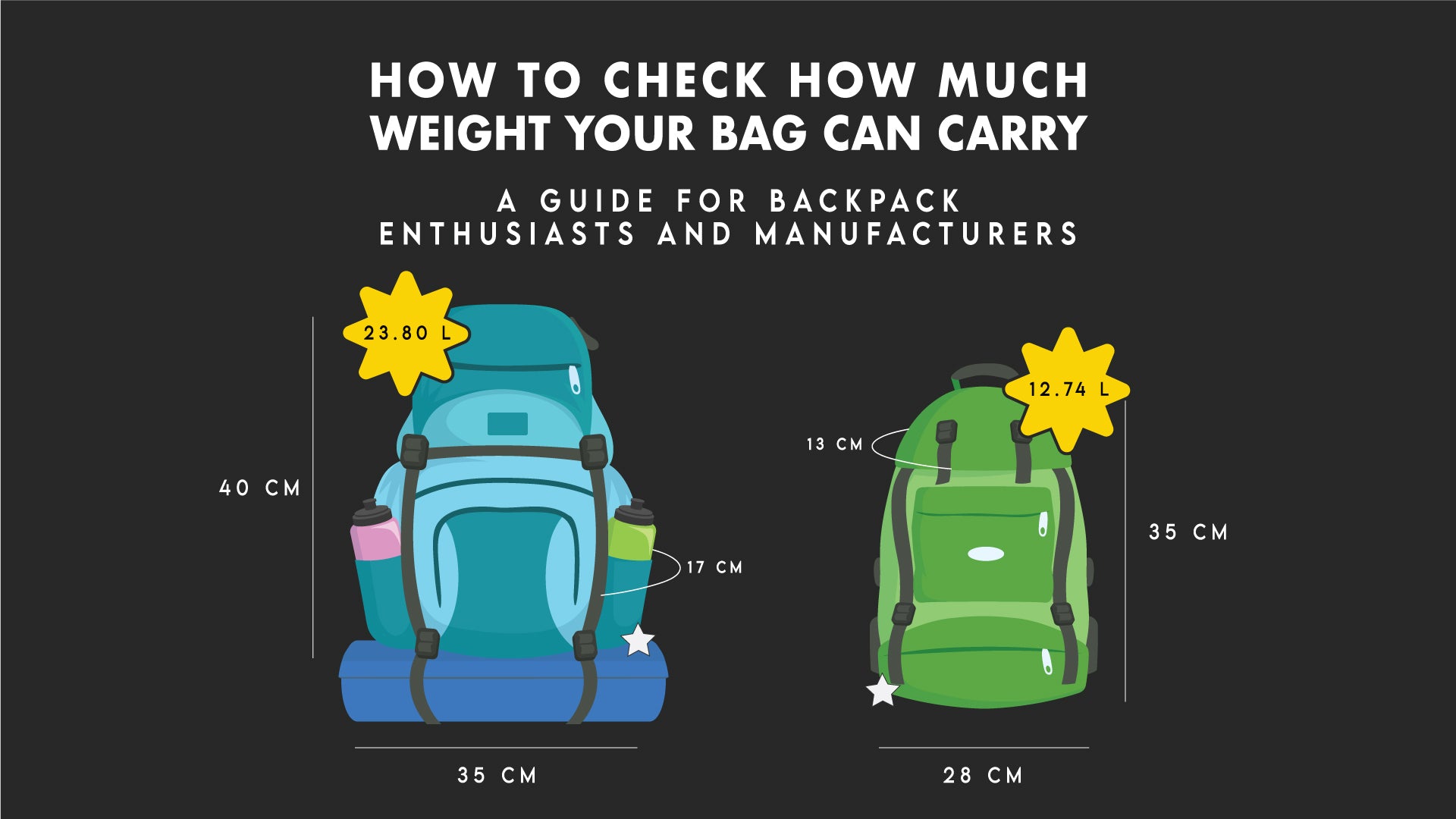
Backpack capacity is based on the amount of three-dimensional space inside the bag. Manufacturers generally calculate volume by measuring the internal compartments and converting the result into liters.
For a rough estimate, you can multiply the length, width, and height of a compartment in centimeters, then divide the result by 1,000 to estimate liters. This calculation is only approximate because curved shapes, padding, pockets, and zippers reduce usable space.
Source: creaindia.com
Example calculation
A compartment measuring 45 cm by 30 cm by 15 cm has an estimated volume of 20.25 liters before accounting for padding and design features.
Check real storage needs
Compare the backpack capacity with the actual items you carry rather than relying only on the liter number.
What Affects How Much a Backpack Can Hold?
Two backpacks with the same liter rating may not feel identical because their designs affect usable space. Internal dividers, laptop sleeves, padding, and pocket layouts can change how efficiently items fit.
A structured backpack may protect electronics better but use some space for padding. A simpler backpack may provide more open storage but less organization.
Source: images.squarespace-cdn.com
Compartments
More pockets improve organization but can reduce the amount of open storage available.
Shape
A rectangular backpack often uses space more efficiently than a narrow or highly curved design.
Materials and padding
Protective padding adds weight and can slightly reduce usable internal volume.
Common Mistakes When Choosing Backpack Size
Many people choose backpacks based only on appearance or the liter number without considering what they actually carry. A backpack that is too small can become uncomfortable when overfilled, while an oversized backpack may add unnecessary bulk.
The best size depends on the user’s daily routine, required equipment, and comfort preferences.
Source: images.squarespace-cdn.com
Choosing capacity without measuring items
Measure important items such as laptops, textbooks, or camera equipment before selecting a backpack.
Confusing liters with weight limits
Liters describe volume, while the safe carrying weight depends on the backpack design, materials, and wearer comfort.
Ignoring fit and straps
A properly sized backpack should sit comfortably on the back and distribute weight evenly.
Frequently Asked Questions
Q
Is a 20 liter backpack a standard size?
Yes. A 20 liter backpack is considered a common everyday size. It usually provides enough room for school supplies, a small laptop, personal items, and daily essentials.
Q
Is a 30 liter backpack too big for everyday use?
A 30 liter backpack can work for everyday use if you carry extra items such as gym clothing, work equipment, or travel accessories. For lighter loads, a smaller backpack may be more comfortable.
Q
How many liters should a backpack be for travel?
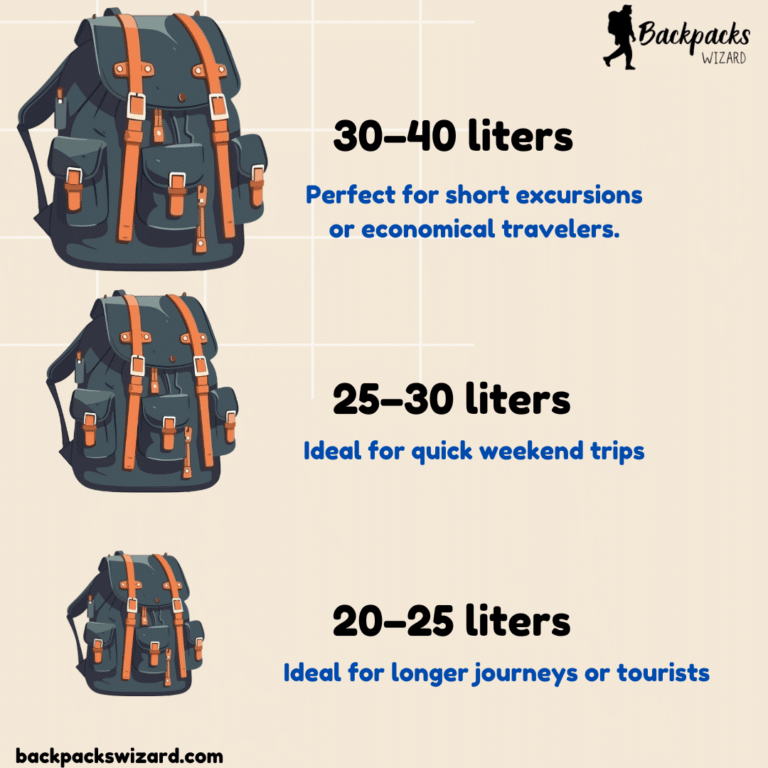
Travel backpack size depends on trip length and packing style. Short trips may require around 25 to 40 liters, while longer trips often need larger capacities.
Q
Can a 25 liter backpack fit a laptop?
Many 25 liter backpacks can fit laptops, but the exact fit depends on the laptop compartment dimensions and the laptop size.
Q
Are backpack liters accurate?
Backpack liters provide a useful capacity estimate, but actual usable space varies because of compartments, padding, shape, and organization features.
✦ Wrapping Up
Conclusion
A standard backpack is typically 15 to 30 liters, with 20 to 25 liters being a practical everyday range for many users in the United States. This size usually offers enough room for work, school, commuting, and personal essentials.
The best backpack capacity depends on what you carry, how often you travel, and how much organization you need. Choosing based on your real daily items is more reliable than selecting a size by liters alone.
💡 Key Takeaway
For most everyday needs, start with a 20 to 25 liter backpack and compare the available compartments, fit, and storage layout before choosing a final size.
Learn how many liters you need for backpacking based on trip length, gear, climate, and packing style. Compare backpack sizes for weekend, multi-day, and extended trips.
Learn how many liters a carry on backpack should be, including airline size limits, recommended capacities, packing tips, and how to choose the right backpack volume.
Learn How to Pack a Backpack for Air Travel with practical steps for weight balance, organization, airline rules, security checks, and efficient carry-on packing.