
The pros and cons mirrorless camera buyers face depend on how they shoot. A travel photographer may love a light body and small lens. A sports shooter may care more about autofocus speed, viewfinder response, and battery life.
Mirrorless cameras have no reflex mirror between the lens and sensor. Light reaches the image sensor directly. The camera can then show a live view on the rear screen or in an electronic viewfinder. This design brings several useful benefits, but it also creates trade-offs.
For many U.S. photographers, the choice comes down to daily use. If you carry a camera on hikes, family trips, weddings, or city walks, size and weight matter. If you shoot long events, wildlife, or sports, battery life and lens cost may matter more.

What Is a Mirrorless Camera?
A mirrorless camera uses a digital sensor to create the live image you see while shooting. Unlike a DSLR, it does not use a large mirror and optical prism system to send light to the viewfinder. This allows the camera body to use a simpler internal design.
The sensor sits behind the lens and receives light directly. When you press the shutter, the camera records the image from that sensor. Many current models also use the sensor for autofocus, exposure checks, and video.
Understanding this basic design makes the pros and cons mirrorless camera discussion much easier. The same sensor-based design that makes a camera compact also powers many of its modern features.
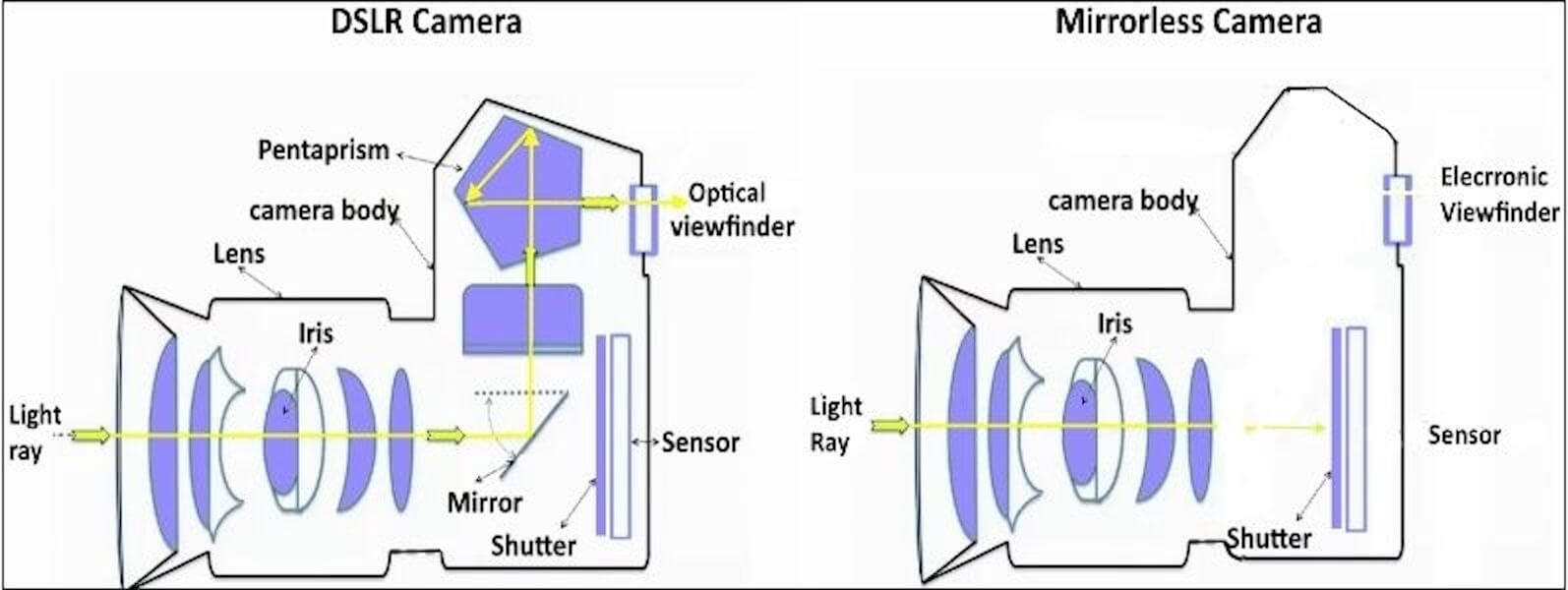
- ✦ No reflex mirror
The camera does not need a moving mirror to direct light to an optical viewfinder.
- ✦ Electronic viewfinder
Many mirrorless cameras use an electronic viewfinder that shows a live digital feed from the sensor.
- ✦ Direct sensor view
The image sensor handles the live view, exposure preview, autofocus, and image capture.
Mirrorless vs DSLR in Simple Terms
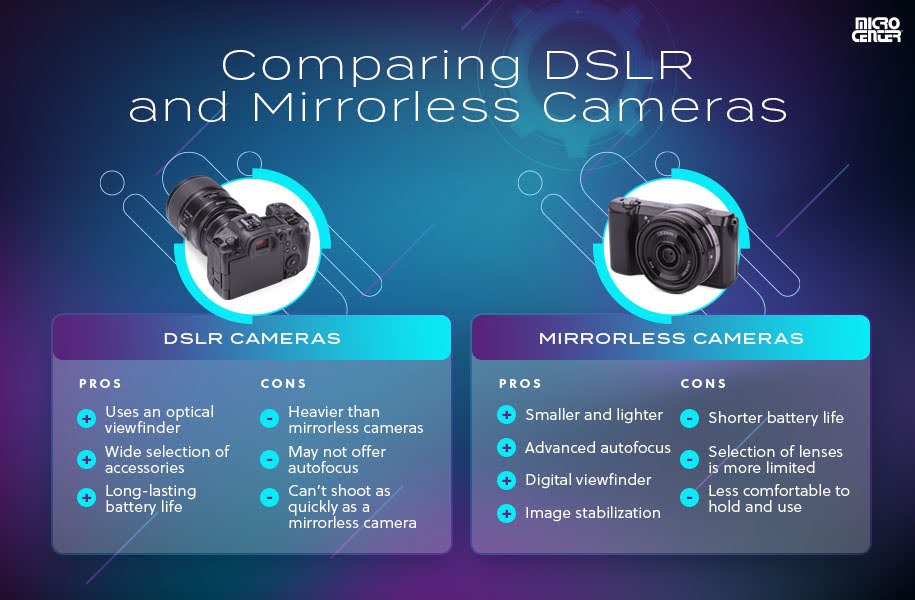
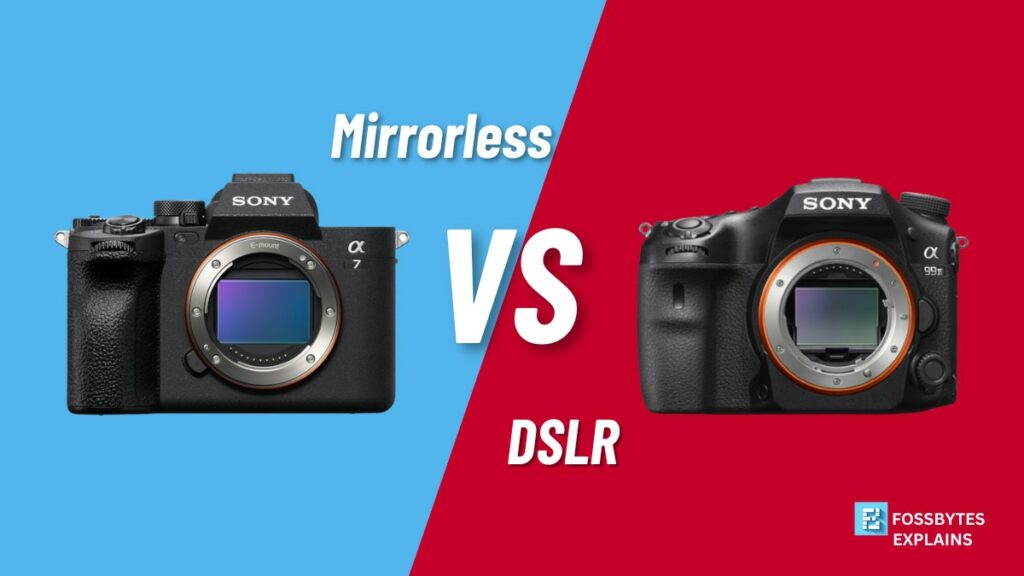
A DSLR uses a mirror and optical viewfinder. A mirrorless camera removes that mirror and uses an electronic display instead. Both types can produce excellent photos, so the design alone does not decide image quality.
The larger difference is how each system feels to use. Mirrorless models often offer a more direct link between camera settings and the image you see on the screen.
- ✦ DSLR
Uses a mirror, optical viewfinder, and a traditional optical path.
- ✦ Mirrorless
Uses the sensor for the live image and usually displays it through an electronic viewfinder or screen.
Pros of Mirrorless Cameras
The biggest reason people switch to mirrorless is the combination of size, speed, and modern features. A small body can still have a large sensor and advanced autofocus. This makes the system useful for both new photographers and experienced shooters.
The exact benefits vary by model. An entry-level APS-C camera will not behave like a high-end full-frame body. Still, the main design benefits appear across much of the mirrorless market.
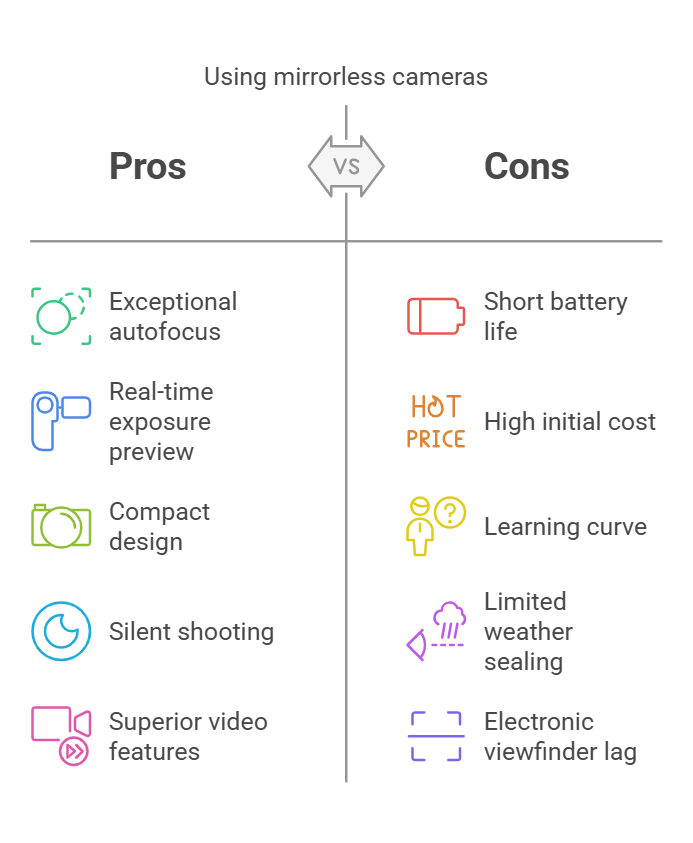
- ✦ Smaller and lighter bodies
Removing the mirror box can reduce body size and weight, although large lenses can still make a kit heavy.
- ✦ Fast autofocus
Many modern mirrorless cameras use advanced sensor-based autofocus with subject and eye detection.
- ✦ Excellent video features
Mirrorless cameras often offer strong video modes, live autofocus, and useful screen controls.
- ✦ Live exposure preview
The electronic viewfinder or screen can show how brightness, white balance, and other settings affect the image.
- ✦ Silent shooting options
Some models can use an electronic shutter for very quiet shooting in places such as weddings, museums, and performances.
Why Small Size Matters
A smaller camera can be easier to carry all day. This matters during travel , street photography, family events, and hiking. A camera that stays in your bag is more useful than one that feels too large to bring.
There is one important catch. The camera body may be small, but a fast full-frame lens can still be large. The full system size matters more than body size alone.
- ✦ Travel benefit
A lighter setup can reduce the load during flights, road trips, and long walks.
- ✦ Everyday benefit
A compact kit can be easier to carry for family photos, street scenes, and casual shooting.
Cons of Mirrorless Cameras
The pros and cons mirrorless camera debate also has some clear drawbacks. The most common complaints involve battery life, electronic viewfinders, heat, cost, and the price of a complete lens system.
These problems do not affect every model in the same way. A high-end camera may have a large battery and strong heat control, while a small entry-level body may have more limits. It is important to judge the full camera system instead of the body alone.
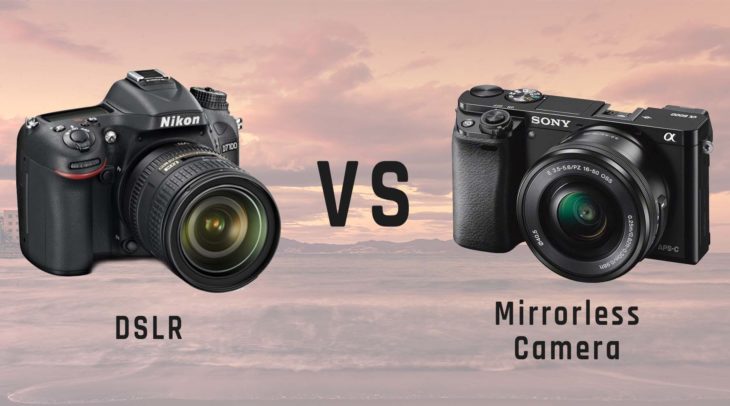
- ✦ Shorter battery life
The electronic viewfinder and rear screen need power, so many mirrorless cameras use
more battery than traditional DSLRs during normal shooting. - ✦ Higher system cost
New mirrorless bodies and native lenses can be expensive, especially in full-frame systems.
- ✦ Electronic viewfinder limits
An EVF can show a digital image rather than a direct optical view, and some users notice lag, noise, or lower clarity in difficult conditions.
- ✦ Heat during long video use
Compact bodies have less room for heat control, so some models may limit long video recording in warm conditions.
- ✦ Learning curve
The many digital controls and autofocus options can feel complex to new users.
Battery Life Is a Real Trade-Off
Battery life is one of the most practical disadvantages of mirrorless cameras. The camera must power the electronic viewfinder or screen while you compose. Heavy use of autofocus, image stabilization, Wi-Fi, and video can also drain power.
The simple fix is to carry a spare battery. For weddings, travel days, sports, or long outdoor shoots, extra batteries can become part of the normal kit.
- ✦ Carry a spare
One extra battery can make a major difference during long shooting days.
- ✦ Watch the screen
Using power-saving settings and reducing unnecessary screen time can extend battery life.
Mirrorless Camera Image Quality
A common question about the pros and cons mirrorless camera is whether mirrorless cameras take better photos than DSLRs. The answer is more complex than a simple yes or no. Image quality depends on the sensor, lens, exposure, processing, and photographer.
A modern mirrorless camera can produce excellent detail, color, dynamic range, and low-light results. Full-frame models can offer strong performance at high ISO settings, while APS-C and Micro Four Thirds systems can provide a useful balance of size, cost, and image quality.
The lens still matters a great deal. A good lens can improve sharpness, contrast, low-light performance, and background blur. For this reason, buyers should budget for the entire system rather than spending nearly all of their money on the camera body.
- ✦ Sensor size
Larger sensors can offer useful advantages in low light and depth of field, while smaller sensors can help keep cameras and lenses compact.
- ✦ Lens quality
The lens has a major effect on sharpness, contrast, light gathering, and creative control.
- ✦ Image processing
The camera processor and software affect noise reduction, color, autofocus, and JPEG output.
Does Mirrorless Mean Better Photos?
Not automatically. A skilled photographer can make excellent images with many different camera types. The main benefit of a modern mirrorless system is that it gives the photographer useful tools, not a guarantee of better photos.
Features such as eye autofocus, stabilization, and live exposure preview can make it easier to get the intended shot. That can improve results in real-world use, even when the basic image sensor is not dramatically different from another camera.
- ✦ Better tools can help
Modern autofocus and stabilization can make difficult shots easier to capture.
- ✦ Technique still matters
Light, composition, focus, shutter speed, and lens choice remain central to image quality.
Autofocus and Performance Benefits
Autofocus is one of the strongest areas in the modern pros and cons mirrorless camera discussion. Many mirrorless cameras can detect faces, eyes, animals, and other subjects directly from the image sensor. This can make focus tracking easier during fast action.
For sports and wildlife, subject detection can save time. For portraits, eye detection can help keep attention on the subject’s eyes. These tools are helpful, but they still need good settings and careful use.
- ✦ Eye detection
The camera can detect a person’s eye and use it as a focus target on supported models.
- ✦ Animal detection
Some cameras can recognize selected animals and track them as they move.
- ✦ Subject tracking
Modern systems can follow a moving subject across parts of the frame.
- ✦ Live exposure preview
The electronic viewfinder can help you judge exposure before pressing the shutter.
Why Autofocus Matters in Real Life
Imagine photographing a child running across a park. The subject may move fast and change direction. A strong tracking system can reduce the number of missed focus shots.
The same idea applies to pets, birds, athletes, and events. Still, autofocus is not magic. It can struggle when subjects are hidden, light is very low, or the scene is crowded.
- ✦ Good for action
Fast tracking can help with sports, wildlife, pets, and moving people.
- ✦ Not foolproof
Photographers still need to choose suitable focus modes and shutter speeds for the scene.
Mirrorless Cameras for Video
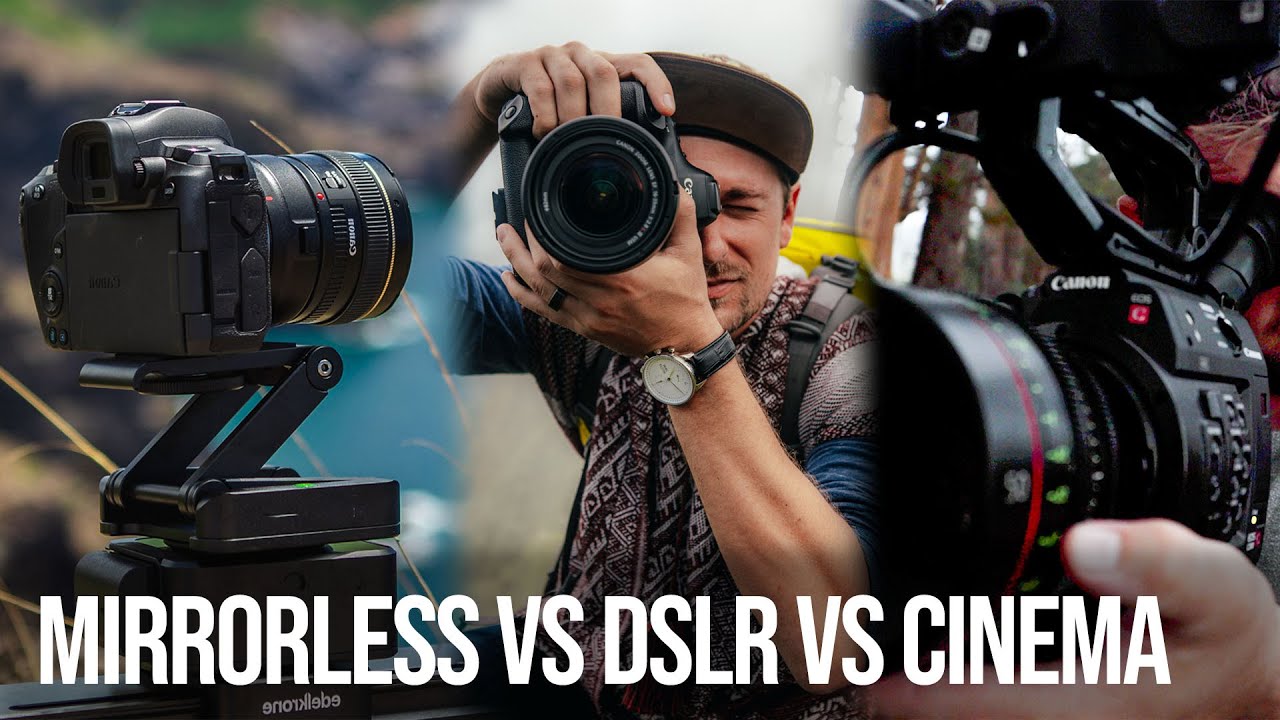
Mirrorless cameras are popular for video because the sensor already provides the live image used for recording. Many models offer high-resolution video, fast autofocus, image stabilization, external microphones, and flip or tilt screens.
This makes mirrorless cameras useful for creators who shoot YouTube videos, interviews, travel clips, short films, and social media content. However, not every model has the same video tools. Buyers should check recording limits, codecs, frame rates, heat control, and audio options.
For a creator who takes both photos and video, a hybrid mirrorless camera can reduce the need to carry two separate systems. That flexibility is one of the strongest benefits of the mirrorless format.
- ✦ Hybrid shooting
One camera can handle both still photography and
video. - ✦ Live autofocus
Modern autofocus can track faces and subjects while recording.
- ✦ Stabilization
Supported cameras can use in-body stabilization to reduce camera shake.
- ✦ Flexible screens
Tilting or fully articulating screens can help when shooting from unusual angles.
Video Drawbacks to Check
Long video recording can create heat. Small bodies have limited room for cooling, so some cameras may reduce recording time under demanding conditions. This matters more for long interviews and professional video than for short clips.
Audio is another point to check. A camera with a microphone input and headphone output can be much easier to use for serious video work.
- ✦ Heat control
Check how the camera handles long recordings in warm environments.
- ✦ Audio ports
A microphone input is useful for cleaner recorded sound.
Lens Choice, Cost, and Long-Term Value
One of the most important parts of the pros and cons mirrorless camera decision is the lens system. A camera body may look affordable until you price the lenses you actually need. Wide zooms, fast portrait lenses, telephoto lenses, and professional glass can add a large amount to the total cost.
Newer mirrorless systems often have modern lens designs and strong optical performance. Some systems also support older DSLR lenses through adapters. However, adapted lenses may not offer the same autofocus speed, size, or full feature support as native lenses.
Think about your future needs before buying. If you plan to shoot wildlife, portraits, travel, or video, list the lenses you may want over the next few years. This gives you a more realistic picture of the system cost.

- ✦ Native lenses
Lenses designed for the camera mount often provide the best balance of autofocus, communication, size, and performance.
- ✦ Adapters
Adapters can let some photographers use older lenses, but compatibility and autofocus performance vary.
- ✦ Used gear
Used cameras and lenses can lower the entry cost, but buyers should check condition, shutter history where relevant, battery health, and return terms.
- ✦ System value
The best value comes from the full camera, lens, battery, storage, and accessory setup rather than the body price alone.
Should You Buy New or Used?
A used mirrorless camera can be a smart way to enter a system at a lower cost. Older models may still produce excellent images, especially when paired with a good lens.
Before buying used gear, inspect the sensor, mount, ports, screens, buttons, and battery. Check the seller’s return policy too. A low price is less useful if the camera needs costly repairs.
- ✦ Check condition
Look for damage, moisture signs, worn ports, sensor marks, and problems with controls.
- ✦ Check compatibility
Make sure the lenses and accessories you want work with the exact camera mount.
Who Should Buy a Mirrorless Camera?
The right answer depends on how you plan to use the camera. A beginner may value easy controls and a reasonable price. A professional may need fast autofocus, strong video features, weather sealing, long battery life, and a wide lens range.
For many people, the pros and cons mirrorless camera decision becomes clear after listing their real shooting needs. Do not buy features simply because they sound impressive. Choose the features that solve problems you actually face.

- ✦ Travel photographers
A compact body and suitable lenses can make long days of walking and sightseeing easier.
- ✦ Portrait photographers
Eye detection and a wide range of portrait lenses can make people photography more convenient.
- ✦ Sports and wildlife shooters
Fast autofocus and subject tracking can help with moving subjects.
- ✦ Content creators
Hybrid photo and video features can make one camera useful for many types of content.
- ✦ Beginners
A mirrorless camera can be a strong learning tool if the controls are easy to understand and the system fits the budget.
Who May Prefer a DSLR?
Some photographers may still prefer a DSLR. An optical viewfinder gives a direct view through the lens without displaying a digital feed. Some users also value long battery life and the large selection of used DSLR equipment.
If you already own several compatible DSLR lenses, switching systems can also be costly. Staying with an existing system may make more financial sense if it still meets your needs.
- ✦ Existing lens collection
Keeping a familiar DSLR system can avoid the cost of replacing many lenses.
- ✦ Optical viewfinder preference
Some photographers simply prefer the direct optical view of a DSLR.
Frequently Asked Questions about pros and cons mirrorless camera
Recent Posts
Advantages of DSLR Camera: 10 Key Benefits for Photographers
Discover the advantages of DSLR cameras, from image quality and lens choice to manual control, battery life, speed, and low-light performance.
Single Lens Reflex Cameras: How SLR and DSLR Cameras Work, Their Benefits, and How to Choose One
Learn how single lens reflex cameras work, how SLR and DSLR cameras differ, their key benefits, limits, lenses, and how to choose one.