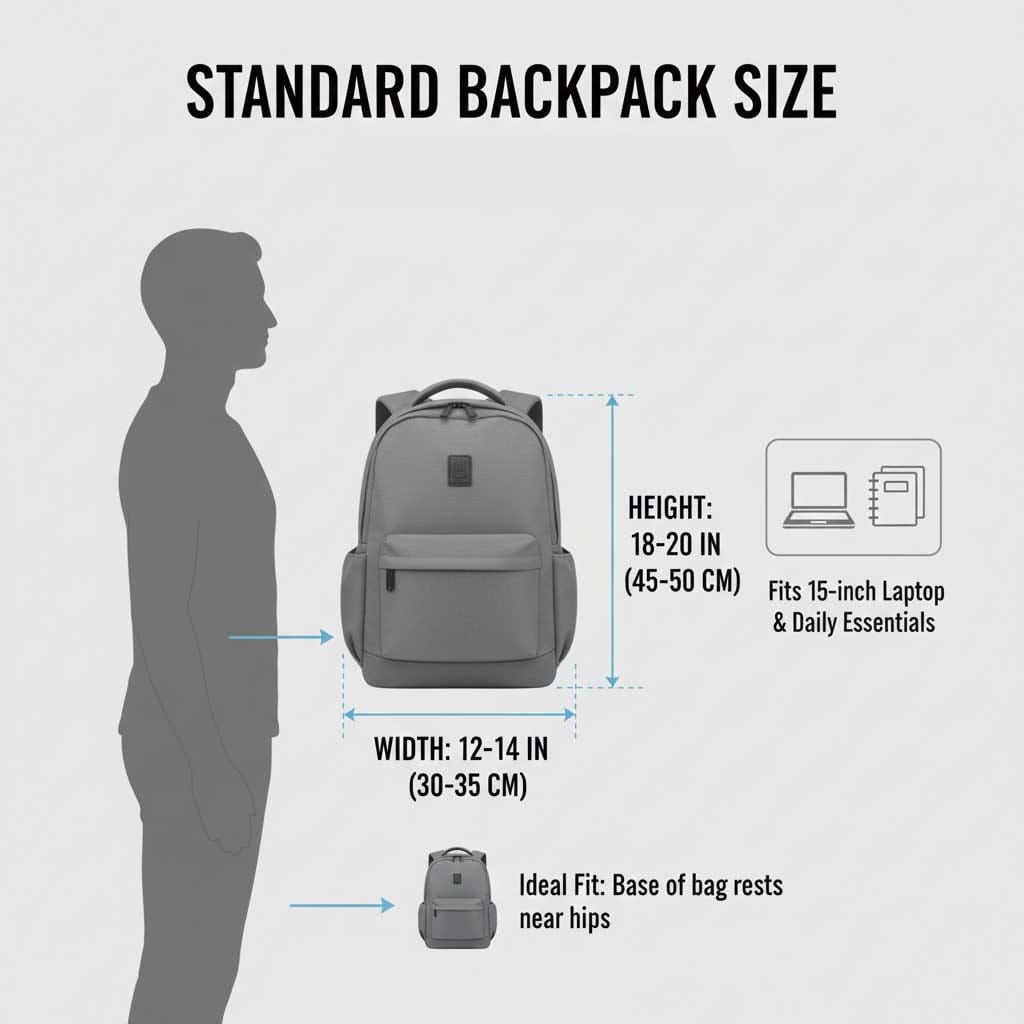
A typical backpack is about 16 to 20 inches tall, 10 to 14 inches wide, and 5 to 9 inches deep, with everyday backpacks commonly holding 15 to 30 liters. The right size depends on what you carry and how you plan to use it.
In the United States, backpack sizes vary widely because the same category can include small school bags, commuter backpacks, laptop bags, hiking packs, and travel backpacks. A backpack is usually measured by both its physical dimensions and its volume in liters, which describes how much storage space it provides.
Choosing the correct backpack size requires matching capacity to the user’s needs rather than choosing only by appearance. A 20-liter backpack may work well for daily commuting, while a 40-liter backpack may be more suitable for multi-day travel. The best size balances storage space, comfort, weight, and the items being carried.
A standard everyday backpack is commonly around 16 to 20 inches tall, 10 to 14 inches wide, and 5 to 9 inches deep. These measurements describe a general range rather than a universal standard because backpack designs differ by brand, purpose, and user group.
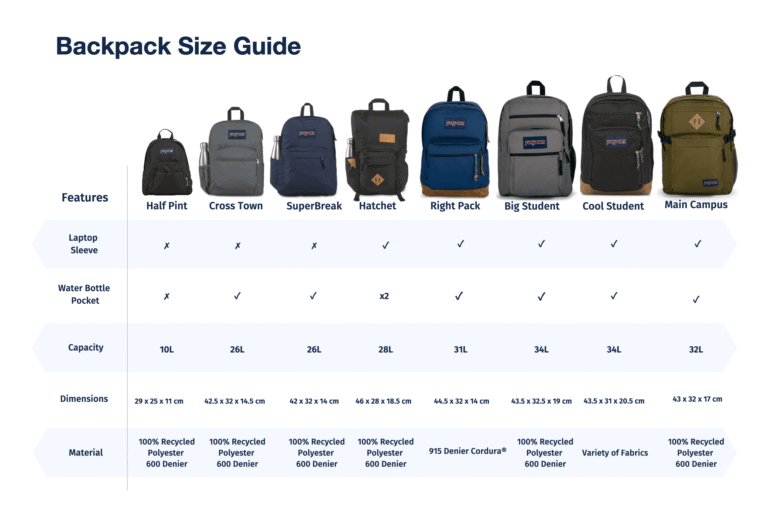
Backpack capacity is often listed in liters. Manufacturers calculate liters by measuring the internal storage space, but the usable space can vary depending on compartments, padding, zippers, and design features.
Source: vancharlioutdoor.com
Small backpacks
Usually 5 to 15 liters and suitable for light everyday items such as a phone, wallet, water bottle, and small accessories.
Medium backpacks
Usually 15 to 30 liters and commonly used for school, college, work, commuting, and daily travel.
Large backpacks
Usually 30 to 50 liters or more and designed for extended travel, camping, hiking, or carrying larger loads.
How Backpack Size Is Measured
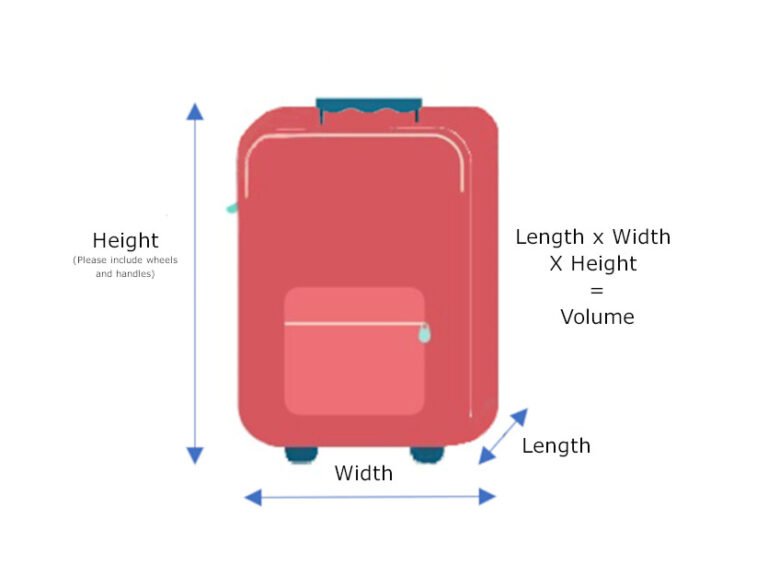
Backpack size is measured in two main ways: external dimensions and internal capacity. Dimensions show the physical footprint of the bag, while liters show the approximate amount of gear it can hold.
For example, two backpacks may both hold 25 liters but have different shapes. One may be tall and narrow for laptops and books, while another may be wider for clothing or outdoor equipment.
Backpack Sizes by Capacity: How Many Liters Do You Need?
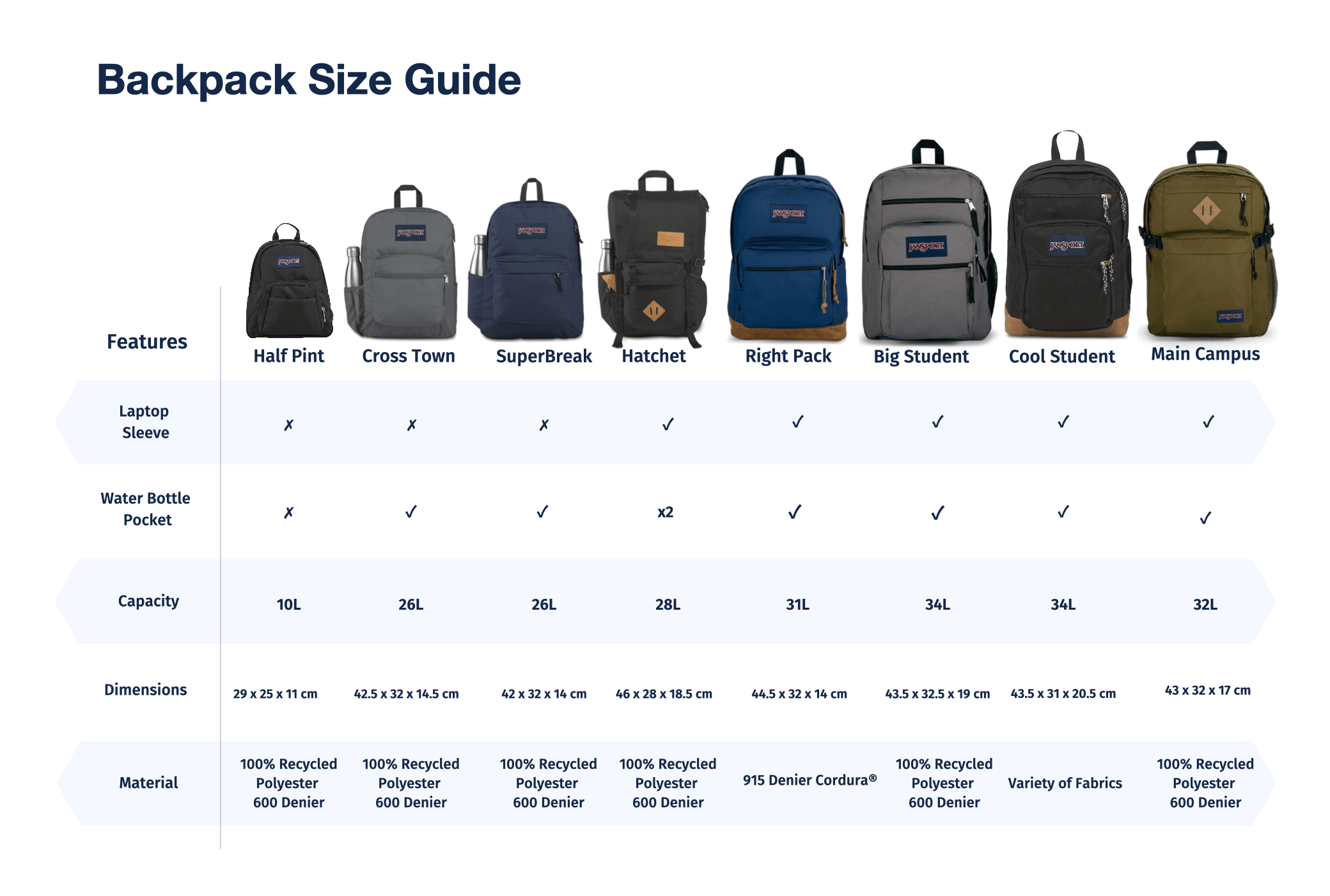
The correct backpack capacity depends on the amount of equipment you need to carry. A backpack measured in liters provides a useful comparison between different styles and brands.
The table below shows common backpack categories and typical uses. Actual capacity may differ between models because manufacturers measure storage differently.
Source: cededmwg.blob.core.windows.net
10 to 20 liters
Good for light daily use, small electronics, notebooks, snacks, and personal items.
20 to 30 liters
A versatile range for students, office workers, commuters, and short trips.
30 to 40 liters
Useful for weekend travel, larger laptops, extra clothing, and outdoor activities.
40 liters or larger
Designed for extended travel, backpacking, and carrying bulky equipment.
Common Backpack Size Examples
A school backpack is often around 15 to 25 liters because it needs room for books, folders, school supplies, and sometimes a laptop. A work backpack may have similar capacity but includes dedicated electronics compartments.
Travel backpacks are usually larger because travelers need space for clothing, toiletries, chargers, and other essentials. Hiking backpacks may prioritize comfort features and weight distribution instead of maximum storage.
How Big Is a Backpack for School, Work, and Travel?
The best backpack size changes depending on the activity. A student carrying textbooks needs more space than someone carrying only a tablet and personal items.
Matching the backpack to the task helps prevent carrying unnecessary weight and improves comfort during daily use.
Source: storage.googleapis.com
School backpack
A 15 to 25 liter backpack is often enough for books, notebooks, supplies, and a laptop depending on the student’s needs.
Office backpack
A 20 to 30 liter backpack commonly fits a laptop, documents, chargers, lunch, and commuting essentials.
Travel backpack
A 30 to 45 liter backpack provides more room for clothing and travel equipment while remaining portable.
Hiking backpack
A hiking backpack may range from small day packs to large multi-day packs depending on distance, weather, and equipment needs.
How to Choose the Right Backpack Size
Start by listing the items you normally carry, then choose a backpack with enough capacity for those items without excessive empty space. Consider the largest item first, such as a laptop, books, camera equipment, or outdoor gear.
A properly sized backpack should sit comfortably against the back, allow adjustable straps to fit correctly, and avoid forcing the user to carry more weight than necessary.
Backpack Size Mistakes and Important Limitations
A common mistake is choosing a backpack only because it looks large. A bigger backpack may become uncomfortable if it encourages carrying unnecessary items or creates an uneven load.
Another limitation is that listed capacity does not always translate directly into usable space. Padding, laptop sleeves, multiple compartments, and backpack shape can reduce the available storage area.
Source: osgwbag.com
Ignoring body fit
A backpack that is too long or too wide may feel uncomfortable even if the capacity is suitable.
Choosing too much capacity
Extra space can add unnecessary weight and make organization more difficult.
Checking only liters
Always review dimensions when the backpack must fit a laptop, school locker, airplane seat, or specific storage area.
Signs You Need a Different Backpack Size
You may need a different size if your backpack cannot hold required items, feels unstable when carried, forces items to be compressed, or leaves excessive unused space.
Adjusting packing habits may solve some problems, but changing backpack size is usually better when the bag consistently does not match the intended activity.
How to Estimate Backpack Size Before Buying
Before buying a backpack, estimate the volume of the items you carry and compare them with the listed capacity. Measuring your largest items can help prevent buying a backpack that is too small.
For online purchases, check both liter capacity and external measurements because photographs can make backpacks appear larger or smaller than they actually are.
Source: sunteambag.com
Measure important items
Check the size of laptops, books, cameras, or equipment that must fit inside.
Consider daily habits
Choose based on what you regularly carry rather than occasional items.
Allow practical extra space
A small amount of extra capacity can help with unexpected items without making the backpack oversized.
Frequently Asked Questions
Q
What is the average size of a backpack?
The average everyday backpack is usually around 16 to 20 inches tall and has a capacity of about 15 to 30 liters. The exact size depends on whether it is designed for school, work, travel, or outdoor use.
Q
Is a 20 liter backpack big enough?
A 20 liter backpack is often large enough for daily essentials, a laptop, notebooks, chargers, and personal items. It may not provide enough room for bulky clothing or extended trips.
Q
How many liters is a normal school backpack?
Many school backpacks are between 15 and 25 liters. Students who carry more books, sports gear, or larger electronics may need additional capacity.
Q
What size backpack is allowed as a carry-on?
Carry-on backpack size limits depend on the airline. Travelers should check the specific airline’s current baggage rules because allowed dimensions can vary.
Q
Does a bigger backpack mean it is better?
Not necessarily. A larger backpack is useful when more storage is needed, but an oversized bag can become heavier and less comfortable when used for everyday activities.
✦ Wrapping Up
Conclusion
A backpack’s size is determined by both its dimensions and storage capacity. Most everyday backpacks fall between 15 and 30 liters, while smaller and larger options serve specialized needs such as light carrying, travel, or outdoor activities.
The best backpack size is the one that fits your required items, your body, and your daily routine. Check both liters and measurements before choosing a backpack to avoid buying one that is too small or unnecessarily large.
💡 Key Takeaway
Choose a backpack by matching its capacity and dimensions to the items you actually carry, not simply by selecting the largest available size.
Learn how to measure a suitcase correctly using length, width, and height measurements. This guide explains airline size limits, common mistakes, and practical tips for checking luggage dimensions.
A standard backpack usually holds 15 to 30 liters. Learn how backpack liters are measured, what sizes fit school, work, travel, and everyday use, and how to choose the right capacity.
Learn how big a 62 linear inches suitcase is, how to calculate linear inches, typical suitcase dimensions, airline size limits, and what fits inside a 62-inch checked bag.