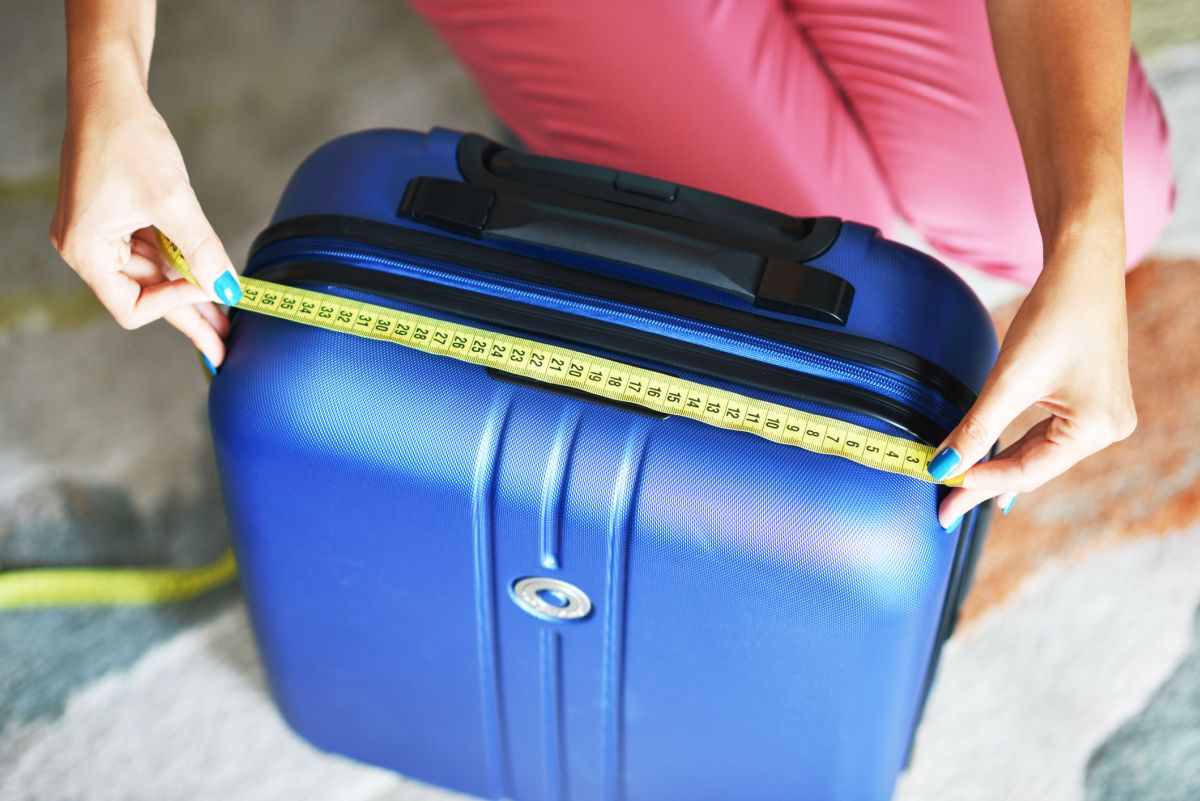
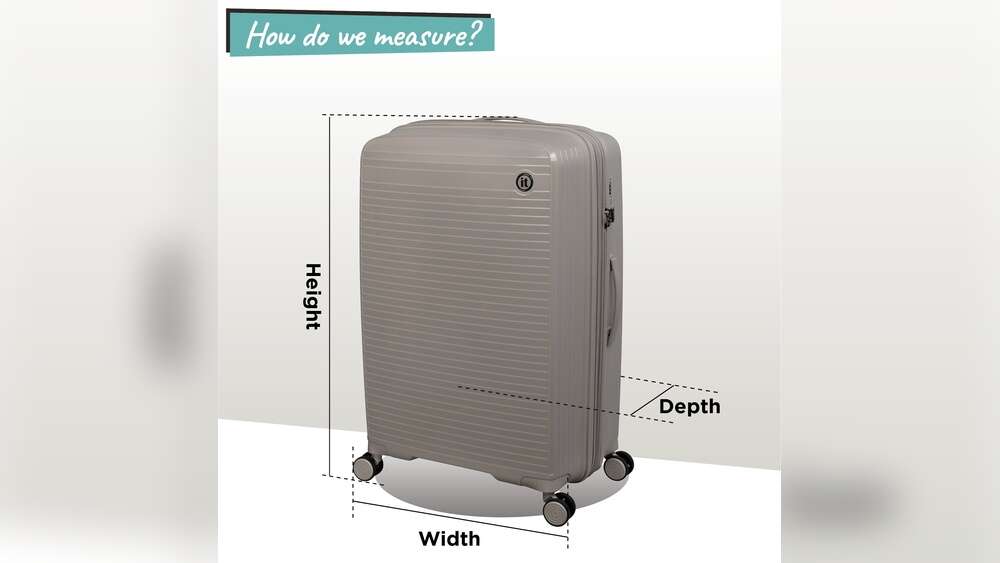
To measure a suitcase, place it upright and measure the longest points from the outside: height from the floor to the top handle area, width from side to side, and depth from front to back. Include wheels, handles, and external pockets because airlines usually count the complete outside dimensions.
For travelers in the United States, measuring a suitcase before flying helps avoid problems at airport check-in, especially when airlines apply strict carry-on and checked baggage size limits. A suitcase that appears small enough may exceed allowed dimensions once wheels, handles, or expandable sections are included.
The standard method is to measure the suitcase’s exterior dimensions in three directions: length or height, width, and depth. These measurements are normally written as height × width × depth and should represent the suitcase when it is ready for travel, including attached parts that add to its size.
A suitcase is measured using three exterior dimensions: height, width, and depth. These measurements describe the total space the luggage occupies and are the numbers airlines use when checking baggage size compliance.
The terms length and height can vary depending on the source, but for luggage measurement, the largest vertical measurement is usually called height. When comparing luggage with airline limits, use the exact dimension format requested by the airline.
Source: lifefamilyfun.com
Height
Measure from the ground to the highest fixed point of the suitcase, including wheels and the top handle area.
Width
Measure across the widest side of the suitcase from left to right when facing the front.
Depth
Measure from the front of the suitcase to the back, including areas that extend outward.
Why Include Wheels and Handles?
Airlines generally measure the outside dimensions of a bag, so removable or fixed parts that increase the overall size can affect whether luggage meets the limit. Measuring only the suitcase body can give an inaccurate result.
Wheels
Include the full wheel height because wheels extend below the main suitcase shell.
Handles
Include top and side handles if they add to the exterior measurement.
How to Measure a Suitcase Step by Step
You can measure a suitcase accurately with a simple tape measure. Perform the measurement on the suitcase in the same condition you will use it for travel, including expanded sections if they will be opened during the trip.
Before measuring, place the suitcase on a flat surface and make sure wheels, handles, and pockets are positioned as they would be during transport.
Source: fity.club
Step 1: Measure the height
Stand the suitcase upright and measure from the floor to the highest point, including wheels and handles.
Step 2: Measure the width
Measure the widest horizontal side from one edge to the other.
Step 3: Measure the depth
Measure the distance from the front surface to the back surface.
Step 4: Record the dimensions
Write the measurements as height × width × depth for easier comparison with airline requirements.
How to Check Your Measurement Accuracy
A correct measurement should include every part of the suitcase that contributes to its external size. Repeat each measurement once or twice if the suitcase has curved edges or flexible materials.
Consistent position
Measure with the suitcase standing normally rather than compressed or tilted.
Correct tool placement
Keep the tape measure straight along the outside surface instead of following curves inside the suitcase.
How Suitcase Measurements Compare With Airline Size Limits
Airlines set their own baggage rules, so there is no single universal suitcase size limit. Carry-on and checked baggage allowances can differ by airline, route, ticket type, and aircraft.
The most reliable approach is to compare your measured height, width, and depth with the airline’s published maximum dimensions before traveling.
Source: takeoffluggage.com
Carry-on luggage
Usually has stricter size limits because bags must fit in overhead compartments or under seats.
Checked luggage
Often allows larger bags but may have maximum total dimensions calculated by adding height, width, and depth.
International flights
May use different measurement standards or restrictions than domestic flights.
Example of Calculating Total Dimensions
If a suitcase measures 28 inches high, 18 inches wide, and 12 inches deep, the total external dimensions are calculated as 28 + 18 + 12 = 58 inches. This type of calculation is commonly used for checked baggage limits when an airline specifies total linear inches.
Many suitcase measurement errors happen because travelers measure only the main suitcase body or rely on marketing size labels instead of actual dimensions.
Checking the complete outside measurement before a trip reduces the chance of unexpected baggage fees or problems at the airport.
Source: takeoffluggage.com
Ignoring wheels
Wheels can add several inches to the total height and may affect airline compliance.
Measuring empty luggage only
Expandable compartments may increase depth when packed.
Using the suitcase size name
Labels such as 24-inch or 28-inch describe categories, not guaranteed external measurements.
Rounding too much
Small differences can matter when an airline has strict limits, so record measurements accurately.
What to Do If Your Suitcase Is Too Large
If your suitcase exceeds an airline limit, check whether reducing packed items or closing an expandable section changes the dimensions. If the bag remains oversized, review the airline’s options before arriving at the airport.
Recheck the measurement
Confirm that wheels, handles, and pockets were measured correctly.
Compare airline rules
Verify the exact allowance for your flight rather than relying on general luggage charts.
Frequently Asked Situations When Measuring Suitcases
Different travel situations can change how you should measure luggage. Paying attention to the suitcase type and travel requirements helps you avoid incorrect comparisons.
Source: travelkitshub.com
Soft-sided luggage
Measure the bag when packed because flexible fabric can expand beyond the empty size.
Hard-shell luggage
Measure the outer shell and attached components because rigid materials maintain their shape.
Measure Before Buying Replacement Luggage
When replacing a suitcase, measure your current luggage and compare it with the listed dimensions of a new bag. Manufacturer size labels may use different measurement methods, so check the full height, width, and depth specifications.
Compare complete dimensions
Look at all three measurements instead of comparing only the suitcase height.
Frequently Asked Questions
Q
Do you measure a suitcase with wheels included?
Yes. For airline travel, measure the complete outside dimensions and include wheels, handles, and other parts that extend beyond the suitcase body.
Q
What order should suitcase dimensions be written in?
Suitcase dimensions are commonly written as height × width × depth. Always confirm the format used by the airline or luggage manufacturer.
Q
How do I measure a suitcase for carry-on luggage?
Measure the suitcase’s full exterior size with wheels and handles included, then compare the height, width, and depth with your airline’s carry-on requirements.
Q
Can I use a ruler instead of a tape measure?
A tape measure is usually more practical because suitcases are larger than most rulers and may have curved surfaces.
Q
Why is my 28-inch suitcase larger than expected?
Suitcase inch labels usually refer to a category based on height or packing size. The actual outside dimensions may be different depending on wheels, handles, and design.
✦ Wrapping Up
Conclusion
Learning how to measure a suitcase correctly requires checking the full exterior dimensions: height, width, and depth. Including wheels, handles, and expandable sections gives a more realistic measurement for travel planning.
Before flying from a U.S. airport, compare your measurements with the specific airline’s baggage policy. Accurate measurements can help prevent unexpected size issues and make choosing luggage easier.
💡 Key Takeaway
Use a tape measure to record your suitcase height, width, and depth with all exterior parts included, then check those numbers against your airline’s published baggage limits before traveling.
Find out what is the best cheap vlogging camera for sharp video, clear audio, and easy recording without overspending. Compare budget-friendly options.
Learn How Much Does a Suitcase Cost in the USA, including budget, mid-range, and premium price ranges, factors that affect cost, and tips for choosing the right luggage.
Compare the best compression bags for travel, including rechargeable vacuum-bag kits and expandable packing cubes. Find the right space-saving system for your luggage.