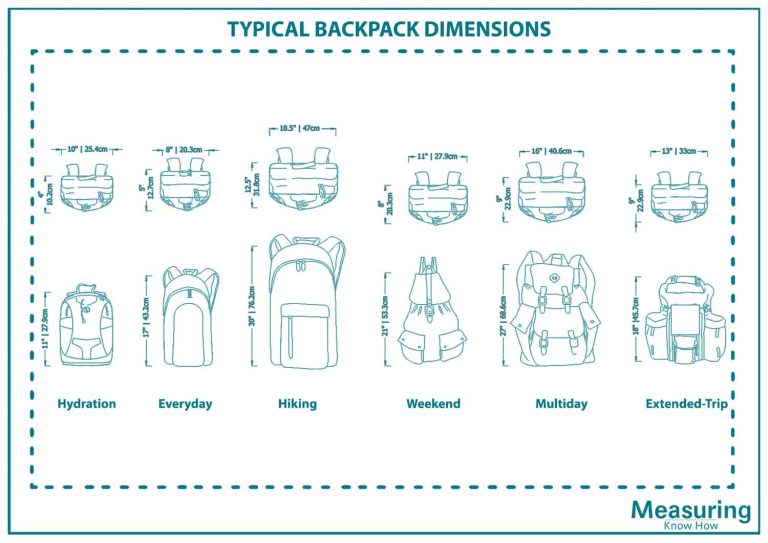
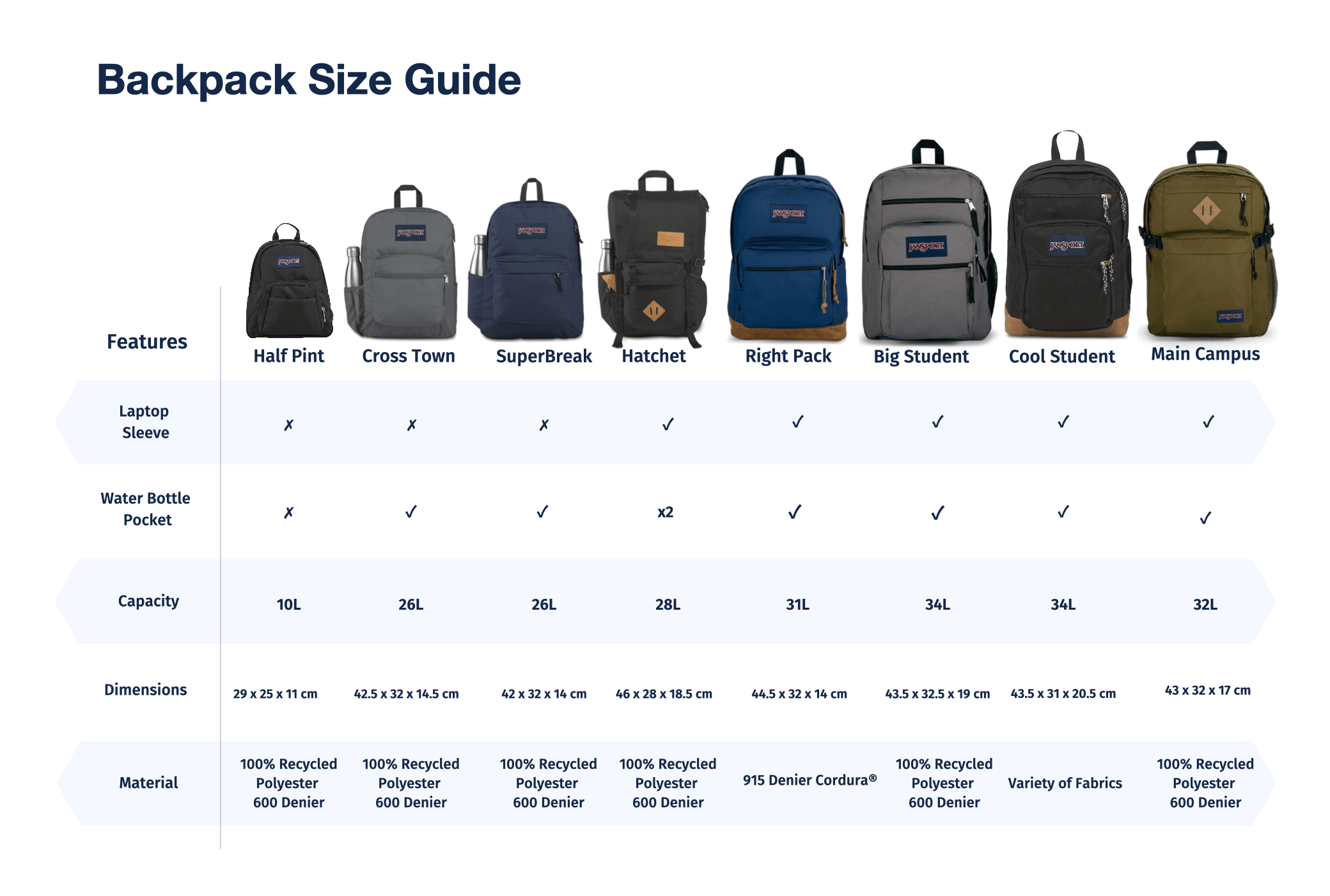
A full size backpack is usually about 17 to 20 inches tall, 12 to 15 inches wide, and 6 to 9 inches deep, with a typical capacity of 25 to 40 liters. The right size depends on whether it is used for school, work, travel, or outdoor activities.
In the United States, a full size backpack commonly refers to an adult-sized backpack that can hold daily essentials such as books, a laptop, clothing, water bottles, and personal items. There is no single official industry definition for full size, so manufacturers use different dimensions and volume ratings.
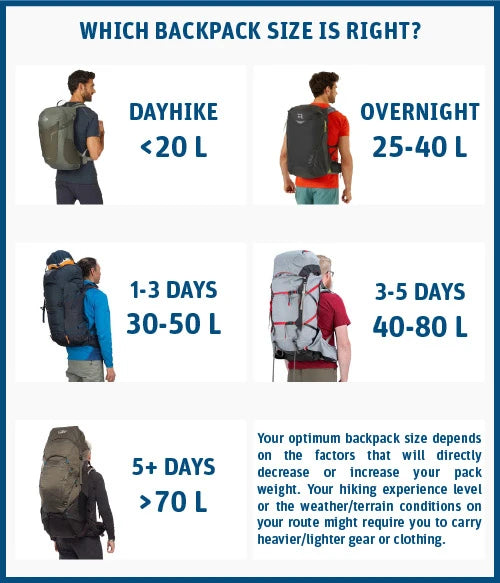
Backpack size is best measured by both physical dimensions and internal capacity. A 25 to 30 liter backpack is often enough for everyday carry, while larger 35 to 40 liter backpacks provide more space for travel or heavier loads. The best choice depends on what you need to carry and how long you will use it.
A full size backpack generally means a medium-to-large backpack designed for adults rather than a small daypack or children’s backpack. It usually has enough room for several compartments, a laptop sleeve, books, clothing, and everyday accessories.
Because backpack makers do not use one universal sizing standard, the term full size describes a practical category rather than an exact measurement. Checking the listed dimensions and liter capacity gives a more accurate idea of how much the backpack can carry.
Source: thetruewilderness.com
Typical height
Most full size backpacks are approximately 17 to 20 inches tall, which allows them to hold standard notebooks, folders, and many laptop sizes.
Typical width
A width of about 12 to 15 inches is common and provides enough room for daily gear without becoming excessively bulky.
Typical depth
A depth of roughly 6 to 9 inches provides storage space while keeping the backpack comfortable for regular use.
How Many Liters Is a Full Size Backpack?
A full size backpack is commonly between 25 and 40 liters. The liter rating measures the total internal volume and is often a better indicator of carrying capacity than outside measurements.
A backpack’s usable space can vary because padding, laptop compartments, pockets, and internal dividers take up some of the available volume.
Source: gh-bags.com
20 to 25 liters
Suitable for lighter daily carry, including a tablet, small laptop, notebook, and personal items.
25 to 35 liters
A common full size range for school, college, commuting, and office use.
35 to 40 liters
Better for travel, outdoor activities, or carrying extra clothing and equipment.
Why Liter Capacity and Dimensions Can Differ
Two backpacks with the same liter rating may feel different because one may use space more efficiently. A structured laptop backpack may hold fewer bulky items than a flexible travel backpack with the same capacity.
Shape
Rectangular designs often organize books and electronics more efficiently than narrow outdoor shapes.
Full Size Backpack Dimensions by Common Use
The ideal full size backpack depends on the activity. A backpack for school or work usually prioritizes organization and laptop protection, while travel and hiking backpacks focus on larger storage capacity.
Source: vancharlioutdoor.com
School and college
A 25 to 35 liter backpack usually provides space for textbooks, notebooks, electronics, and daily supplies.
Work and commuting
A 20 to 30 liter backpack is often enough for a laptop, charger, documents, lunch, and personal items.
Short travel
A 35 to 40 liter backpack can provide enough room for clothing and travel essentials for shorter trips.
How to Choose the Right Full Size Backpack
Choosing the right full size backpack starts with identifying what you carry most often. A larger backpack is not always better because extra space can add unnecessary weight and bulk.
Measure the largest item you plan to carry, such as a laptop or binder, then compare it with the backpack’s listed dimensions and capacity.
Source: www.potterybarnkids.com
Check laptop compatibility
Confirm the laptop compartment dimensions instead of relying only on the backpack’s overall size.
Consider comfort
Padded shoulder straps, a supportive back panel, and proper adjustment can improve comfort when carrying heavier loads.
Match capacity to use
Choose enough room for your normal items without selecting a much larger backpack that encourages unnecessary weight.
Common Mistakes When Measuring Backpack Size
Many people judge a backpack only by height or appearance. This can lead to choosing a bag that is too small for important items or unnecessarily large for everyday use.
Always compare the listed dimensions, volume, and intended purpose before buying or replacing a backpack.
Source: storage.googleapis.com
Ignoring depth
A tall backpack may still have limited capacity if it is too shallow for bulky items.
Confusing external size with storage
Exterior measurements include fabric, padding, and pockets that do not always translate into usable interior space.
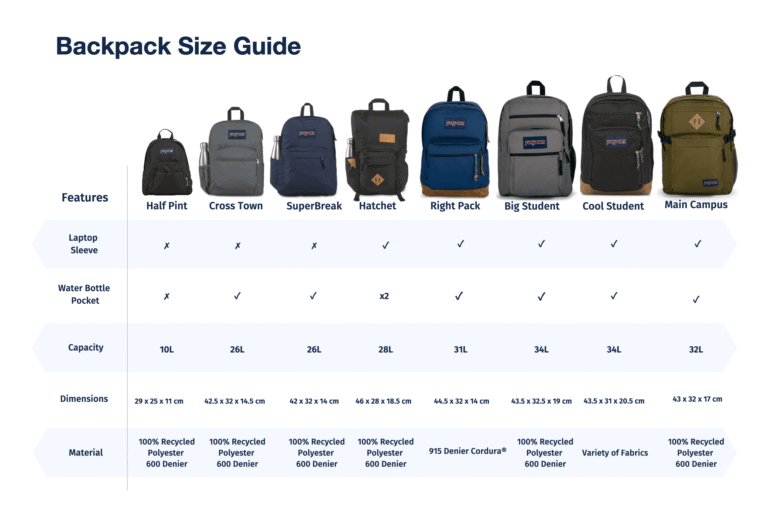
Understanding Backpack Size Charts
Backpack size charts help compare different categories, but measurements should be treated as guidelines because designs vary between brands and models.
A full size backpack should fit comfortably against your back and allow you to carry the items you actually need.
Source: northstbags.com
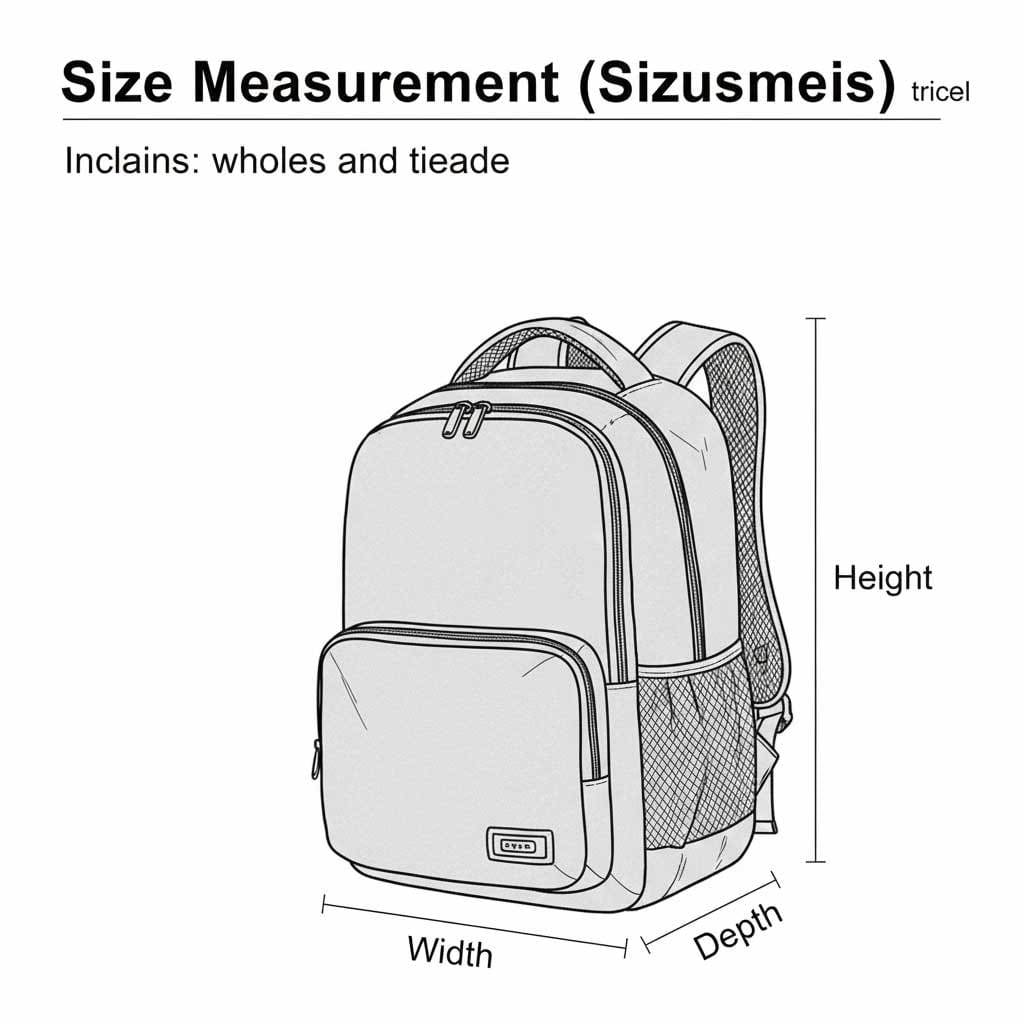
Use measurements together
Height, width, depth, and liters provide a clearer picture when considered as a group.
Frequently Asked Questions
Q
Is a 30 liter backpack considered full size?
Yes. A 30 liter backpack is commonly considered a full size everyday backpack because it provides enough room for school, work, commuting, and personal items.
Q
What is the most common full size backpack size?
Many everyday full size backpacks are around 25 to 35 liters, with dimensions close to 17 to 20 inches tall, 12 to 15 inches wide, and 6 to 9 inches deep.
Q
Can a full size backpack fit a laptop?
Many full size backpacks include laptop compartments, but compatibility depends on the compartment dimensions and the laptop model.
Q
Is a 40 liter backpack too big for everyday use?
A 40 liter backpack can work for people who carry extra equipment or travel items, but it may feel larger and heavier than necessary for simple daily use.
Q
How do I know if a backpack is the right size for me?
The right size holds your essential items comfortably, fits your body properly, and does not require you to carry unnecessary empty space.
✦ Wrapping Up
Conclusion
A full size backpack is generally a medium-to-large backpack with a capacity of about 25 to 40 liters and dimensions around 17 to 20 inches tall. The best size depends on your daily items, activity, and comfort needs.
Before choosing a backpack, compare liters, measurements, and intended use instead of relying only on the phrase full size.
💡 Key Takeaway
Measure the largest items you carry, estimate the storage volume you need, and choose a backpack that provides enough space without unnecessary bulk.
Learn how much stuff you can fit in a duffel bag, including clothing, shoes, travel gear, and everyday items. Compare duffel bag sizes, capacity limits, and packing tips.
A standard backpack usually holds 15 to 30 liters. Learn how backpack liters are measured, what sizes fit school, work, travel, and everyday use, and how to choose the right capacity.