
Mirrorless cameras are better for many photographers because they offer faster autofocus, real-time previews, smaller bodies, and strong video features.
The answer to why are mirrorless cameras better depends on how you shoot. For travel, portraits, wildlife, and video, a mirrorless camera can feel like a major step forward. It shows the exposure before you press the shutter, focuses well on moving subjects, and often packs advanced tools into a light body.
Still, a DSLR may suit photographers who prefer long battery life, an optical viewfinder, or a large library of used lenses. This guide explains the real strengths and limits of mirrorless cameras so you can make a smart choice, not just follow a trend.
What is a mirrorless camera?
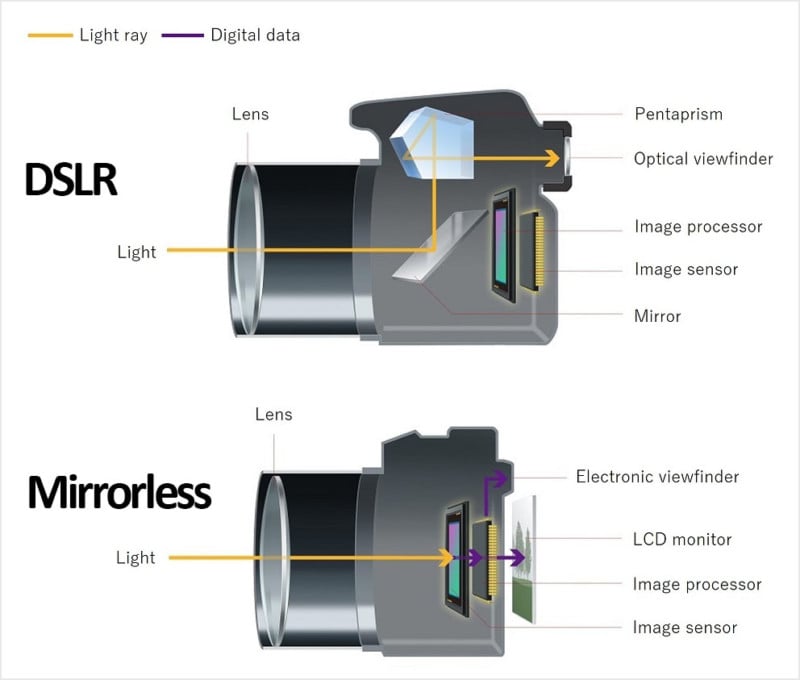
A mirrorless camera uses a digital image sensor to create the view shown on its screen or electronic viewfinder. It does not use the mirror and optical viewfinder system found in a digital single-lens reflex, or DSLR, camera.
In a DSLR, light passes through the lens and reflects off a mirror. That light then reaches the optical viewfinder. When you take a photo, the mirror flips up so the sensor can record the image.
A mirrorless camera removes that mirror box. Light reaches the sensor all the time. This simpler design helps explain why are mirrorless cameras better for many modern photography needs.
Key parts of a mirrorless system include:
• Image sensor: Captures the photograph and helps control image quality, detail, and low-light performance.
• Electronic viewfinder: Shows a live digital preview of exposure, color, focus, and white balance.
• Interchangeable lens mount: Lets you use wide-angle, telephoto, macro, and portrait lenses.
• In-body image stabilization: Moves the sensor to reduce blur caused by hand movement on supported models.
• Hybrid autofocus system: Uses phase detection, contrast detection, or both to focus on people, animals, and vehicles.
A mirrorless camera is not automatically better because it is newer. Sensor size, lens quality, autofocus design, and photographer skill still matter. The main advantage is that the camera gives you more information and control before you take the shot.
Why are mirrorless cameras better for everyday photography?
Mirrorless cameras are often better for everyday photography because they make the process faster and more visual. You can see many settings in real time instead of guessing how the final photo may look.
This helps beginners learn exposure. It also helps experienced photographers work with more confidence in changing light.
Real-time exposure preview
An electronic viewfinder can show the effect of shutter speed, aperture, and ISO before you press the shutter. If the image looks too dark, you can adjust the settings while looking through the viewfinder.
A DSLR optical viewfinder shows the scene as it appears to your eyes. It does not usually show the final exposure until after the photo is taken. That makes the mirrorless preview feel like a window with a built-in light meter.
Focus peaking and magnification
Many mirrorless cameras offer focus peaking. This feature highlights edges that appear sharp, often with a bright color. It is useful for manual focus, macro photography, landscapes, and video.
You can also magnify part of the scene in the electronic viewfinder or rear screen. This makes it easier to check focus on a flower, product, or distant subject.
A quieter shooting experience
Many mirrorless cameras include an electronic shutter. It can take photos with little or no sound. This is useful for:
• Weddings and ceremonies
• Museums and galleries
• Street photography
• Wildlife
• Sleeping children
The electronic shutter has limits. Fast movement can create rolling-shutter distortion, where straight objects look bent. Under some artificial lights, it may also cause banding or uneven exposure. A mechanical shutter remains useful in these situations.

Why are mirrorless cameras better for autofocus?
One major reason why are mirrorless cameras better is their autofocus performance. Modern models can focus across much of the frame and track subjects using the image sensor itself.
Many cameras now recognize faces, eyes, animals, birds, cars, motorcycles, and airplanes. The exact performance varies by brand and model. Premium cameras tend to offer better tracking in difficult light or with fast movement.
Better subject tracking
A DSLR often uses a separate autofocus sensor during viewfinder shooting. A mirrorless camera can use focus information directly from the main image sensor. This allows the camera to track a subject while showing the live image in the viewfinder.
For example, when photographing a runner, a dog, or a child at play, the camera can follow the subject across the frame. Eye detection can also keep focus on the most important part of a portrait.
Wider autofocus coverage
Many mirrorless cameras offer autofocus points across a large area of the frame. You do not always need to place the subject in the center.
This is helpful when composing a portrait with the person off to one side. It also helps wildlife photographers keep a bird within the focus area as it moves.
Important autofocus limits
Autofocus is not magic. It can struggle with:
• Very low light
• Subjects hidden behind branches
• Fast subjects moving toward the camera
• Low-contrast surfaces
• Heavy rain, mist, or dust
Good technique still matters. Use the right focus mode, choose a suitable shutter speed, and learn how your camera detects subjects.

Why are mirrorless cameras better for video?
Mirrorless cameras have become popular with video creators because they are built around a live sensor feed. The camera can use the same autofocus system for both photos and video.
Many models offer 4K recording, microphone inputs, headphone outputs, flat color profiles, and advanced stabilization. Some higher-end models can record 6K or 8K video, although resolution alone does not guarantee better footage.
Useful video features may include:
• Eye and face tracking
• In-body image stabilization
• Focus peaking
• Zebra exposure warnings
• Log recording profiles
• High frame rates for slow motion
• Clean HDMI output
• External microphone support
A mirrorless camera can also show exposure changes while recording. This makes it easier to manage bright skies, indoor scenes, and mixed lighting.
However, video quality depends on more than the camera body. Lens breathing, overheating, rolling shutter, audio, lighting, and editing skill all affect the final result. A good microphone and stable support can improve a video more than a jump from 4K to 8K.

Why are mirrorless cameras better for size and travel?
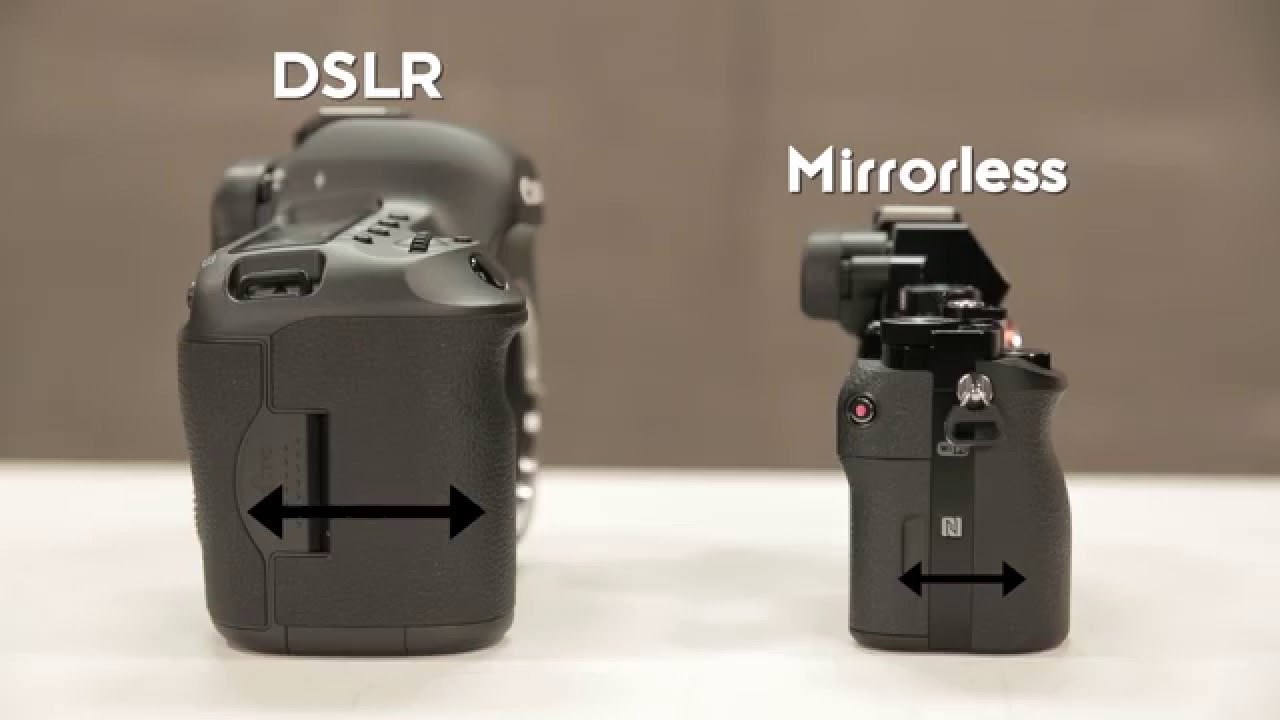
One of the clearest answers to why are mirrorless cameras better is their compact design. Removing the mirror and optical viewfinder system allows manufacturers to make many bodies smaller and lighter than similar DSLRs.
This difference matters when you carry a camera all day. A smaller body can fit in a travel bag, reduce shoulder strain, and make you more likely to bring the camera with you.
Mirrorless lenses can also be compact, especially wide-angle and standard lenses. But the total system may not always be small. A professional telephoto lens can still be large and heavy because it needs wide glass, strong motors, and a bright maximum aperture.
For travel, consider the complete kit:
• Camera body
• Lens or lenses
• Spare batteries
• Charger or USB power bank
• Memory cards
• Tripod or support
• Camera bag
A small body with a large professional lens may not feel balanced. Try the camera in your hand before buying it. Grip shape, button placement, and weight distribution often matter more than a few ounces on a specification sheet.
Why are mirrorless cameras better for image stabilization?
Many mirrorless cameras include in-body image stabilization, often called IBIS. The system moves the sensor to reduce the effect of small hand movements.
This can help you use slower shutter speeds when photographing still subjects. It may also make handheld video smoother. Some systems combine sensor stabilization with optical stabilization inside the lens.
Image stabilization does not freeze a moving person or animal. It only reduces blur caused by camera shake. If a person moves during a long exposure, you still need a faster shutter speed.
A practical example is an indoor museum scene. With a stabilized camera, you may capture a sharp photo at a slower shutter speed than you could with an unstabilized camera. The result depends on your technique, the lens, and the subject.
Use stabilization wisely:
• Keep it on for handheld still images when the camera maker recommends it.
• Turn it off on some tripods if the system creates unwanted movement.
• Use a faster shutter speed for moving subjects.
• Check the image at 100 percent before assuming it is sharp.
Why are mirrorless cameras better for silent and discreet photography?
Silent shooting is another strong benefit. An electronic shutter can capture a photo without the sound of a mechanical shutter. This can help you work politely and discreetly.
At a wedding, silent shooting can prevent a loud burst from interrupting a quiet ceremony. At a wildlife location, it can reduce disturbance. In street photography, it may help you remain less noticeable.
There are trade-offs. Electronic shutters read the sensor from one area to another instead of capturing every pixel at exactly the same moment. This can create skewed lines when a subject or camera moves quickly.
Banding can also appear under some LED, fluorescent, or artificial lights. If you see strange stripes or uneven brightness, switch to the mechanical shutter or an electronic front-curtain mode.
Silent shooting is a tool, not a universal replacement for the mechanical shutter. Test it in the type of light and movement you expect to photograph.
Why are mirrorless cameras better for lenses and system growth?
Mirrorless systems often use newer lens mounts with short flange distances. This gives designers more freedom when creating fast, sharp lenses.
Many systems now include excellent lenses for:
• Portrait photography
• Wildlife and sports
• Landscape photography
• Street photography
• Macro photography
• Commercial work
Mirrorless cameras also support lens adapters. Some adapters allow you to use older DSLR lenses, though autofocus speed and compatibility can vary. Native lenses usually provide the best performance and full feature support.
The lens lineup is just as important as the camera body. A mid-range camera with a sharp, bright lens can produce better results than a premium body paired with a poor lens.
Before choosing a system, check:
-
The lenses you need today.
-
The lenses you may want in three to five years.
-
Lens prices and availability.
-
Third-party lens support.
-
The size and weight of the full kit.
This is one lesson I would share with any new photographer: do not buy a camera only because the body has the newest autofocus. A camera system is a long-term investment.
What are the disadvantages of mirrorless cameras?
A fair answer to why are mirrorless cameras better must include their weaknesses. Mirrorless cameras are powerful, but they do not win in every situation.
Shorter battery life
An electronic viewfinder and rear screen use power. As a result, many mirrorless cameras offer fewer shots per battery than comparable DSLRs.
Modern models have improved. USB charging and USB power delivery also make travel easier. Still, carry at least one spare battery for a long day, especially in cold weather.
Electronic viewfinder limitations
An electronic viewfinder can show exposure and focus information, but it may lag in very dark scenes. Some displays can also look noisy or less natural than an optical viewfinder.
An optical viewfinder shows the scene directly. Many photographers enjoy that clear, immediate view, especially in bright outdoor light.
Heat and recording limits
Video recording and high-speed bursts create heat. Some cameras may reduce recording time to protect internal parts. Limits vary by resolution, frame rate, room temperature, memory card, and camera design.
Check independent testing and the manufacturer’s specifications before buying a camera for professional video.
Cost
New mirrorless systems can be expensive. Native lenses may also cost more than older DSLR lenses. Adapters can reduce the cost, but they may add weight or limit autofocus features.
Used cameras can offer excellent value. Look for clean sensor glass, healthy batteries, working ports, and a low or reasonable shutter count. Shutter count is only one factor, so inspect the camera’s full condition.
Mirrorless vs. DSLR: Which is better?
The mirrorless versus DSLR debate has no single winner. The right choice depends on your subject, budget, habits, and preferred shooting experience.
Mirrorless cameras are often the better fit for:
• Video creators
• Travel photographers
• Portrait photographers who want eye detection
• Wildlife shooters who need subject tracking
• People who want exposure previews
• Photographers who value compact equipment
DSLRs may still be better for:
• Photographers who prefer an optical viewfinder
• People who need very long battery life
• Users with many affordable DSLR lenses
• Photographers who like large, traditional controls
• Buyers seeking a low-cost used system
In my practical camera comparisons, the biggest change is not always image quality. Modern cameras with similar sensor sizes can produce very similar files in good light. The larger difference is often speed, feedback, focus behavior, and how comfortable the camera feels during a real shoot.
That point can save you money. If your current DSLR already meets your needs, you may not need to switch. Upgrade when the new features solve a real problem, such as missed focus, poor video autofocus, or a heavy travel kit.
How to choose the best mirrorless camera
Start with your photography goals. Do not begin with brand names or the highest megapixel count.
For beginners
Choose a camera with:
• A comfortable grip
• Simple automatic modes
• A reliable kit lens
• A clear electronic viewfinder
• Good JPEG color
• Wi-Fi or Bluetooth transfer
• Affordable spare batteries and lenses
A 20 to 26 megapixel camera is enough for most family photos, travel images, and online publishing. More megapixels can help with large prints and cropping, but they also create larger files.
For travel
Look for low weight, USB charging, weather resistance, and a versatile zoom lens. A small prime lens can also make a travel kit lighter and more discreet.
For portraits
Prioritize eye autofocus, lens quality, skin tones, and flash support. A bright 50mm, 85mm, or similar portrait lens can create a soft background and flattering perspective.
For wildlife and sports
Focus on tracking, burst speed, buffer depth, viewfinder response, battery life, and telephoto lens choices. A fast camera is only useful if the system offers a lens that reaches your subject.
For video
Check recording formats, autofocus, stabilization, microphone input, headphone output, heat management, and file workflow. Make sure your computer and storage can handle the footage.
A useful buying method is to rent the camera and one lens for a weekend. Photograph your real subjects. Test the grip, menus, autofocus, battery, and file transfer. A short rental can reveal more than hours of online research.
Practical tips for getting better results with a mirrorless camera
Learning why are mirrorless cameras better is useful, but skill comes from applying the features.
-
Turn on the exposure preview. Use it to understand how aperture, shutter speed, and ISO change the image.
-
Set up eye detection. Test human and animal modes before an important shoot.
-
Customize buttons. Assign focus mode, ISO, or subject detection to controls you can reach quickly.
-
Watch shutter speed. Stabilization helps camera shake, but it cannot stop subject movement.
-
Carry a spare battery. Keep it warm in cold weather and charge it before a long shoot.
-
Learn the electronic shutter limits. Use the mechanical shutter for fast movement or problem lighting.
-
Shoot RAW when you need editing flexibility. Use JPEG when speed and easy sharing matter most.
-
Clean the sensor carefully. Changing lenses exposes the sensor area to dust.
-
Use a fast memory card that meets your camera’s requirements. This can improve burst and video performance.
-
Practice before important events. New menus and autofocus settings can slow you down if you learn them during the shoot.
One mistake I often see is relying too heavily on automatic subject detection. It can choose the wrong eye or object when several subjects overlap. Keep a smaller focus area or tracking control ready so you can take charge when the camera guesses wrong.
Frequently Asked Questions About Why Are Mirrorless Cameras Better
Why are mirrorless cameras better than DSLRs?
Mirrorless cameras often provide better live previews, wider autofocus coverage, stronger video tools, and smaller bodies. DSLRs can still offer longer battery life, optical viewfinders, and access to affordable used lenses.
Are mirrorless cameras better for beginners?
They can be better for beginners because the electronic viewfinder shows how exposure changes before the photo is taken. This makes it easier to learn settings, although a simple DSLR can also teach photography well.
Do mirrorless cameras take better photos?
A mirrorless camera does not automatically take better photos. Image quality depends on the sensor, lens, lighting, settings, and photographer, but mirrorless features can make it easier to focus and expose the image correctly.
Are mirrorless cameras good for professional photography?
Yes. Professionals use mirrorless cameras for weddings, sports, portraits, wildlife, fashion, news, and commercial work. Choose a model with the reliability, lens range, battery support, and file quality your job requires.
Do mirrorless cameras have better autofocus?
Many modern mirrorless cameras have excellent autofocus, especially for eyes, faces, animals, and moving subjects. Performance varies by model, so compare real-world tracking tests rather than looking only at the number of focus points.
Are mirrorless cameras better for video?
They are often better suited to video because they use a live sensor feed and commonly include strong autofocus, stabilization, and video controls. Check for overheating, rolling shutter, audio support, and recording limits before buying.
Should I switch from a DSLR to a mirrorless camera?
Switch if mirrorless features solve a clear problem, such as missed focus, heavy equipment, or weak video performance. If your DSLR still produces the results you need, keeping it and investing in better lenses may be the wiser choice.
Conclusion
Mirrorless cameras are better for many photographers because they combine real-time exposure previews, advanced autofocus, compact designs, stabilization, silent shooting, and powerful video features. They make the camera feel less like a guessing tool and more like a helpful guide.
They still have limits, including battery use, electronic viewfinder behavior, rolling shutter, heat, and system cost. The best camera is the one that fits your subjects, hands, budget, and daily habits.
Think about the problems you want your next camera to solve. Compare the full lens system, rent a model if possible, and practice with its key features before making your final choice. Explore more photography guides, share your experience, or leave a comment about which mirrorless camera you are considering.
Recent Posts
Parts of a 35mm Camera: Complete Guide to Every Key Part and Its Function
Learn the parts of a 35mm camera, what each part does, and how the lens, shutter, film chamber, viewfinder, and controls work together.
Parts of a Camera Canon: A Complete Guide to Canon Camera Parts and Functions
Learn the parts of a Canon camera, what each part does, and how the lens, sensor, shutter, controls, viewfinder, and screen work together.