
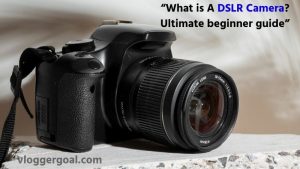
DSLR cameras have completely changed the photography industry by enabling both amateurs and pros to take breathtaking pictures with remarkable detail and clarity. There are many different kinds of cameras on the market, since photographers have different tastes and needs when it comes to shooting.
If you want more control over depth of focus and want an optical viewfinder or interchangeable lenses, a DSLR camera is your best option! Our post will go into greater detail regarding the DSLR camera definition because many beginners are still unaware of their capabilities.
I have grown to love DSLRs, but as I’ll touch on later, they might not be as popular as they once were. Let’s explore what these cameras are, how they work, their advantages and disadvantages, and why they aren’t as popular as they used to be…
What is A DSLR Camera
Digital Single-Lens Reflex, or DSLR, cameras combine the control and adaptability of film-based SLR cameras with the ease of use of digital technology. When utilizing the viewfinder, you can see straight through the lens thanks to its mirror and prism technology, which gives you a preview of the image in real time before you take it.
DSLR cameras are distinguished from point-and-shoot cameras by this function, which gives you more control over exposure, focus, and composition.
What Does DSLR Mean?
The phrase “digital single-lens reflex” isn’t the most straightforward to comprehend at first. But when you break it down into its parts, it makes more sense.
Digital: This suggests that the camera is not film-based and that, rather than employing photographic light-sensitive film, images are taken digitally on an image sensor. The single-lens reflex, or SLR, camera was the film-based equivalent that preceded the DSLR.
Single-Lens: This word, which indicates that the camera only uses one lens, is rather self-explanatory. The lens is used for both image capture and preview. A twin-lens reflex camera, in contrast, simply employs one lens to capture the image and another lens to observe the situation before capturing it.
Reflex: This describes how a DSLR camera allows the photographer to see exactly what scene will be photographed. The light in a DSLR is directed toward the optical viewfinder via the mirror. Other kinds of cameras don’t always project the precise scene that will be photographed, and they occasionally use other technologies.
In order to guide light toward the optical viewfinder for the photographer to see, DSLR cameras use a mirror that is inclined at 45 degrees. You may see a scene through a DSLR’s viewfinder when it is turned off because the light is not directed through a digital path.
The mirror is raised to display the camera’s sensor for an exposure when the shutter button is pressed. When snapping a picture, there is a temporary blackout of the viewfinder, since this causes the light’s path to change from going up into the viewfinder to going straight into the sensor.
Additionally, this generates the shutter noise that DSLR cameras are known for, which is both pleasant and occasionally annoying. Film cameras dominated the professional market for at least ten years due to a number of variables, including cost and speed, even though the first DSLR cameras were commercially accessible in the 1980s and 1990s.
In recent years, there has been a comparable shift between DSLR and mirrorless cameras, and many would contend that we have arrived at a time when mirrorless cameras are now generally more appealing than DSLRs. However, there are still justifications for DSLRs, which this article will discuss.
How Does a DSLR Camera Work?
A Digital Single-Lens Reflex camera works by using a combination of mechanical and electronic components to direct light from a single lens to either the viewfinder or the digital sensor. Here is a detailed breakdown of the DSLR mechanism:
1. The Optical Viewfinder Path
The defining feature of an SLR is the optical path that allows the photographer to view the scene directly through the main lens.
- The Lens: Light enters the lens.
- The Mirror: Inside the camera body, there is a precision-cut, movable mirror positioned at a 45-degree angle behind the lens. When the camera is idle or ready, this mirror is down, directing the light stream upwards.
- The Focusing Screen: The light hits a translucent screen where the image is formed.
- The Pentaprism: The light then travels through a pentaprism or a pentamirror. This wedge-shaped optical block flips the laterally reversed image created by the lens and mirror, presenting it to the photographer’s eye as a correctly oriented, right-side-up image in the viewfinder.
- The Eyepiece: The photographer looks through the eyepiece to see the scene in real-time, exactly as the lens is framed.
2. The Autofocus and Metering System
Before the shot is taken, the camera uses a portion of the light to determine focus and exposure:
- Secondary Mirror: A small section in the center of the main mirror is partially silvered or perforated, allowing some light to pass through it.
- Dedicated AF Sensor: This through-light hits a secondary mirror, which redirects it downward to a dedicated phase-detect autofocus sensor array located at the bottom of the camera box. This system is fast and precise, especially for tracking movement.
- Exposure Meter: Light is also directed to a separate light meter sensor to calculate the correct exposure settings.
3. The Capture Sequence
When the shutter button is fully pressed, a rapid mechanical sequence occurs:
- Mirror Flip: The primary mirror instantly swings up and out of the light path. This action is what causes the distinctive “slap” sound and the momentary viewfinder blackout.
- Shutter Opens: The focal-plane shutter opens.
- Sensor Exposure: Light travels straight through the lens, past the now-raised mirror, and exposes the digital image sensor for the duration of the set shutter speed.
- Shutter Closes: The shutter closes, ending the exposure.
- Mirror Returns: The mirror immediately drops back down to the 45-degree position, restoring the image to the optical viewfinder.
4. Digital Processing
After the mechanical action is complete, the electronic components take over:
- Data Readout: The sensor’s recorded electrical charge is read out.
- Processing: The camera’s internal processor converts this analog data into a digital image file, applies any necessary color or noise reduction, and writes the final file to the memory card.
- Review: The processed image is then displayed on the rear LCD screen for the photographer to review.
In summary, a DSLR uses its mirror system as a switch, directing light to the eye for viewing or to the sensor for capturing, making it a highly versatile and complex electromechanical device.
Key Features Of A DSLR Camera
Shooting Modes
Aperture Priority Mode: In this mode, you control and modify the aperture, allowing your camera to use other parameters to determine the shutter speed.
The clarity of backdrop elements can be altered by adjusting this aperture. For instance, narrower apertures capture more detail in the picture, while larger apertures blur the backdrop to improve focus on the main subject. Additionally, it controls the amount of light that reaches the sensor; more light enters through larger apertures than through narrower ones.
Shutter Priority Mode: This time, you control the shutter speed while your camera controls the aperture, unlike in Aperture Priority Mode. The speed can be adjusted to blur motion or freeze motion. This procedure also modifies light intake, similar to aperture adjustment. Slower shutter speeds allow more light to enter, while faster shutter speeds allow less.
Manual Mode: You may fully customize the parameters in this mode to have greater creative control over your digital photography trip by controlling both the shutter speed and the aperture.
ISO
Your interchangeable-lens camera’s light sensitivity is determined by ISO:
- Unless additional light sources are used to compensate, lower ISO ratings indicate less sensitivity and produce dark images.
- For brighter photographs, sensitivity is increased by higher ISO numbers. They could, however, degrade image quality, particularly above ISO 1600.
In summary, if you want to create higher-quality photos, you should use lower native ISO settings. Higher ISO settings, however, might be very helpful in poor light or while shooting continuously for exceptional occasions that might not happen again.
After all, no one voiced dissatisfaction over the absence of high-definition footage or pictures of the first moon landing in history! Our list of the top DSLRs for video analyzes models that reduce noise even when you have to increase the ISO, which is useful for readers who prioritize motion work.
Focusing Modes
Your autofocus system’s operation is determined by this parameter. Spectrum and single-point focus are the two choices. Single-point focusing is less distracting and more dependable than spectrum focusing. Additionally, it lets you choose a precise focal point, which is often in the center of the frame, but you can always move it to the subject of your choice.
Back Focusing
To prevent unintentional focus setting changes, your camera uses rear focusing, which allocates the autofocus function to a button other than the shutter button. This benefit improves productivity and lowers the possibility of missing important photos, especially during light painting sessions.
Exposure Compensation
Beyond what can be accomplished with aperture, shutter speed, or even ISO settings alone, exposure compensation modifies the brightness of photos. An excellent option for adjusting exposure under less-than-ideal lighting circumstances!
In dark environments, lowering exposure compensation stops light sources from being too bright. On the other hand, more exposure preserves true color intensity under strong light or other conditions, particularly for whites.
Advantages of DSLR Cameras
While modern mirrorless cameras have overtaken DSLRs in new technology development, DSLRs still offer several compelling advantages, especially for specific shooting styles, budgets, and needs. Here are the primary advantages of DSLR cameras:
1. Optical Viewfinder
The most defining feature of a DSLR is the optical viewfinder, which provides a distinct shooting experience:
- Real-Time, Lag-Free View: The OVF shows the scene directly through the lens via the mirror and prism system. There is absolutely no electronic lag, delay, or refresh rate issue, making it ideal for tracking fast, unpredictable action like sports or wildlife.
- Best in Extreme Light: An OVF is crystal clear and functions perfectly in both very bright sun and extremely dark conditions, unlike an Electronic Viewfinder, which can sometimes struggle with refresh rate or brightness in these extremes.
- Natural View: The view is optical, not a digital screen, offering a more direct and natural connection to the scene.
2. Superior Battery Life
Because DSLRs use an OVF and do not constantly power a high-resolution electronic viewfinder or the main sensor for live view, they are significantly more power-efficient.
- Longer Shooting Days: DSLRs can often capture anywhere from 800 to over 1,500 shots on a single battery charge, compared to many mirrorless cameras that often achieve 300–500 shots.
- Ideal for Remote/Extended Shoots: This longevity makes them essential for long event days, multi-day travel, or shooting in remote locations where charging is difficult.
3. Ergonomics and Handling
DSLR bodies are generally larger and offer a substantial, comfortable grip.
- Better Balance with Large Lenses: Their size and weight distribution make them better balanced when using large, heavy telephoto lenses. The deeper hand grip provides more secure and comfortable support for long periods of shooting.
- Robust Build: Professional DSLRs are built like tanks, offering exceptional durability and weather sealing, which stands up well to tough working conditions.
4. Lens Ecosystem and Affordability
Due to decades of development, the DSLR lens market is enormous.
- Vast Lens Selection: Canon and Nikon have hundreds of lenses built over the last 30+ years, providing more choices, including numerous specialized or unique legacy lenses.
- Better Value: Because the industry has shifted focus to mirrorless, the used market for high-quality DSLR cameras and lenses is excellent, offering professional-grade gear at significantly lower prices than equivalent mirrorless equipment.
5. Mature and Reliable Autofocus System
DSLRs utilize a dedicated Phase-Detect Autofocus sensor located at the bottom of the camera.
Reliable Speed: This dedicated system is highly developed and offers extremely fast and reliable focus for still photography, particularly in low light or with low-contrast subjects, often excelling with older or third-party lenses.
Disadvantages of DSLR Cameras
While DSLRs have many strengths, their inherent mechanical design and the modern shift toward mirrorless technology have created several notable disadvantages:
1. Size, Weight, and Portability
DSLRs are significantly larger and heavier than comparable mirrorless cameras.
- Bulkier Design: The need to accommodate the mirror box and pentaprism/pentamirror adds considerable depth and weight to the camera body.
- Less Convenient: This makes DSLRs less ideal for travel, hiking, street photography, or any situation where minimal gear is preferred.
2. Viewfinder Blackout and Limited Information
The core mechanical function of a DSLR creates limitations during the actual moment of capture.
- Viewfinder Blackout: When the mirror flips up to take the photo, the optical viewfinder goes completely dark for the duration of the exposure.
- No Exposure Preview: The optical viewfinder shows the scene optically, regardless of your exposure settings.
3. Inferior Video Performance
The mirror mechanism complicates video recording and Live View shooting.
- Slower Autofocus in Video: To record video, the mirror must be locked up, which disables the primary, fast phase-detect autofocus system.
- Sensor Heating: Running the main sensor continuously for extended periods of video recording can sometimes lead to overheating issues, particularly in older or entry-level models.
4. Noise and Vibration
The mechanical act of taking a photo with a DSLR is inherently noisy.
- Mechanical Noise: The sound of the mirror slapping up and down (the “shutter slap”) is loud and noticeable.
- Disruption: This noise is highly disruptive in quiet environments like weddings, theaters, museums, or when shooting shy wildlife.
- Shutter Shock: The mirror’s movement can introduce slight vibrations into the camera body, which may lead to subtle blur when shooting at certain shutter speeds on a tripod.
5. Development and Future Technology
The camera industry has largely halted development of new DSLR bodies, focusing R&D efforts on mirrorless systems.
- Stagnant Technology: Innovations like advanced real-time subject tracking, computational photography features, and cutting-edge video specifications are almost exclusively being introduced on mirrorless cameras.
- New Lenses: Manufacturers are designing their best and most innovative new lenses specifically for their mirrorless mounts, leaving the DSLR lens ecosystem mature but technologically capped.
What are the drawbacks of using a DSLR?
First off, DSLRs are more costly and bulkier than smartphones and small cameras. DSLRs (and mirrorless cameras) are costly purchases if you want something portable and don’t care too much about the quality of the photos.
DSLRs and mirrorless cameras have a stronger case among professional and amateur photographers. But since the latter is becoming more and more popular, you might be more likely to purchase a mirrorless camera in 2025 rather than a DSLR.
Because they don’t have a mirror, mirrorless cameras are typically lighter and smaller, and their frequently quick mechanical and electronic shutters make it simpler to capture moving objects, like cars or animals.
Mirrorless cameras are frequently better for hybrid users because they typically have greater video resolutions, even if some DSLRs can shoot in 4K. Some even go as far as 8K, such as the Nikon Z9.
Why is the DSLR popular?
Although modern mirrorless cameras now dominate the high-end market, the Digital Single-Lens Reflex camera achieved massive global popularity due to a combination of technological maturity, robust design, and market saturation.
This made it the default choice for photographers for over a decade. Here is an in-depth look at the reasons behind the DSLR’s popularity:
1. High Image Quality
DSLRs were the first widely available consumer and professional cameras to consistently pair high-quality optics with large digital sensors.
Large Sensors: DSLRs primarily use APS-C or full-frame sensors. These sensors are vastly larger than those found in smartphones or point-and-shoot cameras, allowing them to capture significantly more light. This results in superior image data, especially:
Dynamic Range: The ability to capture detail in both the darkest shadows and the brightest highlights.
Low-Light Performance: Larger pixels capture light more efficiently, resulting in cleaner images with less digital noise at high ISO settings.
Through-The-Lens Viewing: The core SLR mechanism ensures that the photographer sees the image directly through the main lens via the mirror/pentaprism. This offered an indisputable sense of visual connection and framing accuracy that early digital compacts could not match.
2. Adaptability with Accessories
The DSLR design, inherited from film SLRs, created the most extensive and versatile photographic ecosystem available.
Interchangeable Lenses: The interchangeable lens mount is the DSLR’s superpower. Photographers can switch from a wide-angle landscape lens to a super-telephoto wildlife lens to a macro lens. This flexibility is essential for professional versatility.
Legacy Support: Because the SLR design has existed for decades, the major manufacturers have built up a massive, affordable, and readily available used market of lenses and accessories. A beginner can buy an excellent, inexpensive 50 mm f/1.8 prime lens that has been in production for years.
Sturdy Mount: The robust, wide-diameter lens mounts and deep flange distance (space between the mount and sensor) were perfectly suited for the demands of large, heavy professional telephoto lenses used in sports and wildlife.
3. Creative Freedom
DSLRs popularized the idea that an average user could access the controls of a professional camera.
Full Manual Control: DSLRs provide dedicated dials and buttons for the exposure trinity: aperture, shutter speed, and ISO. This allows the photographer to move beyond automatic modes and master the creative fundamentals of photography, such as controlling depth of field.
Optical Viewfinder: The OVF gives a clear, real-time, zero-lag view of the scene. Many professionals prefer the OVF for tracking fast-moving subjects (like sports) because it provides a pure, uninterrupted optical connection to the action, unlike early electronic viewfinders, which suffered from lag and low resolution.
Bokeh and Depth of Field: The large sensors and fast, high-quality prime lenses available for DSLRs made achieving a shallow depth of field (the pleasing background blur known as bokeh) a standard, easily repeatable creative choice.
4. Reliability, Speed, and Ergonomics
DSLRs were built to be dependable workhorses for demanding professionals.
Battery Life: Because the viewfinder is optical, the camera is only required to power the sensor and LCD screen when actually taking or reviewing a photo. This resulted in significantly longer battery life compared to early mirrorless cameras, which had to power a processor and an electronic viewfinder continuously.
Phase-Detect Autofocus: DSLRs use a dedicated, complex phase-detection autofocus module located at the base of the camera, which receives light reflected by the mirror. This system was, for many years, faster and more reliable than the initial contrast-detect AF systems used in early mirrorless cameras, especially for tracking moving subjects.
Ergonomics and Durability: The large body is a feature, not a bug. The size allows for a deep, comfortable grip and space for rugged, weather-sealed construction and professional control layouts.
5. Varied Options for Beginners and Professionals
The sheer volume of DSLR models created by Nikon and Canon cemented their popular status across all skill levels.
Low Barrier to Entry: Entry-level models (like the Canon Rebel or Nikon D3000/D5000 series) offered excellent image quality and access to the lens ecosystem at a price point that made them the first “serious” camera for millions of people.
Professional Standard: Mid-to-high-end bodies became the industry standard for wedding, portrait, and photojournalism work, providing proven results that professionals relied on daily.
Maturity and Trust: For over a decade, the DSLR camera was the undisputed technological leader. Photographers and businesses invested heavily in the system, creating a powerful market inertia based on familiarity, reliability, and guaranteed backwards compatibility.
FAQs
What does ‘DSLR’ stand for?
Answer: DSLR stands for Digital Single-Lens Reflex. It is a type of camera that uses a mechanical mirror system and a prism to let you see directly through the lens.
What is the primary distinction between a mirrorless camera and a DSLR?
Answer: The core difference is the mirror. A DSLR camera has a mechanical mirror inside that reflects light to an optical viewfinder (OVF). A mirrorless camera removes this mirror, allowing light to go directly onto the image sensor, and uses an electronic viewfinder (EVF).
What is the “mirror” used for in a DSLR?
Answer: The mirror’s job is to reflect the image coming through the lens up into the optical viewfinder (OVF) so the photographer can compose the shot. When the shutter button is pressed, the mirror flips up, and the light hits the sensor to capture the image.
What are the three main settings that control exposure in a DSLR?
Answer: The three settings are known as the Exposure Triangle:
- Aperture (controls depth of field and light)
- Shutter Speed (controls motion blur and light)
- ISO (controls the sensor’s sensitivity to light)
What is an optical viewfinder (OVF), and what is its advantage?
Answer: The OVF is what you look through on a DSLR. Since it uses mirrors and glass, it provides a direct, clear, and real-time view of the scene with zero lag, and it does not drain the battery.
Can I change the lenses on a DSLR?
Answer: Yes, absolutely. The ability to use interchangeable lenses is one of the biggest advantages of a DSLR camera system, offering incredible versatility.
Is a DSLR camera still a good choice for beginners?
Answer: Yes, they are. DSLRs offer excellent image quality and great ergonomics and are often more affordable than comparable mirrorless systems, making them fantastic value for learning.
Do DSLRs take better photos than a smartphone?
Answer: In terms of image quality, yes. DSLR camera have much larger sensors that capture significantly more light, resulting in much higher resolution, better performance in low light, and greater control over depth of field
Do DSLRs have good battery life?
Answer: Generally, yes. Because the optical viewfinder does not use electrical power, DSLRs typically have much longer battery life than mirrorless cameras. It’s common for a DSLR to take 800-1000+ shots on a single charge.
Conclusion: What Is a DSLR Camera?
In conclusion, DSLR cameras are strong instruments that give photographers unparalleled control and accuracy when taking beautiful pictures. Both pros and amateurs of photography love them for their interchangeable lenses, superb image quality, and creative versatility. DSLR cameras continue to be an attractive choice in the rapidly changing field of digital photography, despite their disadvantages.
Recent Posts
Parts of a 35mm Camera: Complete Guide to Every Key Part and Its Function
Learn the parts of a 35mm camera, what each part does, and how the lens, shutter, film chamber, viewfinder, and controls work together.
Parts of a Camera Canon: A Complete Guide to Canon Camera Parts and Functions
Learn the parts of a Canon camera, what each part does, and how the lens, sensor, shutter, controls, viewfinder, and screen work together.